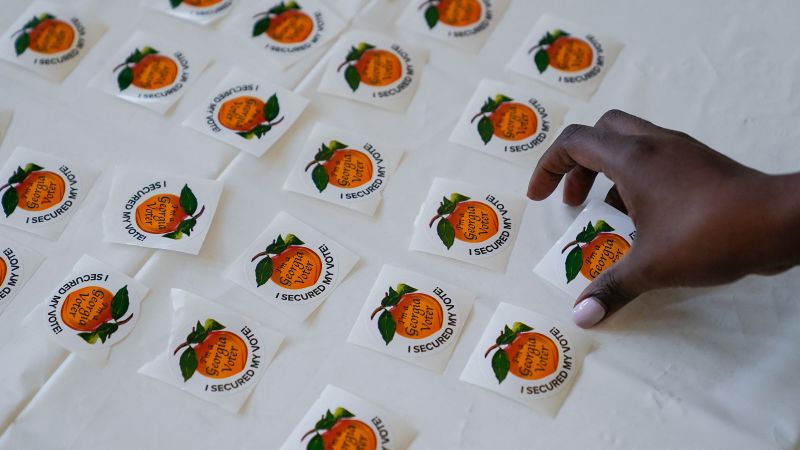
London, May 19, 2026 — Voters in six U.S. States will cast ballots in a critical round of primaries on Tuesday, May 20, with races in Georgia and Kentucky drawing particular attention as they could reshape the political landscape ahead of the November midterms. From competitive governor contests to high-stakes Senate battles and tests of President Donald Trump’s influence, these elections will determine nominees who may define the next two years of American politics. Here’s what to watch—and why it matters.
With control of the narrowly divided U.S. Senate and the future of key swing states on the line, Tuesday’s primaries offer a preview of the November battles. In Georgia, a crowded Republican field for governor and a closely watched Senate race will set the stage for November showdowns that could decide control of the Senate and the direction of a pivotal swing state. Meanwhile, Kentucky’s Republican primary for U.S. Senate—where Trump has endorsed a challenger to incumbent Senator Rand Paul—could signal the former president’s continued sway over the GOP base. Beyond these headline races, primaries in Alabama, Pennsylvania, Oregon, and Idaho will test the party’s internal dynamics and preview the fight for the U.S. House majority.
For voters and political observers alike, the stakes are clear: these primaries will narrow the field for November, shape the national conversation, and offer early indicators of the political winds ahead of a midterm election year. With early voting already underway in some states, here’s a breakdown of the races to watch, the candidates vying for nominations, and what’s at risk.
Georgia: Governor and Senate Races in the Spotlight
Georgia’s primaries will feature two of the most consequential races of the year. The Republican nomination for governor is a wide-open contest with eight candidates, including state Attorney General Chris Carr, healthcare executive Rick Jackson, Lieutenant Governor Burt Jones, and Secretary of State Brad Raffensperger. Jones, who has President Trump’s endorsement, faces a well-funded challenge from Jackson, who has invested over $83 million of his personal fortune into the race. The Democratic field includes former Atlanta Mayor Keisha Lance Bottoms and former Republican Lieutenant Governor Geoff Duncan, adding to the unpredictability of the race.
The governor’s race is particularly significant because it will succeed term-limited incumbent Brian Kemp, whose tenure has been marked by contentious voting law changes and a high-profile investigation into his office’s handling of election materials. The winner will face Bottoms or another Democratic nominee in November, with the outcome likely to influence Georgia’s political trajectory for years to come.
Meanwhile, Georgia’s U.S. Senate race is a critical battleground for control of the narrowly divided chamber. While the primary candidates have not yet been fully determined, the general election will pit the Republican nominee against Democratic incumbent Raphael Warnock, whose 2022 victory was a turning point in Georgia’s political realignment. The Senate race could hinge on turnout in suburban Atlanta and rural areas, where Warnock’s margins were razor-thin.
Why Georgia Matters
Georgia’s elections have national implications. The state flipped from Republican to Democratic in the 2020 presidential election and has since become a bellwether for the South. A Republican sweep in November could shift the Senate majority, while a Democratic hold would preserve the current balance. Georgia’s primaries include competitive races for the state Supreme Court, where nonpartisan judicial contests could have long-term effects on voting rights and other legal issues.
Kentucky: Trump’s Endorsement Tests Senator Rand Paul’s Future
In Kentucky, the Republican primary for U.S. Senate has drawn intense attention due to President Trump’s direct involvement. Trump has endorsed state Representative David Massie, a conservative challenger to incumbent Senator Rand Paul, in what analysts describe as a test of the former president’s influence over the GOP base. Paul, a longtime Trump ally who broke with the president on several issues, faces a tough re-election bid in a state that has trended more conservative in recent years.
Massie’s campaign has framed the race as a referendum on Paul’s leadership, arguing that the senator has strayed from conservative principles. Trump’s endorsement of Massie—his first in a Senate primary this cycle—has energized his base, but Paul remains a formidable incumbent with deep ties to Kentucky’s political establishment. The race could serve as a litmus test for Trump’s ability to rally support for his preferred candidates ahead of 2024.
What’s at Stake in Kentucky
Beyond the Senate race, Kentucky’s primaries include competitive contests for governor, and U.S. House seats. The governor’s race features Attorney General Daniel Cameron, a Trump ally, and former state representative Ben Chandler, a moderate Republican. The outcome could signal whether Kentucky’s GOP is moving further right or seeking to broaden its appeal.
For national Republicans, Kentucky’s primary is a critical barometer. A Paul victory would suggest that Trump’s influence is not absolute, while a Massie win could embolden the former president’s efforts to reshape the party in his image. The race also has implications for the 2026 midterms, as Kentucky’s 6th Congressional District—held by Republican Andy Barr—is another Trump-endorsed target.
Other States: Alabama, Pennsylvania, Oregon, and Idaho
While Georgia and Kentucky dominate headlines, primaries in Alabama, Pennsylvania, Oregon, and Idaho will also shape the midterm landscape.
Alabama
Alabama’s primaries include a competitive race for governor between Republican incumbent Kay Ivey and former Chief Justice Roy Moore, who faces legal challenges from his 2017 Senate campaign. The race has drawn national attention due to Moore’s controversial history and Ivey’s efforts to position herself as a more moderate alternative. The outcome could influence Alabama’s political direction, particularly in a state where conservative populism remains a dominant force.
Pennsylvania
Pennsylvania’s primaries will feature races for governor and U.S. House, with particular focus on the Philadelphia suburbs, where Democratic and Republican candidates are vying for seats in competitive districts. The state’s governor’s race includes Republican Doug Mastriano, a Trump-aligned candidate, and Democrat Josh Shapiro, the current attorney general. The outcome could have implications for Pennsylvania’s role in the 2026 elections, particularly in the critical 7th and 17th Congressional Districts.
Oregon and Idaho
In Oregon, primaries will determine nominees for governor and U.S. House, with races in the Portland area drawing attention. Idaho’s primaries include a competitive race for governor between Republican incumbent Brad Little and challenger Randy Crane, a former state representative. Both states are increasingly important battlegrounds as the political divide widens in the Pacific Northwest.
Key Takeaways: What’s Next?
- Georgia’s governor and Senate races will set the stage for November battles that could decide control of the Senate and the future of a pivotal swing state.
- Kentucky’s Senate primary is a test of Trump’s influence, with implications for the 2024 election and the GOP’s direction.
- Alabama’s governor race could signal whether the state’s political establishment is shifting away from controversial figures like Roy Moore.
- Pennsylvania’s suburban races will be watched closely as indicators of the national political mood.
- Oregon and Idaho are emerging as new battlegrounds, with races that could reshape the region’s political landscape.
What Happens Next?
Results from Tuesday’s primaries will begin rolling in on May 20, with some states certifying results within days and others taking longer. The next major checkpoint will be the general election on November 4, 2026, where the nominees determined today will face off for control of key offices. For now, voters in Georgia, Kentucky, Alabama, Pennsylvania, Oregon, and Idaho will decide which candidates advance to the general election—and which issues will dominate the national conversation in the months ahead.
Whether you’re a political junkie or a casual observer, these primaries offer a glimpse into the forces shaping the 2026 midterms. Stay tuned for live updates and analysis as results come in, and join the conversation: What do you think will be the biggest takeaway from Tuesday’s races? Share your thoughts in the comments below.
- 8TV News Headlines: BN-PN Cooperation and Soo Yi Fang Election Ban (July 18, 2026)
- Judge Voids Trump Settlement and Refers Attorneys to Florida Bar for Discipline
- Trump says US being ‘invaded by filthy air’ as he threatens Canada with tariffs over wildfires (archyworldys.com)
- Trump Calls 2026 World Cup the Biggest Sporting Event Ever (world-today-news.com)