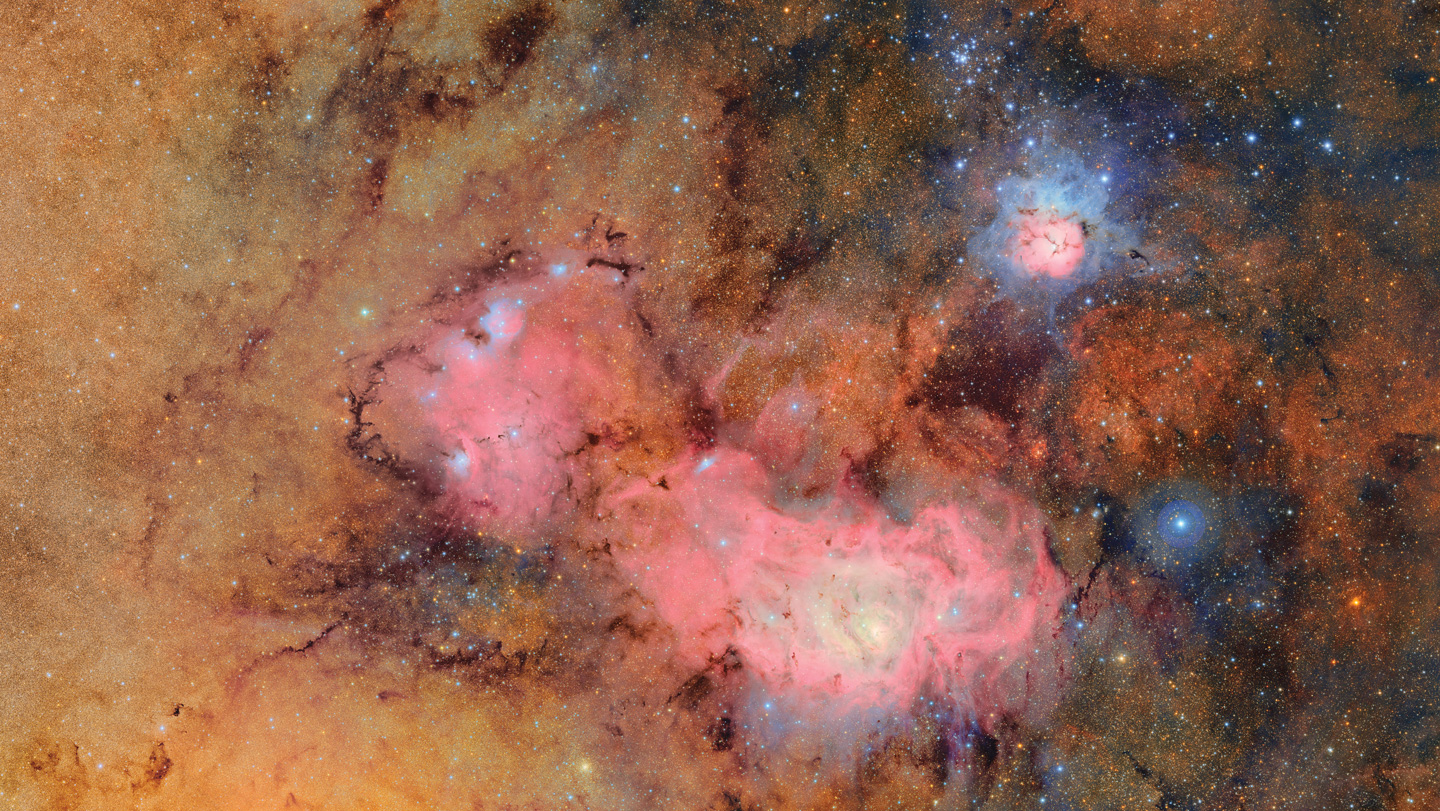
from eclipses on demand to a rare interstellar visitor to the chances of Earth being flung out of orbit, some news in 2025 made us ponder our place in the universe. Here’s a look at some of our favorite space stories.
A rare interstellar visitor
our solar system got a new out-of-town guest in 2025, for only the third time that we certainly know of. Comet 3I/ATLAS was spotted on July 1 by the ATLAS survey telescope in Chile. Astronomers quickly determined that its orbit was taking it on a quick jaunt through the solar system before sweeping out again.
Since then, the comet has sprouted a tail, swung around the sun at more than 200,000 kilometers per hour, been photographed by spacecraft across the solar system (including from the surface of Mars), shown signs of icy volcanism and sparked discussion of the possibility that it’s an alien spacecraft. (Spoiler: It’s not).
Even after the comet’s closest pass to Earth on December 19, at about 270 million kilometers away, it should be visible into spring 2026 as it heads back out into interstellar space.
Lightning on Mars
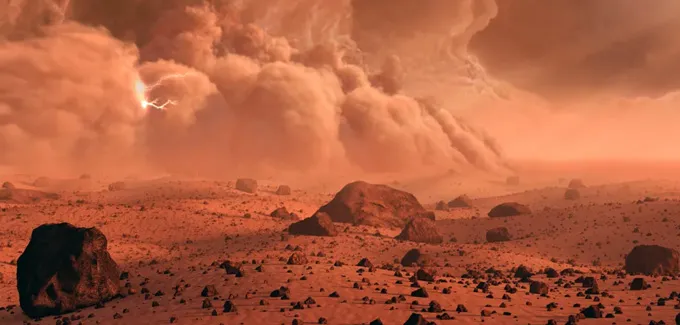
A microphone on the Perseverance rover picked up the static crackle of electricity in Martian air,a kind of “mini-lightning,” scientists reported this year. Researchers had previously noticed a sharp clicking sound in recordings of a dust devil and assumed it was from dust hitting the mic. But this year, a team of planetary scientists realized that it could have been a zap from dust particles sliding against or bumping into each other, building up electric charges that discharge in a sudden bolt. This kind of lightning, called triboelectricity, had been suspected to happen on Mars for a long time, but had never been heard until now.
Betelgeuse’s buddy is caught on camera
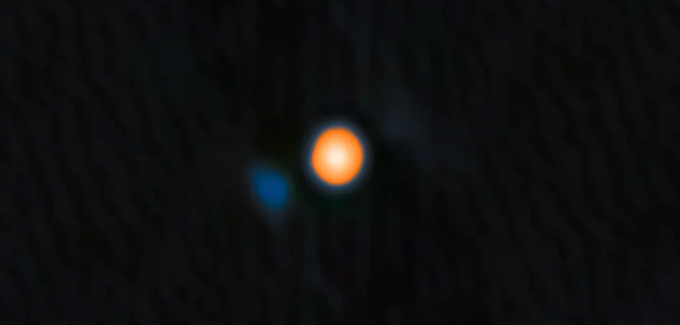
Astronomers may have finally seen Betelgeuse’s companion star. The red supergiant that marks one of the constellation Orion’s shoulders had long been suspected to be part of a binary, with a star about the mass of the sun orbiting it roughly every 2,000 days. Last year, two groups reported indirect signals that the astral attendant is really there.
In July,astronomers released an image of a faint blue smudge near the bright supergiant. The star still needs to be confirmed with more observations.But if it’s there, astronomers suggest naming it Siwarha, meaning “her bracelet,” as it encircles a star whose name means “hand of the giant.”
Unfortunately, the smaller star’s orbit puts it inside Betelgeuse’s outer atmosphere, which means the star is doomed to fall into its larger companion in the next 10,000 years.
Artificial eclipses on demand
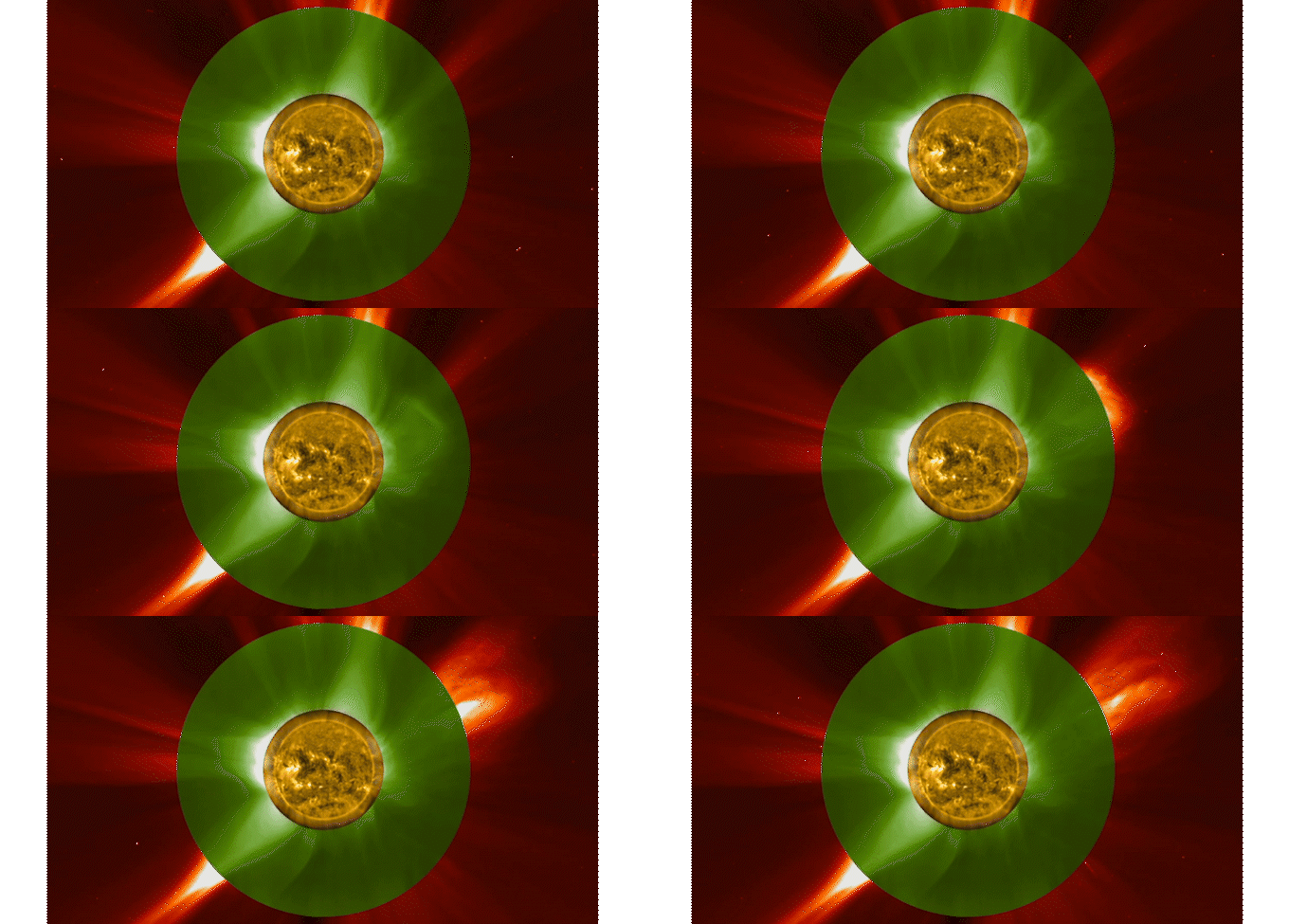
A pair of spacecrafts worked together to create the first images of an artificial solar eclipse.The twin Proba-3 craft launched in December 2024 to test precision choreography that would let one craft completely block the disk of the sun from the other’s point of view. this synchronized spaceflight lets Proba-3 create eclipses on demand, giving scientists more time to observe the sun’s wispy and elusive corona.
the Proba-3 team released the duo’s first eclipse images in June.Since july, Proba-3 has created 51 eclipses, and has more than 100 more planned for 2026, says principal investigator Andrei Zhukov, a solar physicist at the Royal Observatory of Belgium in Brussels. The mission will run for two years.
A cosmic cinematographer starts filming
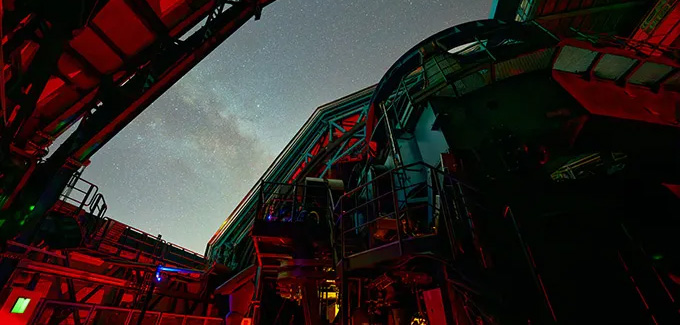
The Vera Rubin Observatory in Chile started its decade-long survey of the sky this year. Located on a high, dry mountaintop, the observatory will take a patchwork quilt of wide-field images to cover the entire Southern Hemisphere’s nighttime view every couple of days.Astronomers can play those images like a flipbook to create the greatest cosmic movie ever made.
Vera Rubin will capture how cosmic phenomena change over time and catch short-lived events like supernovas and fast-moving objects like asteroids. High-precision maps of billions of galaxies and stars will help astronomers learn more about the history and evolution of the Milky Way, the contents of our own solar system and the nature of dark matter and dark energy.
An inconstant cosmos
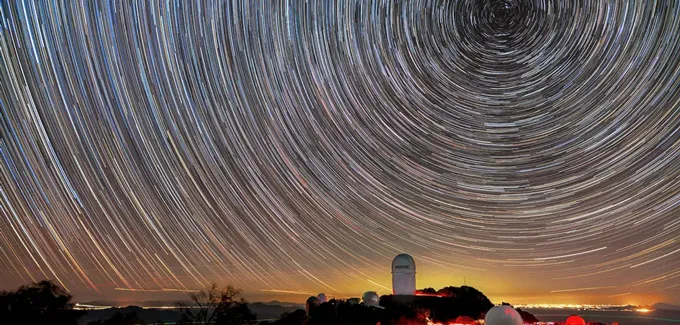
Speaking of which, the shocking finding that dark energy could change gained momentum. Dark energy, the mysterious force that drives the expansion of the universe to go faster and faster, was long thought to be a constant force, exerting the same outward influence over cosmic history. In 2024, data from the Dark Energy Spectroscopic Instrument, or DESI, suggested that instead, dark energy could change over time. Scientists expected this hint of “dynamical” dark energy to fade with more data, but the opposite happened. Now we have three years of DESI data covering 14 million galaxies and quasars. The case for dynamical dark energy is even stronger, stunned scientists reported in March.
One small step for private moon landers
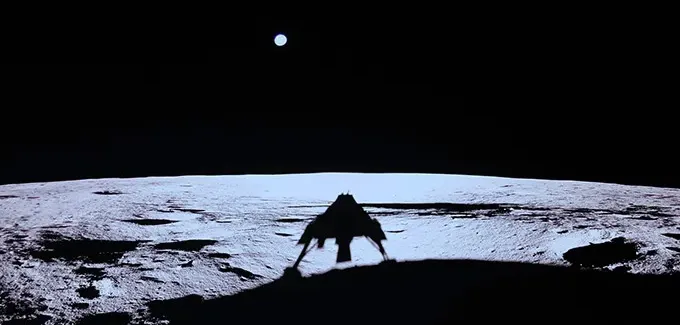
This year, a private company finally landed a spacecraft on the moon without crashing or tipping over. Blue Ghost, built by Texas-based Firefly Aerospace, touched down softly in Mare Crisium on March 2. The lander operated for one lunar day (about 14 Earth days) plus five hours into the lunar night. It spent its time testing a bevy of scientific instruments, including a GPS-like system for the moon, a robotic drill, an X-ray telescope and a device to measure the stickiness of moon dust. It also observed a total eclipse from the moon’s surface.
Blue Ghost is just one of many private landers with lunar dreams. But two others that launched this year, the Athena lander from Houston-based Intuitive Machines and the Resilience lander from Tokyo-based company ispace, were unsuccessful. And plans to have private companies like SpaceX or Blue Origin land astronauts on the moon as part of NASA’s Artemis missions are in flux heading into 2026.
It could always be worse
If 2025 was a hard year, take comfort: At least Earth hasn’t been flung out of the solar system by a passing star.
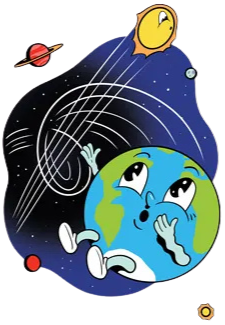
That’s a real possibility, scientists calculated in May. If another star comes close enough to the sun, its gravity could send Mercury’s orbit jiggling out of control.Mercury could collide with either the sun or Venus, causing a chain reaction in which Earth either collides with Venus or Mars, falls into the sun, or gets flung toward Jupiter and booted from the solar system altogether.
luckily, the odds of any of that happening to earth in the next 5 billion years is just 0.2 percent.But this story captured Science News readers’ imaginations. It was our third most-read story of the year.





![Early Type 1 Diabetes Detection: Symptoms & Prevention [Podcast]](https://i0.wp.com/kevinmd.com/wp-content/uploads/Design-2-scaled.jpg?resize=330%2C220&ssl=1 "Early Type 1 Diabetes Detection: Symptoms & Prevention [Podcast]")