
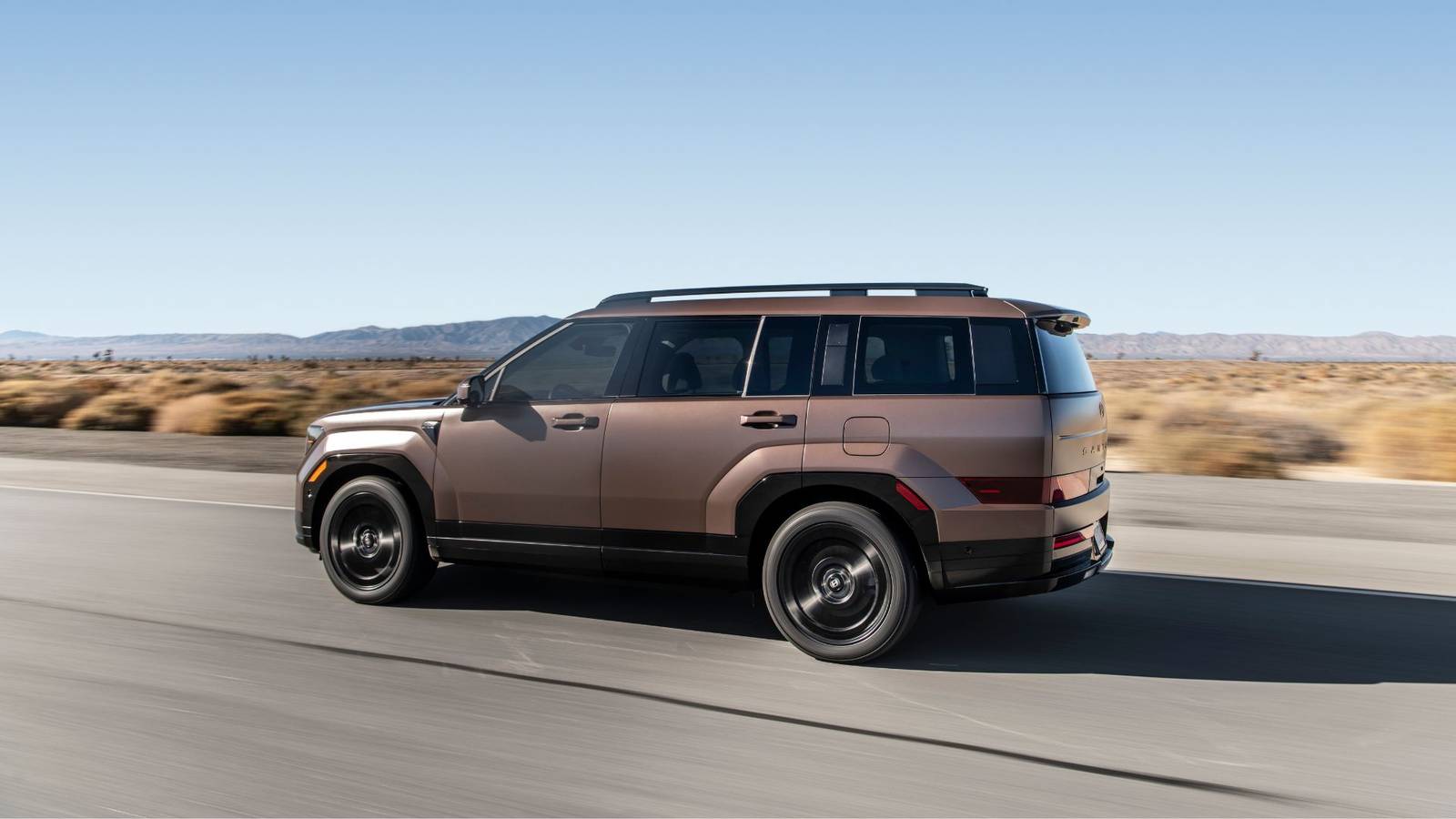
The Intelligence Shift: Why the Hybrid SUV Has Become the Smartest Family Buy of 2026
For decades, the formula for the ultimate family SUV was simple: more displacement, more horsepower and more brute force. If you wanted to haul a week’s worth of camping gear or a full carload of passengers, you bought a heavy, gas-hungry engine that could muscle through any obstacle. But as we move through the second quarter of 2026, that era of “mechanical dominance” is rapidly being replaced by an era of “computational intelligence.”
Today’s families are no longer just looking for a vehicle that can move weight; they are looking for a vehicle that can manage a lifestyle. The modern consumer is increasingly discerning, prioritizing seamless connectivity, predictive safety, and, most importantly, a sophisticated balance of efficiency and endurance. This shift in priority has pushed the hybrid SUV to the forefront of the market, cementing its status as the most pragmatic and “intelligent” choice for the contemporary household.
As a technology editor who has spent years watching the convergence of software and hardware, I find this transition fascinating. We are witnessing the automotive industry undergo a fundamental pivot. The “smartest” vehicle is no longer defined solely by its infotainment screen, but by how its electrified powertrain, artificial intelligence, and software-defined architecture work in concert to reduce the cognitive and financial load on the driver.
The Death of Brute Force: A New Era for the Family Vehicle
The traditional SUV was a blunt instrument. It relied on large-capacity internal combustion engines (ICE) to provide the torque necessary for heavy loads. While effective in a vacuum, this approach is increasingly at odds with the realities of modern driving. In an era of urban congestion, stop-and-go school runs, and rising fuel costs, the inefficiency of a pure ICE powertrain has become a significant liability.
The rise of the hybrid SUV represents a sophisticated engineering solution to this problem. By integrating an electric motor with a highly efficient gasoline engine, manufacturers have managed to decouple “power” from “waste.” In a hybrid system, the electric motor handles the high-energy, low-efficiency tasks—such as initial acceleration and low-speed crawling—while the gasoline engine operates in its most efficient RPM range for sustained cruising. This synergy provides the “best of both worlds”: the immediate, silent torque of an electric vehicle (EV) and the long-range reliability of a traditional engine.
This evolution is not just about fuel economy; it is about the refinement of the driving experience. The smoothness of a hybrid transition, the reduction in cabin noise during electric-only modes, and the ability to navigate suburban environments with minimal emissions have changed the way families interact with their vehicles. The SUV has evolved from a loud, heavy machine into a quiet, intelligent mobile sanctuary.
The Hybrid “Goldilocks” Zone: Efficiency Without Anxiety
One of the most significant hurdles to the widespread adoption of full battery-electric vehicles (BEVs) has remained consistent: range anxiety and the infrastructure gap. While the charging network has expanded significantly, the logistical reality of long-distance family travel—often involving unpredictable stops and varying charger availability—remains a friction point for many households.
Hybrid SUVs have effectively occupied the “Goldilocks” zone of the current automotive landscape. They offer a bridge that allows families to participate in the electrified revolution without the logistical constraints of a pure EV. For the parent managing a tight schedule, the ability to drive to a destination without calculating kilowatt-hours or searching for a high-speed charger is a massive psychological advantage.
the maturity of hybrid technology in 2026 means these systems are more reliable and more integrated than ever before. We are seeing a move away from “bolt-on” hybrid systems toward fully integrated electrified architectures. This results in better energy management, where the vehicle can intelligently decide when to draw from the battery and when to engage the engine based on GPS data, traffic patterns, and even driver behavior. This level of predictive energy management is a hallmark of the “smart” SUV.
The Software-Defined Cabin: Where AI Meets Utility
As a tech journalist, this is where the story truly becomes interesting. The “smartness” of a 2026 hybrid SUV is deeply rooted in its identity as a software-defined vehicle (SDV). The hardware—the engine, the battery, the seats—is now essentially a platform for the software that governs the experience.
Artificial Intelligence (AI) has moved from a novelty feature in the dashboard to a core component of the vehicle’s operating system. Modern hybrid SUVs are utilizing AI in several critical ways:
- Predictive Driver Assistance: Rather than just reacting to a sudden brake light, AI-driven Advanced Driver Assistance Systems (ADAS) now use computer vision and sensor fusion to anticipate potential hazards seconds before they manifest, adjusting the hybrid powertrain’s response to prepare for an emergency stop or an evasive maneuver.
- Personalized User Experiences: Through machine learning, vehicles are beginning to understand the nuances of a family’s routine. The car can pre-condition the cabin temperature, suggest optimized routes based on real-time school schedules, and even adjust the driving dynamics (from “Eco” to “Sport”) based on the driver’s historical preferences.
- Over-the-Air (OTA) Evolution: Perhaps the most transformative aspect of the SDV is the ability to improve the vehicle after it has left the dealership. Much like a smartphone, a 2026 hybrid SUV can receive software updates that improve battery management efficiency, refine autonomous driving algorithms, or introduce new infotainment features, effectively extending the vehicle’s technological relevance.
For a family, this means the car becomes a living entity that evolves alongside them. The connectivity suite—integrating seamless smartphone mirroring, high-speed 5G data, and multi-zone entertainment—ensures that the cabin is a productive and engaging space, whether it’s used as a mobile office for a parent or a gaming hub for children.
Market Landscape: Navigating the 2026 SUV Segment
The 2026 market is crowded, but the distinction between “traditional” and “smart” hybrids is becoming clear. When evaluating the best options for a family, the decision often comes down to the specific intersection of size, tech integration, and powertrain type.
In the compact segment, we see highly efficient models that focus on urban agility and maximum fuel economy. These are the vehicles for small families or city dwellers who want the utility of an SUV without the footprint. In the mid-size category—often considered the “sweet spot” for most households—the competition is fiercest. Here, the focus is on the balance of cargo space, safety tech, and the sophistication of the hybrid system.
For larger families, full-size hybrid SUVs are the new standard. These vehicles have successfully moved away from the “truck-like” feel of previous generations, offering instead a more refined, car-like driving experience that belies their massive interior volume. The key differentiator in this segment is how well the manufacturer has integrated the hybrid system to manage the significant weight of a large vehicle without sacrificing the “zip” that modern drivers expect.
When choosing, families must also consider the distinction between standard hybrids (HEV) and Plug-in Hybrids (PHEV). While HEVs are the ultimate “set it and forget it” option, PHEVs offer a compelling middle ground for those with home charging capabilities, allowing for significant all-electric commuting while retaining a gasoline backup for long trips.
| Feature | Standard Hybrid (HEV) | Plug-in Hybrid (PHEV) | Full Electric (BEV) |
|---|---|---|---|
| Primary Energy Source | Gasoline + Self-charging Battery | Gasoline + Rechargeable Battery | Electricity Only |
| Charging Requirement | None (Regenerative Braking) | Plug-in recommended for max benefit | Mandatory daily/weekly charging |
| Range Anxiety | Minimal (Gasoline backup) | Minimal (Gasoline backup) | Moderate (Infrastructure dependent) |
| Best Use Case | General commuting & long trips | Short electric commutes + long trips | Local commuting & planned trips |
Key Takeaways
- Intelligence over Displacement: The smartest SUVs in 2026 prioritize software, AI, and efficient hybrid powertrains over large, high-displacement engines.
- The Hybrid Advantage: Hybrids offer a “Goldilocks” solution, providing the efficiency of electric power without the infrastructure-related range anxiety of full EVs.
- Software-Defined Experience: Modern SUVs are increasingly defined by their ability to receive OTA updates, ensuring that safety and tech features evolve over the life of the vehicle.
- Economic Pragmatism: Hybrid technology offers a lower total cost of ownership through improved fuel economy and more efficient energy management.
- Safety through AI: Advanced driver assistance is no longer just reactive; it is becoming predictive, using AI to enhance family safety.
Frequently Asked Questions
Q: Are hybrid SUVs more expensive to maintain than gas-only SUVs?
A: Generally, no. While hybrid systems are more complex, they often experience less wear on traditional components like brake pads due to regenerative braking. Most major manufacturers also provide extensive warranties on the hybrid battery components to alleviate consumer concern.

Q: How much fuel can a family actually save with a hybrid?
A: Savings vary based on driving habits, but in typical suburban and urban environments—where stop-and-go driving is common—hybrids can offer significantly better efficiency than their pure ICE counterparts.
Q: Will a hybrid SUV hold its value in the future?
A: As the market continues its shift toward electrification, vehicles with proven, efficient hybrid technology are expected to maintain strong resale values compared to pure internal combustion vehicles.
Q: Can a hybrid SUV handle heavy loads like camping gear or large families?
A: Yes. Modern hybrid powertrains are specifically engineered to provide high torque at low speeds, making them exceptionally capable of handling heavy loads and multiple passengers.
The automotive landscape continues to shift as manufacturers prepare for their next round of quarterly technological updates and new model year announcements. Stay tuned for our upcoming deep-dive into the specific software ecosystems of the leading 2026 hybrid models.
What do you look for in a family vehicle? Is it the tech, the efficiency, or the space? Let us know in the comments below and share this article with your fellow tech enthusiasts.