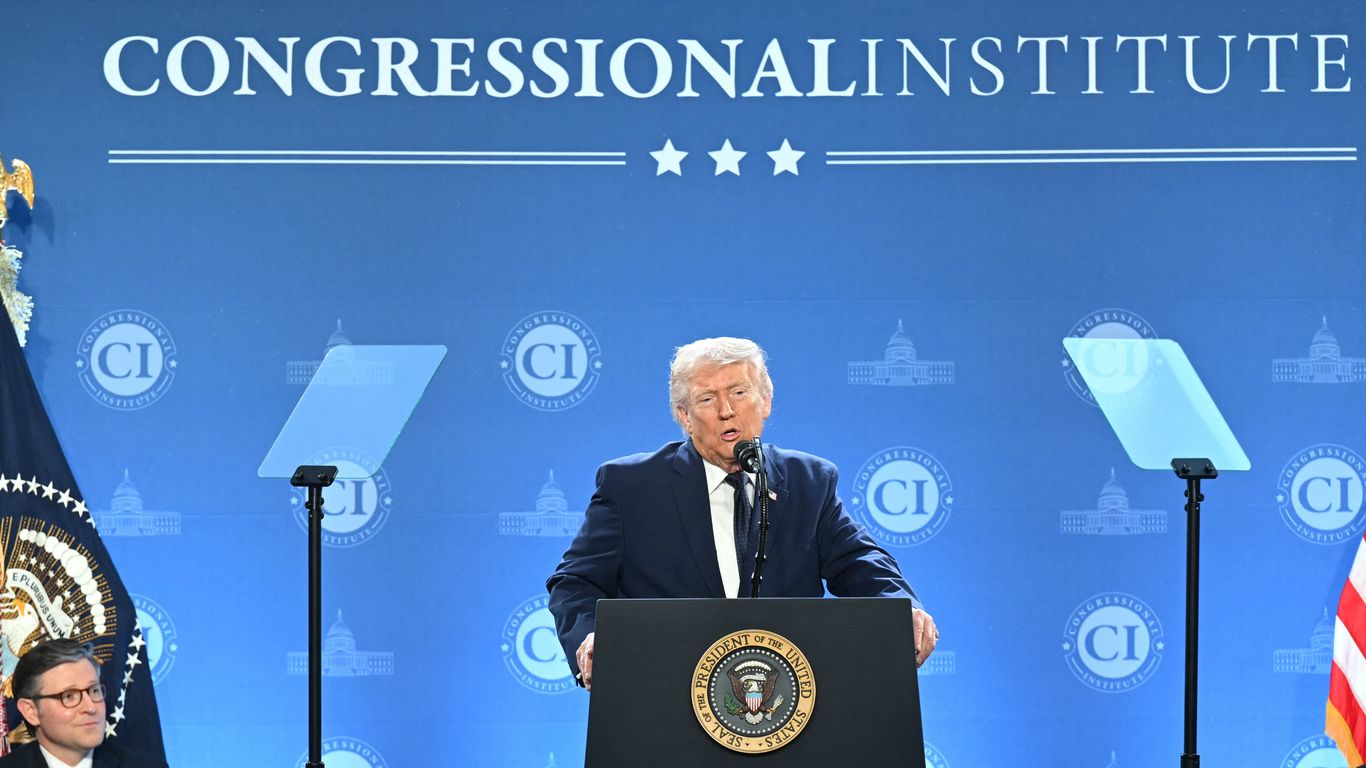
Doral, Florida – As the 2026 midterm elections loom, Republicans are recalibrating their strategy, aiming to retain control of the House of Representatives amidst historical headwinds. A recent strategy session at the GOP retreat in Doral, Florida, revealed a shift in messaging, focusing on economic concerns and perceived Democratic vulnerabilities rather than relying on the tactics that defined the 2024 campaign cycle. This pivot comes as President Trump faces ongoing legal challenges and unfavorable polling numbers, adding complexity to the party’s efforts to maintain its majority.
The midterm elections are traditionally viewed as a referendum on the sitting president and their party, and history suggests a challenging path for the GOP. Republicans lost 41 House seats during Trump’s first midterm in 2018, and President Obama’s Democrats suffered a significant loss of 63 seats in 2010. But, Speaker Mike Johnson and President Trump are attempting to defy these trends by concentrating on what they perceive as weaknesses in the Democratic “brand,” particularly regarding economic policy, crime, and border security. According to a November 2025 poll, 52% of voters held an unfavorable view of the Democratic Party, a statistic Republicans hope to exploit.
A key element of the revised strategy, as outlined during the retreat, involves a deliberate move away from the more hardline rhetoric on immigration that characterized the 2024 campaign. White House Deputy Chief of Staff James Blair reportedly advised lawmakers to de-emphasize “mass deportations,” a central tenet of the previous election cycle. Instead, the focus is to shift towards prioritizing the deportation of individuals with a history of violent crime. This adjustment reflects a recognition that the “mass deportations” message may have alienated moderate voters and proved politically unsustainable. The shift also comes after Representative Darrell Issa (R-CA) announced his retirement in March 2026, adding to a growing number of lawmakers leaving Congress.
Shifting the Narrative: Crime, the Economy, and Border Security
The core of the Republican strategy centers on reminding voters of Democratic positions on key issues during the Biden administration. This includes highlighting concerns about crime rates, particularly in major cities, and criticizing policies such as cashless bail, which Republicans argue contribute to rising crime. The GOP intends to emphasize what they characterize as a lack of effective border security measures, capitalizing on ongoing debates surrounding immigration policy. The strategy aims to paint Democrats as out of touch with the concerns of everyday Americans and unable to deliver on promises of safety and economic stability.
The messaging push is being coordinated by a team of Trump’s top advisors, including Chris LaCivita, his 2024 co-campaign manager, and James Blair. They are working in conjunction with Chris Winkelman, president of the Congressional Leadership Fund, a super PAC closely associated with Speaker Johnson, and Richard Hudson, chair of the National Republican Congressional Committee. These individuals reportedly reminded lawmakers of the GOP’s significant financial advantage, emphasizing the importance of strong organization and a clear message in a closely contested election cycle. According to reports from February 2026, the GOP held an “unprecedented cash advantage” heading into the midterms.
Navigating a Challenging Political Landscape
Despite the strategic adjustments, Republicans face significant challenges. President Trump’s approval ratings remain consistently underwater, hovering in the low 40s, presenting a hurdle for the party as they attempt to rally support. A record number of lawmakers from both parties are choosing to retire, creating uncertainty and potentially opening the door for challengers. As of March 2026, 34 Republicans and 21 Democrats have announced their intention to leave the House at the end of the current Congress, according to data from the House Press Gallery. Historically, the party with more departures tends to lose seats, further complicating the GOP’s efforts to retain control.
The current congressional map also presents a challenge for Republicans. With a relatively small number of truly competitive districts – estimated to be around two dozen – Democrats have a clear path to regaining the majority if they can outperform Vice President Harris by a mere 3% in those key races. This underscores the importance of voter turnout and targeted campaigning in the coming months. The redistricting process, completed in February 2026, has created a more challenging landscape for the GOP, requiring them to focus on maximizing their support in key districts.
The Shadow of Impeachment and Political Polarization
Adding another layer of complexity to the political landscape is the potential for further polarization and political conflict. Speaker Mike Johnson has suggested that Democrats would likely move to impeach President Trump again if they were to regain control of the House in the 2026 midterm elections. This assertion, made in early March 2026, reflects the deep partisan divisions that continue to characterize American politics. Recent attacks by President Trump on Democrats, labeling them as engaging in “sedition,” have drawn criticism and fueled further animosity. Speaker Johnson defended these remarks, arguing that Democrats were acting “wildly inappropriate” by suggesting military members should disobey orders, as reported by Politico in November 2025. Newsweek also reported on Johnson’s response to Trump’s controversial “punishable by death” remark about Democrats, with Johnson characterizing the actions of some Democrats as “seditious.”
The current political climate is also marked by a high degree of distrust and skepticism among voters. The constant barrage of negative campaigning and partisan attacks has eroded public confidence in political institutions and leaders. This makes it even more challenging for both parties to connect with voters and build consensus around key issues. The ability to overcome this distrust and offer a compelling vision for the future will be crucial for success in the 2026 midterm elections.
Looking Ahead: Key Dates and Potential Outcomes
The coming months will be critical as both parties ramp up their campaign efforts and attempt to sway voters. The focus will likely remain on the economy, crime, and border security, with each side attempting to frame the issues in a way that resonates with their base and appeals to undecided voters. The outcome of the 2026 midterm elections will have significant implications for the future of American politics, potentially shaping the legislative agenda and the balance of power in Washington for years to come.
The next key date to watch is the filing deadline for candidates, which varies by state but typically falls in the spring. Following the primaries, the general election campaign will intensify, with candidates engaging in debates, rallies, and extensive advertising campaigns. The election itself is scheduled for November 2026, and the results will be closely watched by political analysts and observers around the world.
As the political landscape continues to evolve, it is essential for voters to stay informed and engaged. The future of our country depends on active participation in the democratic process. We encourage readers to share their thoughts and opinions in the comments section below and to share this article with their friends and family.
Keep reading