
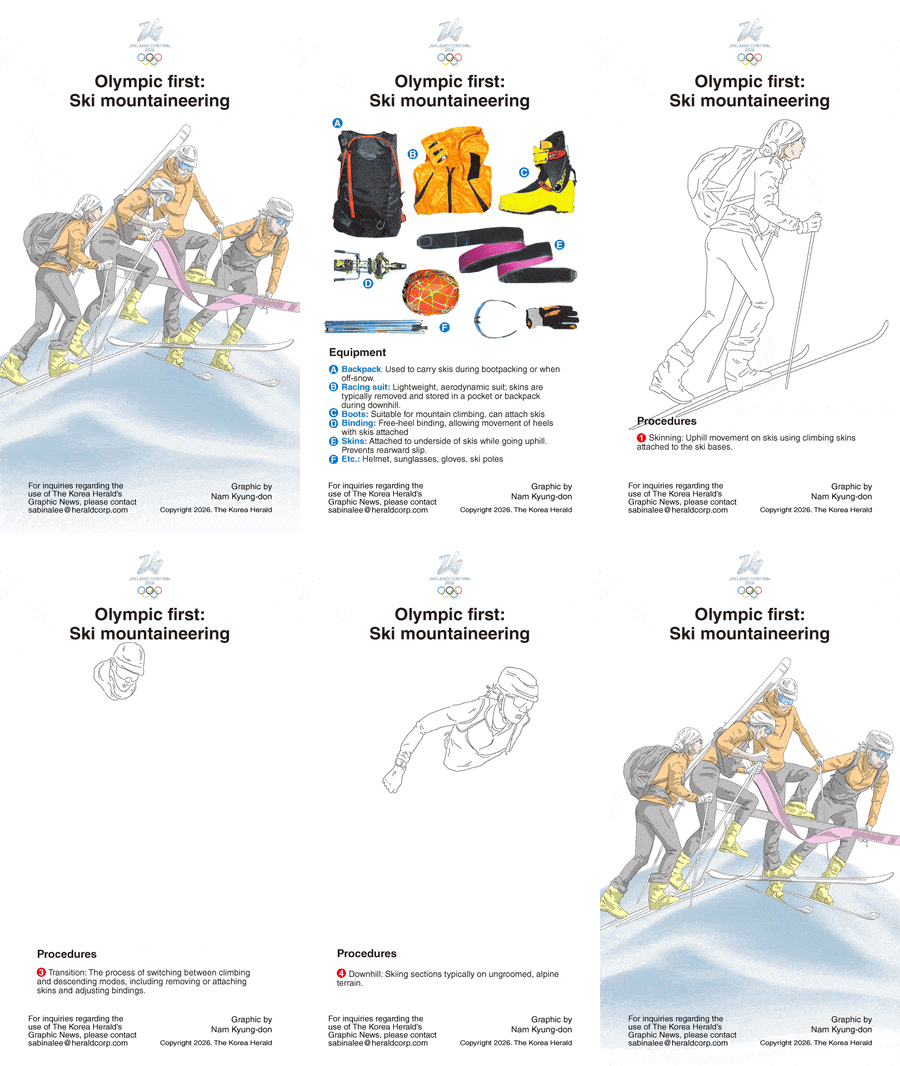
The 2026 Winter Olympics in Milan and Cortina d’Ampezzo, Italy, will mark a historic moment for the sport of ski mountaineering, also known as skimo. Making its Olympic debut at the 25th edition of the Winter Games, skimo represents a thrilling addition to the program, blending the endurance of cross-country skiing with the technical skill of mountaineering. This inclusion reflects a growing global interest in the sport and its alignment with the alpine traditions of the host region.
For years, skimo has been a beloved pursuit in the Alps, but its reach has expanded significantly in recent decades. The International Ski Mountaineering Federation (ISMF) successfully lobbied the International Olympic Committee (IOC) for inclusion, highlighting the sport’s increasing participation worldwide, its commitment to sustainability, and its natural fit within the mountainous Italian landscape. The IOC approved skimo for the Games in 2019, paving the way for its debut in Milan-Cortina.
What is Ski Mountaineering?
Ski mountaineering is a demanding discipline that tests athletes’ all-around abilities. It combines uphill ascents – often on foot with skis strapped to backpacks – with downhill descents, requiring a unique blend of physical strength, technical proficiency, and strategic thinking. Competitors navigate challenging terrain, transitioning seamlessly between climbing and skiing. The sport demands not only speed and endurance but also careful equipment selection and efficient movement in the mountains. Courses are designed to push athletes to their limits, incorporating steep slopes, technical sections, and varied snow conditions.
The equipment used in skimo is specialized and lightweight. Skis are typically narrower and lighter than those used in traditional alpine skiing, allowing for more efficient uphill travel. Bindings are designed to release for climbing and securely lock down for descents. Athletes also utilize climbing skins – adhesive strips attached to the base of the skis – to provide traction on uphill sections. Backpacks are essential for carrying skis during climbing portions, and appropriate clothing and safety gear are crucial for navigating mountain environments.
The Road to Olympic Inclusion
The journey to Olympic recognition wasn’t immediate. The ISMF, founded in 2002, worked diligently to standardize rules, promote the sport globally, and demonstrate its appeal to the IOC. The International Ski Mountaineering Federation played a pivotal role in advocating for skimo’s inclusion, emphasizing its growing international federation membership and the increasing number of skimo races held worldwide. The federation highlighted the sport’s sustainability, noting its minimal environmental impact compared to some other winter sports. The natural synergy between skimo and the mountainous terrain of the Milan-Cortina region further strengthened the case for its inclusion.
The IOC’s decision to add skimo to the Olympic program reflects a broader trend towards embracing sports that appeal to younger audiences and showcase athleticism in natural environments. Ski mountaineering’s combination of physical challenge, technical skill, and stunning scenery aligns with this trend. The inclusion of skimo also diversifies the Winter Olympics program, offering a new and exciting spectacle for viewers around the globe.
The Format at Milan-Cortina 2026
The skimo program at the 2026 Winter Olympics will feature several events, testing different aspects of the sport. Details regarding the specific format and number of medals awarded are still being finalized by the IOC and the ISMF. Yet, This proves expected to include individual and team competitions, with both uphill and downhill components. The courses will be designed to challenge athletes’ endurance, technical skills, and strategic decision-making.
The competition format will likely incorporate elements of both “individual” and “sprint” races. Individual races will test athletes’ overall endurance and ability to navigate long, challenging courses. Sprint races will focus on short, intense bursts of speed and technical skill. Team events will showcase the importance of collaboration and strategy. The exact details of the course design and competition rules will be released closer to the Games.
Sustainability and the Sport
One of the key arguments for skimo’s inclusion in the Olympics was its inherent sustainability. The sport relies on human power and minimal infrastructure, reducing its environmental footprint. Athletes typically access mountain terrain using their own physical strength, minimizing the need for motorized transport. The ISMF has also implemented guidelines to promote responsible mountain practices and minimize the impact of skimo events on the environment. The Olympics website highlights the sport’s commitment to environmental responsibility.
Looking Ahead: The Future of Skimo
The inclusion of ski mountaineering in the 2026 Winter Olympics is expected to significantly boost the sport’s popularity and visibility worldwide. The Games will provide a platform to showcase skimo to a global audience, inspiring new participants and fostering further development of the sport. The ISMF anticipates increased investment in skimo programs and infrastructure, as well as greater participation in skimo races and events.
Beyond the 2026 Games, skimo’s future looks bright. The sport’s growing community, its commitment to sustainability, and its thrilling combination of athleticism and adventure position it for continued success. The potential for skimo to become a mainstay of the Winter Olympics program is high, and the sport is poised to attract a new generation of athletes and fans.
Utah, specifically Solitude, is also positioning itself as a potential host for skimo events, potentially even future Olympic competitions. As reported by the Salt Lake Tribune, the state is actively developing its skimo infrastructure and promoting the sport to attract future events.
The 2026 Winter Olympics will be a landmark event for ski mountaineering, marking its arrival on the world’s biggest sporting stage. As athletes prepare to compete in Milan-Cortina, the sport is poised to captivate audiences and inspire a new generation of mountain enthusiasts.
The next step for the ISMF is finalizing the qualification process for the 2026 Olympic team. Athletes around the world are currently competing in ISMF-sanctioned events to earn points and secure their place at the Games. Further details on the qualification criteria can be found on the ISMF website. Stay tuned for updates on the competition schedule and athlete profiles as the Games approach. We encourage readers to share their thoughts on this exciting new Olympic sport in the comments below.


