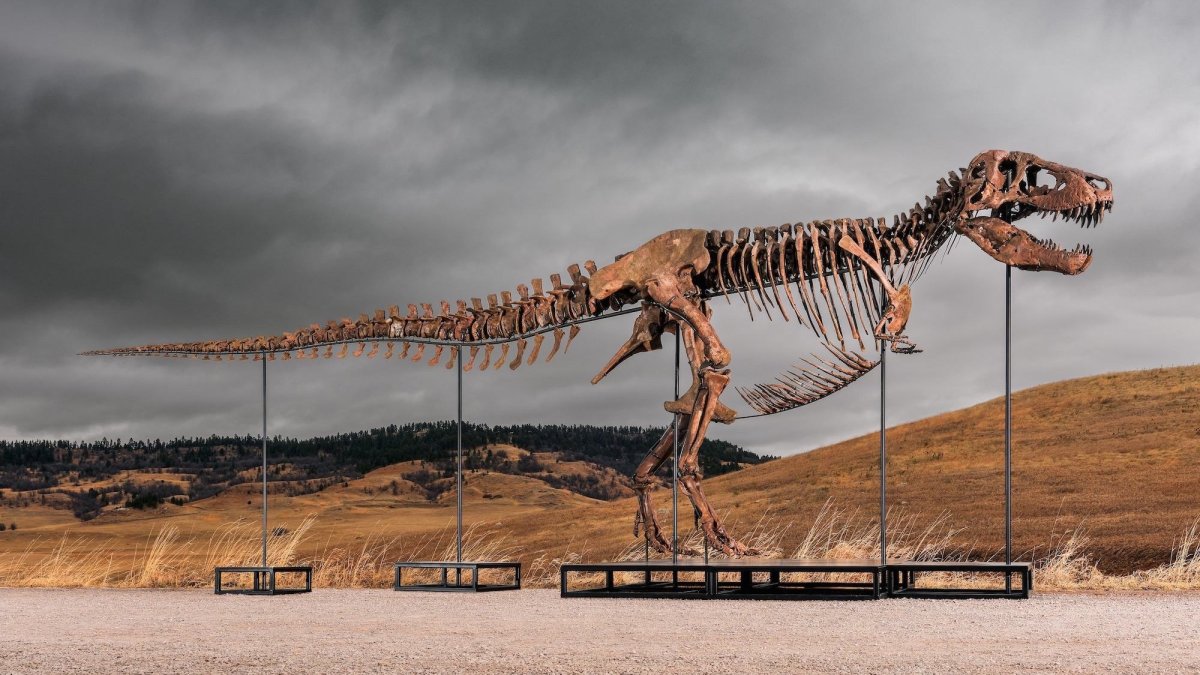
For dinosaur enthusiasts and high-end collectors, a monumental opportunity is approaching. A rare, 12.5-foot tall Tyrannosaurus rex skeleton, identified as “Gus,” is set to hit the auction block, with experts at Sotheby’s estimating its value between $20 million and $30 million. This high-profile sale represents one of the most significant paleontological specimens ever offered for private acquisition.
The discovery of Gus is a story of persistence and, eventually, a tribute to the man who first identified the potential beneath his own land. Gary “Gus” Licking, a cattle rancher in South Dakota, spent years noticing teeth and bone fragments surfacing on his property. Recognizing that these were likely indicators of a much larger, buried fossil, he reached out to experts to investigate the site further.
A Three-Year Excavation Effort
In 2021, Licking’s intuition proved correct. He partnered with Theropoda Expeditions, led by Thomas Heitkamp, to begin a systematic excavation of a 6,500-acre parcel of his ranch. The process was grueling; paleontologists spent three years in the field, often working for weeks at a time without significant findings before uncovering the massive specimen.
“This specimen took three years to excavate—with the team sometimes working for weeks straight without finding a thing,” Heitkamp noted in a press release regarding the project. The team maintained rigorous documentation throughout the process, creating quarry maps and detailed inventories to ensure the scientific integrity of the find. Sadly, Gary Licking passed away just one year into the excavation, never seeing the fully assembled skeleton that would later be named “Gus” in his honor.
Scientific Significance and Anatomy
Beyond the field work, the project required an additional three years of laboratory preparation. Experts cleaned, identified, and stabilized 183 fossil bones, which constitute approximately 82 percent of the dinosaur’s original skeletal structure. The recovered remains include a well-preserved skull measuring over four feet in length and a complete pelvis, contributing to an overall body length of roughly 38 feet.
“It really does feel like tackling the world’s hardest puzzle, except we have to find all the pieces first,” Heitkamp said. “All those bones separated for 67 million years that we can now, almost magically, fit back together. There’s something deeply satisfying about that.”
The Debate Over Private Ownership
The upcoming auction, scheduled for July 14, 2026, at Sotheby’s, continues a long-standing and often contentious debate regarding the commercialization of natural history. Auctions of major dinosaur specimens have sparked concern within the scientific community since the sale of the T. Rex specimen known as “Sue,” which sold for over $8 million in 1997 and now resides at the Field Museum in Chicago.
Critics of these high-value auctions often argue that moving fossils into private collections limits the ability of researchers to conduct public studies. There are also concerns that the prospect of multimillion-dollar payouts may incentivize the prioritization of marketable fossils over the preservation of smaller, less lucrative, but scientifically vital specimens. In response to these concerns, some nations—including Brazil, South Africa, and Canada—have implemented strict legal protections to prevent the export and private sale of significant paleontological finds.
Public Viewing and Future Prospects
Before the gavel falls in July, the public will have the chance to view Gus firsthand. The skeleton is scheduled for public exhibition at Sotheby’s galleries in New York City beginning July 1, 2026. For Dana Licking, the rancher’s widow, the auction serves as a way to share the legacy of the land her husband loved.
“For me the added bonus was knowing that Gus was just one of the many pieces of history hidden in the land that Gary and I loved to share,” she said. “It will be exciting to see how many others will get to enjoy this spectacular discovery.”
The auction of Gus remains a focal point for the intersection of private property rights and scientific heritage. As the date approaches, the global scientific community continues to monitor how such sales impact the future of fossil research and the availability of specimens for study.
We invite our readers to share their thoughts on the balance between private collection and public scientific access in the comments below.
Worth a look