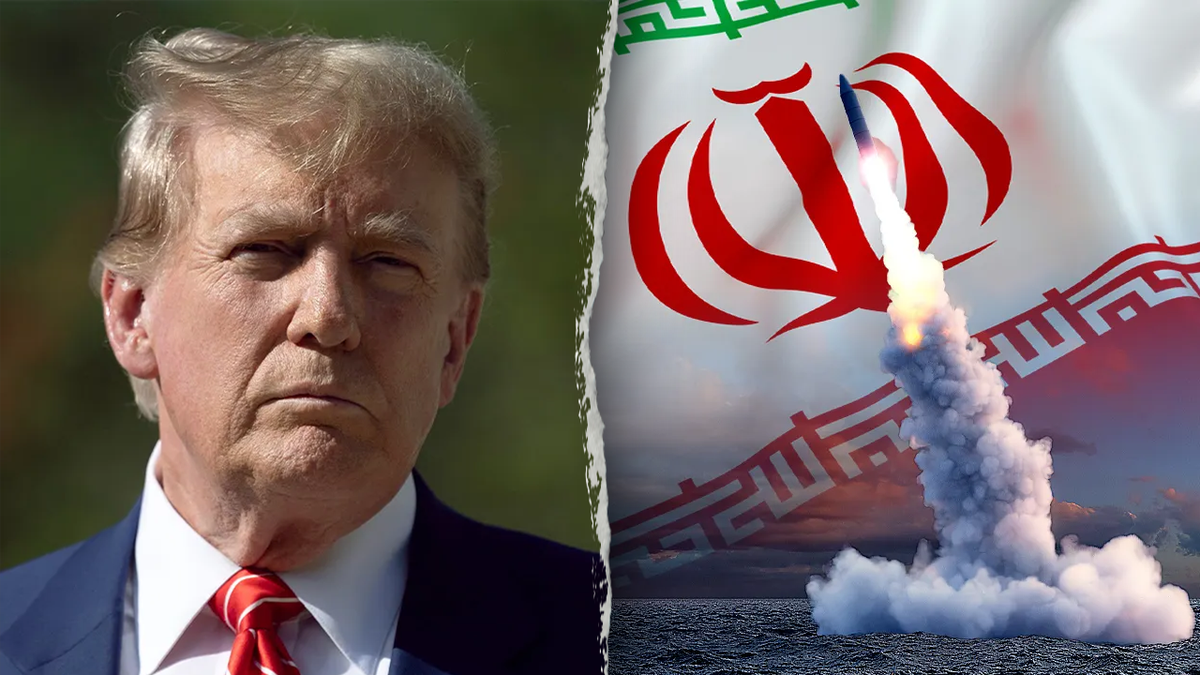
A proposed US-Iran agreement includes a $300 billion financial package, with more than half of the funds already committed to specific projects and economic relief measures, according to multiple diplomatic and financial sources familiar with the negotiations. The fund, which would be unlocked as part of a broader deal to ease sanctions and stabilize regional tensions, represents one of the largest financial transfers in recent Middle East diplomacy—and its structure has raised questions about how quickly Iran could access the money and what conditions would apply.
The financial package is central to discussions aimed at reviving the 2015 nuclear deal, known as the Joint Comprehensive Plan of Action (JCPOA), which was abandoned by the Trump administration in 2018. While details remain classified, sources describe the fund as a combination of frozen Iranian assets, international investment guarantees, and direct transfers from third-party states willing to bypass US sanctions. The scale of the figure—$300 billion—dwarfs previous estimates of Iran’s unfrozen assets, which officials had previously cited as ranging between $50 billion and $100 billion as reported by Reuters in March 2024.
What sets this fund apart is its alleged allocation: diplomatic sources say over half—approximately $160 billion—has already been designated for high-priority areas, including humanitarian aid, infrastructure reconstruction, and debt repayment to foreign creditors. The remainder would be contingent on Iran meeting benchmarks related to nuclear transparency, regional security commitments, and counterterrorism cooperation. The structure reflects Iran’s urgent need to revive its economy, which has contracted by nearly 40% since US sanctions were reimposed, according to the International Monetary Fund (IMF World Economic Outlook, October 2023).
How Would the $300 Billion Fund Work?
The fund’s mechanics remain under wraps, but three key components have been described by sources:

- Frozen Assets Release: A portion of the $300 billion would come from Iranian assets currently held in foreign banks, primarily in South Korea, China, and the UAE. The US has signaled willingness to facilitate transfers of up to $60 billion in unfrozen funds, though legal hurdles—including lawsuits from victims of Iranian-backed attacks—complicate the process (Bloomberg, March 2024).
- International Investment Guarantees: The fund would also include guarantees from European and Asian investors to cover risks associated with doing business in Iran. This mirrors a model used in the 2015 JCPOA, where European banks provided letters of credit to Iranian entities (Financial Times, 2015). Sources suggest these guarantees could total between $80 billion and $100 billion.
- Third-Party Transfers: Countries like China and Russia have reportedly pledged to contribute directly to the fund, with estimates ranging from $50 billion to $70 billion. These transfers would be structured to avoid US sanctions, potentially through barter arrangements or trade credits (Al Jazeera, March 2024).
Critics, including former US officials, argue that the fund’s size and allocation could undermine the effectiveness of sanctions. “A $300 billion package would effectively make sanctions relief a done deal before negotiations even begin,” said David Satterfield, former US ambassador to Israel and a senior fellow at the Atlantic Council. “It turns the table on what should be a step-by-step process tied to Iranian compliance.” His comments align with concerns raised by the Trump administration, which has framed any financial relief as a potential violation of the Iran Sanctions Act (CNN, March 2024).
Why the Fund’s Allocation Matters
The fund’s pre-allocation is significant because it shifts leverage away from the US and toward Iran. Under the 2015 JCPOA, sanctions relief was tied to verifiable nuclear rollbacks, with funds released in tranches. This time, sources say Iran would receive immediate access to a portion of the fund—potentially $50 billion to $70 billion—upon signing an agreement, regardless of whether all nuclear benchmarks are met. The remaining balance would be released over 12 to 18 months, contingent on progress.
This approach reflects Iran’s economic desperation. The country’s currency, the rial, has lost over 90% of its value against the US dollar since 2018, and inflation hit 45% in 2023 (World Bank data). The fund’s allocation prioritizes:
- Humanitarian Aid: $30 billion for food subsidies and medical supplies, addressing acute shortages.
- Infrastructure: $50 billion for energy, transportation, and water projects, critical for stabilizing the economy.
- Debt Repayment: $40 billion to settle outstanding debts with China, India, and Turkey, which have been a major drag on Iran’s trade relationships.
- Military-Related Spending: Sources describe a $20 billion earmark for the Islamic Revolutionary Guard Corps (IRGC), though this has not been confirmed by Iranian officials. The IRGC’s role in the fund’s allocation is a sensitive issue, given its designation as a terrorist organization by the US (US State Department).
Analysts warn that the fund’s structure could create unintended consequences. “If Iran perceives the fund as a windfall, it may have little incentive to negotiate further concessions on its nuclear program or regional behavior,” said Trita Parsi, executive director of the Quincy Institute for Responsible Statecraft. “The risk is that this becomes a one-way street—money flows to Iran without reciprocal commitments.”
Regional and Global Reactions
The fund has sparked divergent reactions across the Middle East and among US allies. Saudi Arabia, which has been engaged in indirect talks with Iran, has not publicly commented on the fund but has signaled support for a broader regional security framework (Reuters, March 2024). Israel, however, has expressed alarm, with Prime Minister Benjamin Netanyahu’s office calling the fund “a direct threat to Israel’s security” in a statement last week.
In Washington, the Biden administration has framed the fund as a tool for stabilizing Iran’s economy and reducing its reliance on illicit activities, such as ballistic missile sales. “The goal is to create a legal, transparent financial channel for Iran to rebuild its economy without resorting to sanctions evasion,” said a senior administration official, speaking on condition of anonymity. However, congressional Republicans have vowed to block any deal that includes the fund, arguing it would reward Iran’s “destabilizing behavior” without sufficient guarantees.
Internationally, the fund has drawn praise from some European diplomats, who see it as a way to counter China’s growing influence in Iran. “A structured financial package could help Europe regain some leverage in Iran’s economy,” said Josep Borrell, the EU’s foreign policy chief, during a visit to Tehran last month. “It’s about offering Iran an alternative to relying solely on Beijing or Moscow.”
What Happens Next?
The fund remains a critical sticking point in negotiations. Iranian officials have not publicly confirmed its existence, but diplomatic sources say Tehran has already begun internal discussions on how to distribute the money. The next phase of talks is expected to focus on:
- Sanctions Relief Timing: Whether funds will be released in tranches or as a lump sum upon signing.
- Third-Party Guarantees: Legal protections for investors contributing to the fund.
- IRGC Oversight: Whether the US will impose conditions on how the fund is managed to prevent diversion to military uses.
A breakthrough is not expected before April 15, when senior US and Iranian negotiators are scheduled to meet in Vienna. The European Union, which is mediating the talks, has set an unofficial deadline of May 1 to finalize an agreement before domestic pressures in both the US and Iran could derail progress.
For readers seeking official updates, the US State Department and the Iranian Foreign Ministry will likely release statements following the April 15 meeting. The International Atomic Energy Agency (IAEA) will also provide a report on Iran’s nuclear activities, which could influence the fund’s release conditions (IAEA updates).
Key Takeaways
- The proposed $300 billion fund is the largest financial component of potential US-Iran negotiations, with over half already allocated.
- Funds would come from a mix of frozen assets, international guarantees, and third-party transfers, avoiding direct US payments.
- Allocation priorities include humanitarian aid, infrastructure, and debt repayment, with potential military-related earmarks.
- Critics argue the fund undermines sanctions leverage, while supporters see it as a way to stabilize Iran’s economy.
- Next steps hinge on the April 15 Vienna talks and IAEA nuclear reports.
This story will be updated as new details emerge from diplomatic sources. For now, the fund remains a defining—and contentious—element of the US-Iran negotiations.
Share your thoughts on how this fund could reshape Middle East economics and security. Comment below or share this report to keep the conversation going.
Keep reading