
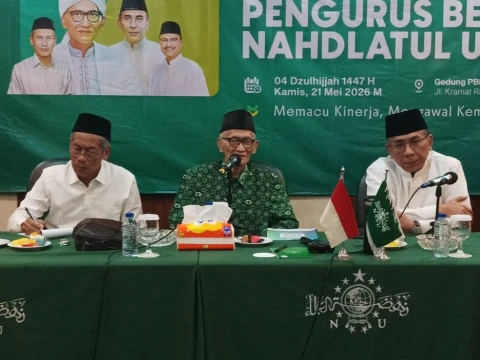
As Indonesia’s largest Islamic organization, Nahdlatul Ulama (NU), moves toward its next major leadership summit, the discourse surrounding the upcoming 35th Muktamar has intensified. Discussions regarding the venue and the selection mechanism for the organization’s executive leadership are currently at the forefront of internal deliberations, reflecting the group’s ongoing commitment to balancing traditional values with modern organizational governance.
The Nahdlatul Ulama, established in 1926, serves as a central pillar in Indonesian civil society, influencing religious, educational, and social policies across the archipelago. The Muktamar, or national congress, acts as the highest decision-making body for the organization, where delegates from across the country gather to determine the strategic direction of the group and elect its Rais Aam (Supreme Leader) and Ketum (General Chairman).
Criteria for the 35th Muktamar Venue
Recent internal discussions within the Syuriyah—the supreme consultative council of the PBNU (Pengurus Besar Nahdlatul Ulama)—have emphasized the importance of selecting a location that aligns with the organization’s identity. The preference for holding the 35th Muktamar within a pesantren (Islamic boarding school) environment is rooted in the organization’s historical foundation as a grassroots movement deeply embedded in traditional religious education.
According to organizational stakeholders, the criteria for the host location are designed to ensure both logistical viability and the preservation of the organization’s scholarly atmosphere. These criteria generally focus on the capacity to accommodate thousands of delegates and the ability to maintain a scholarly environment conducive to deliberative discourse. By prioritizing pesantren as venues, leadership aims to reinforce the connection between the central administration and the local educational institutions that form the backbone of the organization’s membership.
Leadership Selection and the AHWA System
A significant portion of the current debate concerns the selection process for the PBNU leadership. Central to this is the Ahlul Halli wal Aqdi (AHWA) system, a consultative mechanism used to elect the Rais Aam. Proponents of the system argue that it ensures a selection process rooted in religious expertise and consensus, minimizing the potential for divisive political maneuvering during the congress.

The AHWA system, which involves a council of esteemed scholars tasked with selecting the leadership, has been a subject of ongoing discussion in previous congresses. Supporters contend that this method preserves the dignity of the leadership election, while critics occasionally call for more direct voting mechanisms. As the 35th Muktamar approaches, the push to maintain or refine the AHWA system remains a critical agenda item for those focused on organizational stability and internal cohesion.
The Role of Institutional Continuity
Nahdlatul Ulama’s structure is defined by its two-tiered leadership: the Syuriyah, which provides moral and religious guidance, and the Tanfidziyah, which handles executive and administrative functions. The relationship between these two bodies is governed by the organization’s statutes, which are regularly reviewed during the Muktamar to address contemporary challenges.
The 35th Muktamar is expected to address not only leadership succession but also the broader role of the organization in the context of Indonesia’s evolving political landscape. Ensuring that the organization remains a non-partisan force for social good, while effectively managing the interests of its diverse base, remains a primary objective for the current leadership.
Looking Ahead: The Path to the 35th Muktamar
As preparations continue, the focus remains on finalizing the venue and the procedural framework for the upcoming summit. While specific dates and final locations are subject to formal confirmation by the PBNU central board, the ongoing discussions reflect a transparent approach to internal governance. For members and observers, these deliberations are a testament to the organization’s enduring influence and its commitment to institutional longevity.
The next official updates regarding the venue selection and the confirmed schedule for the 35th Muktamar are expected to be released through official PBNU channels. We will continue to monitor these developments as they emerge. We invite our readers to share their perspectives on the importance of organizational transparency in large-scale social movements in the comments section below.