Firming a belly overhang after the age of 60 requires moving beyond traditional floor-based routines like Pilates and focusing on full-body caloric expenditure and muscle preservation, according to fitness professionals. While core-focused practices build localized stability, managing lower abdominal changes involves reducing total body fat and counteracting natural muscle loss. Fitness experts emphasize that standing compound movements provide a more efficient method to build lean tissue, elevate the metabolic rate, and protect aging joints from heavy weighted loads.
As individuals age, physiological shifts alter how the body stores and burns energy. According to data cited by the National Institutes of Health, adults experience a gradual decline in muscle mass each decade starting around age 30, with that reduction accelerating significantly after age 60. Because muscle tissue is metabolically active, losing it causes a corresponding slowdown in metabolism, making fat accumulation easier and weight loss more difficult. Rather than relying on heavy free weights that can strain joints, exercise specialists recommend integrating targeted standing movements into daily routines to maintain functional strength and support long-term metabolic health.
James Bickerstaff, a personal trainer at OriGym, notes that building muscle is particularly important as people age because it helps maintain metabolism and supports long-term weight loss. To address midsection concerns effectively, trainers recommend four specific standing exercises designed to engage the core while working multiple muscle groups simultaneously.
Sit-to-Stand Squats for Core and Lower Body Activation
The sit-to-stand squat replicates one of the most vital movement patterns required for daily independence: rising from a chair. By engaging the largest muscle groups in the lower body while keeping the abdominal wall braced, this exercise burns more calories than isolated ab exercises.
To perform sit-to-stand squats, sit on the edge of a sturdy chair with your feet spaced hip-width apart. Lean forward slightly at the hips, engage your core, and stand up by driving power through your heels. Lower yourself back to the seat with control. Trainers recommend aiming for two to three sets of 8 to 12 repetitions, resting for 60 to 90 seconds between sets.
Step-Ups for Cardiovascular and Strength Conditioning
Step-ups target the glutes, quadriceps, and calves while simultaneously elevating the heart rate, delivering combined strength and cardiovascular benefits. This movement places less stress on the joints compared to traditional lower body exercises like squats or leg presses.
To execute step-ups safely, stand facing a sturdy platform or step. Place one foot firmly onto the elevated surface, press through the heel to lift your body upward, and bring the opposite foot up to meet it. Step down with control, complete all repetitions on one leg before switching sides, and perform two to three sets of 8 to 12 reps per leg with 45 to 60 seconds of rest between sets.
Standing Knee Raises for Deep Abdominal Stability
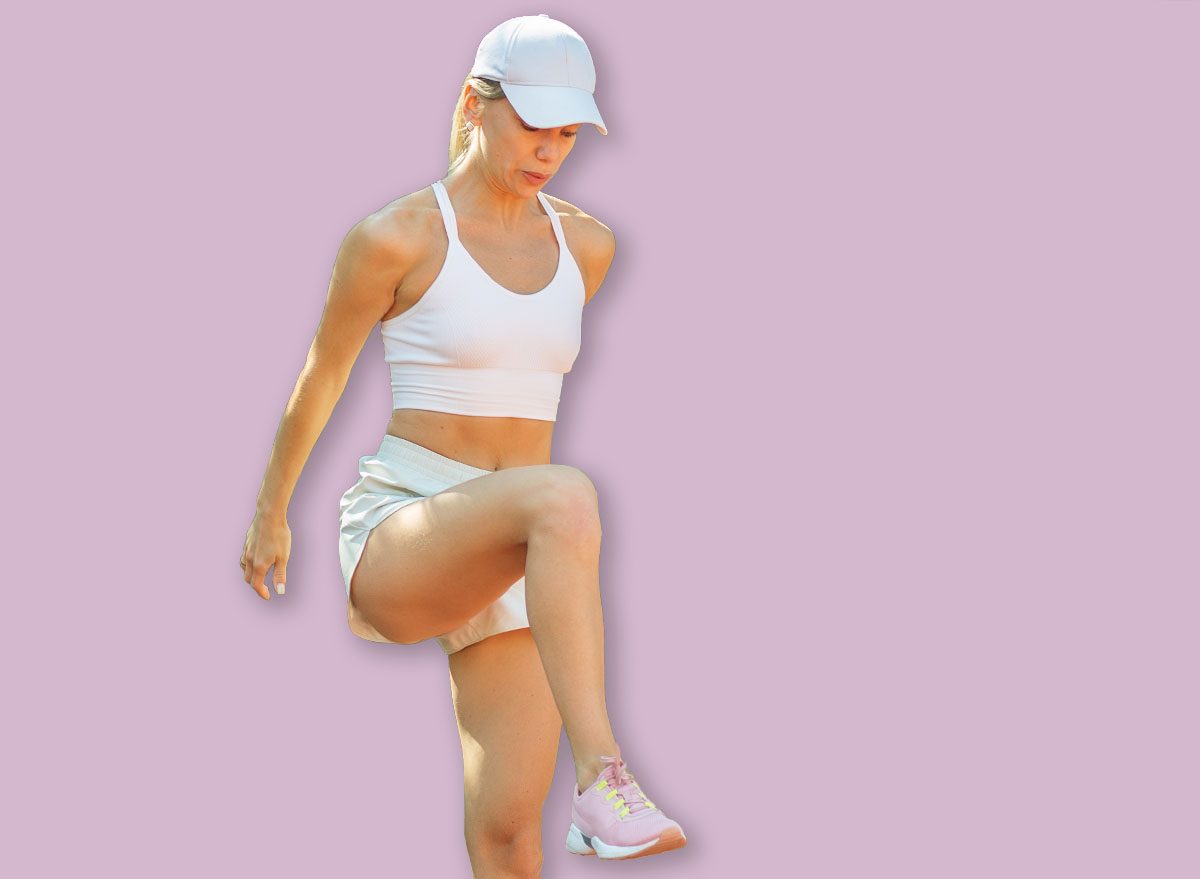
Standing knee raises engage deep abdominal muscles without requiring individuals to get down onto the floor. Bickerstaff explains that standing knee raises strengthen deep abdominal muscles while helping improve balance, coordination, and hip mobility. Lifting one leg at a time forces the core to stabilize the torso actively.
To perform this movement, stand tall with your feet hip-width apart, holding onto a chair or wall for stability if necessary. Flex your abdominal muscles, slowly lift one knee toward your chest without leaning backward, and lower it down with control before switching sides. Aim for two to three sets of 10 to 15 repetitions per side, resting for 45 to 60 seconds between sets.
Standing Wood Chops for Rotational Core Strength
The standing wood chop integrates the entire routine by challenging the core through rotational patterns rather than isolating your abs. This diagonal movement builds the twisting strength and stability utilized during everyday activities such as reaching, lifting, and turning—capacities that naturally decline with age.
To execute a standing wood chop, hold a light dumbbell or medicine ball with both hands beside one hip. Rotate your torso to lift the weight diagonally across your body until your hands finish above the opposite shoulder. Return slowly to the starting position. Perform two to three sets of 10 to 12 repetitions per side, resting for 45 to 60 seconds between sets.
Keep reading