As we age, metabolic shifts and changes in body composition often result in the accumulation of stubborn fat in the lower midsection, commonly referred to as an “apron belly.” While traditional core exercises like crunches are frequently recommended for abdominal toning, medical evidence suggests that a broader, whole-body approach is more effective for those over 50. Achieving a flatter midsection requires a combination of calorie-burning movement, strength training, and nutritional habits that support long-term fat loss, according to research published in Molecular Nutrition & Food Research.
The physiological reality of fat loss is systemic rather than localized. Studies indicate that the body manages fat reduction through a total-body process, meaning that spot reduction—the idea that you can target fat loss to one specific area through exercise alone—is not supported by current scientific consensus. A randomized controlled trial published in Physiological Reports suggests that while aerobic endurance exercise can contribute to fat loss, it is most effective when part of a comprehensive strategy that includes strength training and a consistent caloric deficit.
Why Standing Exercises Outperform Traditional Crunches
For individuals over 50, exercises that engage multiple large muscle groups provide a higher metabolic demand than isolated floor movements. Standing exercises, which require the body to stabilize against gravity, naturally recruit the deep core muscles—the transversus abdominis and obliques—to maintain balance and posture. This “bracing” effect during movement offers a functional advantage over crunches, which primarily isolate the rectus abdominis without the same level of total-body engagement.
By incorporating movements that train the legs, shoulders, and back, you increase the total energy expenditure of your workout. This approach not only builds lean muscle mass, which helps support a faster metabolism, but also improves functional strength for daily activities. The goal is to move the entire body to create a caloric deficit while strengthening the core as a stabilizing unit.
1. Jogging Intervals for Metabolic Conditioning
Jogging intervals are a highly effective way to increase heart rate and improve cardiovascular conditioning. Unlike steady-state cardio, interval training involves alternating between higher-intensity bursts and active recovery periods, which can be more time-efficient for busy schedules. Your core remains engaged throughout the movement to maintain an upright, stable posture while your hips and legs drive the motion.
To perform these correctly, begin with 3 to 5 minutes of easy walking to warm up. Transition into a light jog for 20 to 60 seconds, then return to a walking pace for 60 to 90 seconds. Repeat this cycle for 8 to 12 rounds. Keeping your stride short and landing softly is critical to protecting joint health after 50. Variations such as incline treadmill walking or brisk walking can be used to adjust the intensity based on your current fitness level.
2. Medicine Ball Front Slams for Core Power
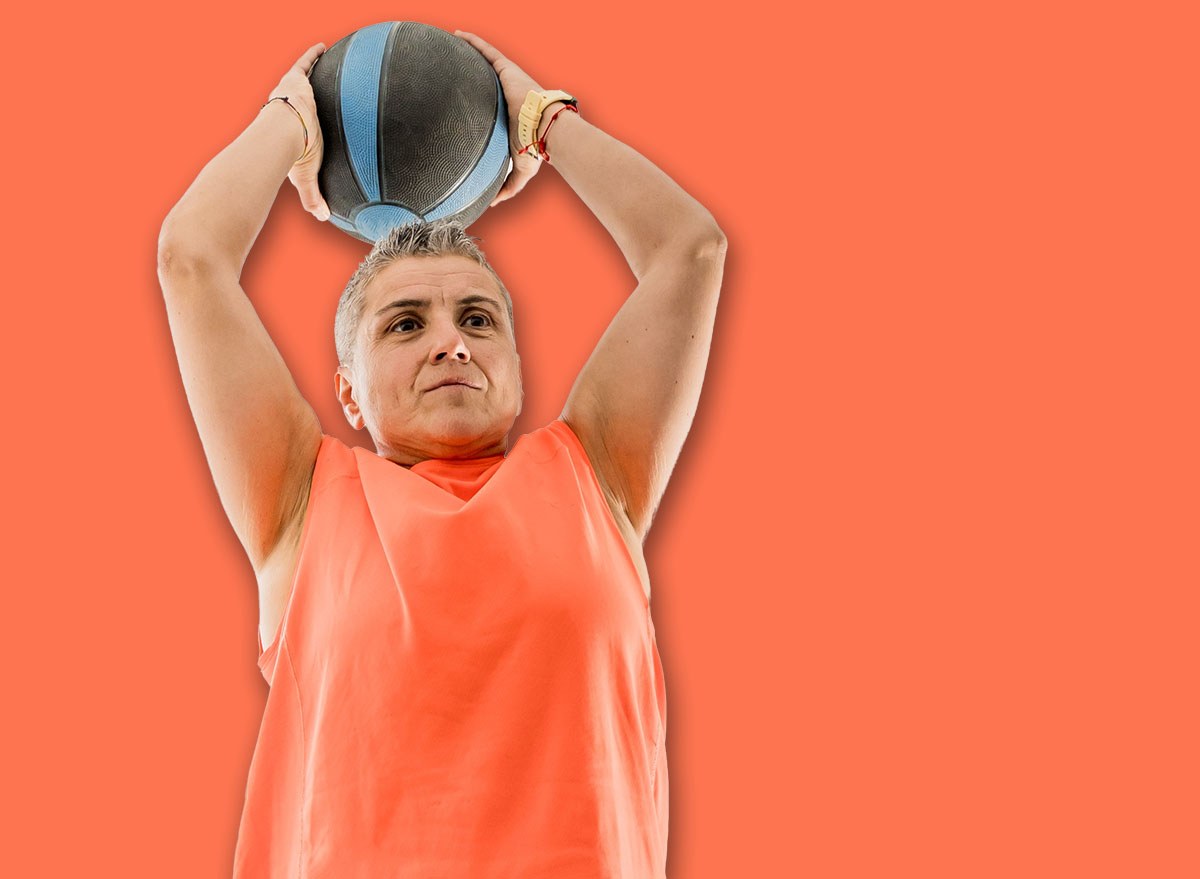
Medicine ball front slams are a dynamic, full-body movement that forces the abdominal muscles to brace against the force of the slam. This exercise targets the shoulders, lats, and legs, while the explosive downward motion engages the core in a way that static floor exercises cannot. It is an excellent tool for improving athletic power and core stability.
Stand with your feet shoulder-width apart, holding a medicine ball. Lift the ball overhead, rising slightly onto your toes to lengthen the torso, then drive the ball down toward the floor using your core and hips. Squat to retrieve the ball and reset your posture before the next repetition. Aim for 3 sets of 8 to 12 repetitions, resting for 45 to 60 seconds between sets. Ensure the movement is controlled to avoid strain on the lower back.
3. Dumbbell Push Press for Total-Body Strength
The dumbbell push press is a compound lift that integrates the lower and upper body, requiring significant core involvement to stabilize the weight as it moves overhead. By using the legs to initiate the upward drive, you can safely move more weight than with a strict shoulder press, which increases the overall stimulus on your muscles and improves bone density—a key consideration for health after 50.
Hold dumbbells at shoulder height with your feet shoulder-width apart. Perform a shallow dip with your knees, then drive through your heels to press the weights overhead. Lock out your arms while keeping your ribs pulled down to prevent arching the back. Lower the weights with control. Perform 3 sets of 6 to 10 repetitions, resting for 60 seconds between sets. This exercise builds the lean strength necessary to support a firmer, more upright posture.
4. Walking Lunges for Balance and Posture
Walking lunges are a functional movement that improves balance, coordination, and lower-body strength. As you step forward and lower your back knee toward the floor, your midsection must work to keep your torso upright and steady. This constant engagement of the core, combined with the heavy lifting demands on the glutes and quadriceps, makes lunges a cornerstone for body composition changes.
Start by standing tall with feet hip-width apart. Step forward into a lunge, ensuring your front knee stays aligned with your ankle. Press through your front foot to return to a standing position, then alternate legs. Perform 3 sets of 8 to 10 repetitions per leg, resting for 45 to 60 seconds between sets. If balance is an issue, consider starting with reverse lunges, which are often easier on the knees and provide a more stable platform for those just beginning a strength routine.
Integrating Nutrition and Consistency
Exercise is only one component of the equation. According to the Molecular Nutrition & Food Research study, abdominal fat reduction is directly linked to lifestyle interventions that include dietary changes. A diet rich in protein and fiber, combined with controlled portions, is essential for maintaining the caloric deficit required for fat loss. Consistency is more important than intensity; it is better to perform three sustainable, high-quality workouts per week than one overly aggressive session that leads to burnout or injury.
If you have questions about your specific health needs or potential limitations, it is recommended to consult with a primary care physician or a certified strength and conditioning specialist before beginning a new exercise program. Tracking your progress through non-scale victories—such as improved energy levels, better posture, and how your clothing fits—can help keep you motivated on your journey toward better health.
Related reading