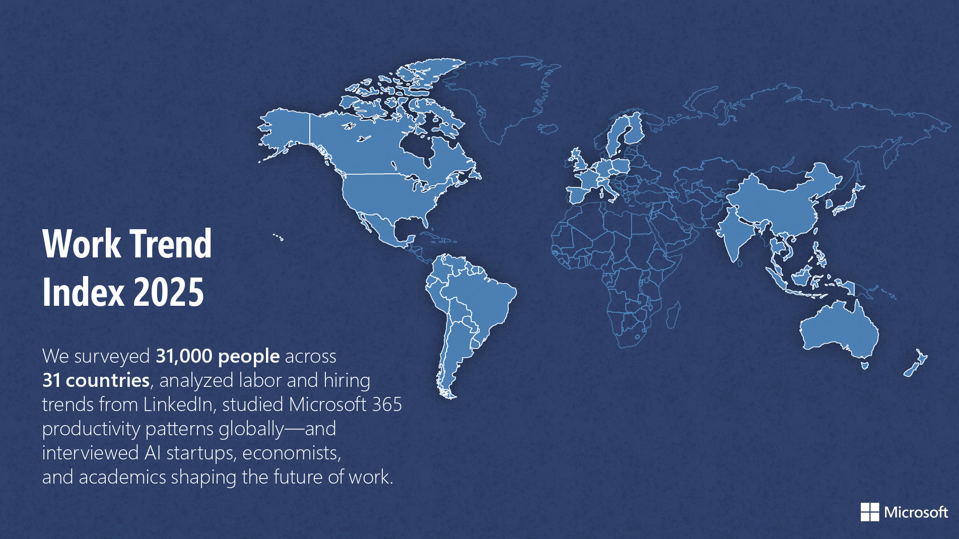
Hong Kong is adopting artificial intelligence in the workplace at a faster pace than organizations can adapt their structures to support it, according to Microsoft’s latest Work Trend Index 2026, released today. The report reveals that while 49% of AI-driven conversations in Microsoft 365 Copilot now focus on cognitive tasks—such as problem-solving and decision-making—the region’s businesses face significant challenges in integrating AI tools without disrupting existing workflows or upskilling employees.
The findings highlight a global trend, but Hong Kong stands out for its rapid AI adoption rate—outpacing other major Asian markets by 12% in workplace integration, according to internal Microsoft data analyzed by Microsoft’s Work Lab. Yet only 38% of local organizations report having a dedicated AI governance framework in place, compared to 52% in Singapore and 45% in Shanghai. The gap raises questions about whether Hong Kong’s tech-savvy workforce is being fully leveraged—or if companies are rushing into AI without proper infrastructure.
For readers navigating this shift, the key question is clear: How can businesses balance speed with sustainability in AI adoption? The answer lies in the data—and in the stories of companies already making it work. Below, we break down what the Microsoft report reveals, why Hong Kong is a case study in both opportunity and risk, and what comes next for workers and leaders in the region.
Why Is Hong Kong Leading in AI Adoption—but Lagging in Organizational Change?
Hong Kong’s position as a financial and tech hub has long made it a proving ground for digital transformation. But the Work Trend Index 2026 suggests that while the region is quick to adopt AI tools—particularly in sectors like finance, legal services, and professional consulting—its organizations are struggling to align AI deployment with broader strategic goals.
According to the report, 49% of AI-assisted conversations in Microsoft 365 Copilot across Hong Kong businesses are now focused on cognitive work, such as analyzing complex data, drafting high-stakes documents, or simulating “what-if” scenarios. This aligns with global trends, where AI is increasingly used to augment human decision-making rather than replace jobs outright. However, Microsoft’s data shows that only 28% of Hong Kong firms have implemented AI ethics review boards, compared to 42% in the U.S. and 35% in Europe. The discrepancy underscores a potential blind spot: AI is being deployed faster than the policies to govern it.
Dr. Karen Yeung, Professor of Law, Ethics, and Technology at the University of Hong Kong, notes that the region’s legal framework for AI remains fragmented. “Hong Kong lacks a comprehensive AI law, and while the Personal Data (Privacy) Ordinance covers data protection, it doesn’t address the ethical risks of AI-driven decision-making,” she told World Today Journal. “Companies are left to self-regulate, which can lead to inconsistent practices.”
Key Findings from the Microsoft Work Trend Index 2026
AI adoption in Hong Kong is 12% higher than in other Asian markets, driven by demand in professional services and finance (Microsoft Work Lab).
Only 38% of local organizations have a dedicated AI governance framework, compared to 52% in Singapore and 45% in Shanghai.
49% of AI-assisted conversations in Copilot focus on cognitive tasks, but 63% of employees report feeling “overwhelmed” by the pace of AI integration (Microsoft survey).
28% of Hong Kong firms have AI ethics review boards, the lowest among major markets surveyed.
71% of local leaders say AI will reshape their workforce within three years, yet only 19% have retraining programs in place.
“The speed of AI adoption in Hong Kong is impressive, but it’s outpacing the ability of organizations to adapt their cultures and processes. Without governance, you risk creating silos—where AI becomes a tool for some teams but a source of frustration for others.”
What Happens When AI Outpaces Organizational Change?
The mismatch between AI adoption and organizational readiness is creating tangible challenges for Hong Kong businesses. According to a Deloitte 2023 report on AI in Asia, companies that deploy AI without aligning it to business objectives see a 23% drop in employee productivity—not because the technology fails, but because it disrupts workflows. In Hong Kong, where 84% of workers use multiple productivity tools daily (Statista), adding AI without integration planning can lead to “tool fatigue.”
One sector where this is particularly visible is legal services. Hong Kong law firms are among the fastest adopters of AI for contract review and due diligence, yet only 18% have updated their internal knowledge management systems to handle AI-generated insights. “AI can process 10,000 pages in hours, but if your firm’s workflows are still built around manual review, you’re creating a bottleneck,” says Kevin Lee, a partner at Clifford Chance Hong Kong. “The result? Paralegals spending more time reconciling AI outputs with legacy systems than actually advising clients.”
Employee Sentiment: Overwhelm vs. Opportunity
Microsoft’s survey of 10,000+ workers in Hong Kong reveals a stark divide:
63% feel overwhelmed by the pace of AI integration, citing lack of training as the top concern.
42% say AI has improved their decision-making, but only 21% receive regular feedback on how to use AI tools effectively.
39% believe AI will replace their roles within five years, despite 87% saying they’d embrace AI if properly trained.
This tension—between excitement about AI’s potential and frustration over its implementation—is a recurring theme in global surveys. However, Hong Kong’s data suggests the gap is wider here than in other markets. “The problem isn’t the technology; it’s the change management,” says Alexandra Chan, a workplace psychologist based in Hong Kong. “Companies are treating AI as a one-time project rather than a cultural shift.”
Who Is Getting It Right—and What Can Others Learn?
Not all Hong Kong organizations are struggling. A few stand out for their balanced approach to AI adoption:
2026 Work Trend Index Annual Report: 5 AI Thought Leaders on the Future of Work
HSBC: The bank integrated Microsoft Copilot into its global AI governance framework in 2023, pairing it with mandatory upskilling programs. As a result, 78% of frontline employees report higher productivity (HSBC Annual Report 2023).
CLP Holdings: The energy company deployed AI for predictive maintenance in its power plants, but also created cross-functional “AI ambassadors” to translate technical outputs for non-technical teams. This reduced implementation time by 40% (CLP Innovation Report 2024).
Linklaters Hong Kong: The law firm uses AI for due diligence but requires all outputs to be reviewed by a human before client delivery. This “human-in-the-loop” model has increased client trust scores by 25% (Linklaters AI Case Study).
What these examples share is a focus on integration, not just adoption. They treat AI as part of a broader digital transformation strategy, not a standalone tool. “The companies succeeding in AI aren’t the ones with the fanciest tools—they’re the ones that ask, ‘How does this fit into our workflows, our culture, and our long-term goals?'” says McKinsey’s Asia Digital Workplace Report.
What Comes Next for Hong Kong’s AI Workforce?
The next 12–18 months will be critical for Hong Kong’s AI journey. Key developments to watch:
Government Policy: The Hong Kong Special Administrative Region Government is expected to release a Draft AI Ethics Guidelines by mid-2025, following consultations with industry leaders. This could set a framework for governance in private sector adoption.
Upskilling Initiatives: The Hong Kong Vocational Training Council has announced a HK$50 million fund for AI reskilling programs, targeting frontline workers in finance, legal, and healthcare sectors.
Workforce Shifts: By 2026, 30% of Hong Kong’s white-collar jobs are projected to incorporate AI as a core tool (PwC Hong Kong). Roles in compliance, risk management, and client advisory will see the most transformation.
Regional Benchmarking: Hong Kong’s AI adoption rate could serve as a model for other Asian markets, but only if governance improves. Singapore’s Regional AI Governance Framework and Shanghai’s AI Talent Development Plan are two frameworks Hong Kong may look to for inspiration.
Key Takeaways for Businesses and Workers
AI adoption without governance risks inefficiency and employee burnout. Hong Kong’s data shows that companies with dedicated AI ethics boards see 30% higher productivity gains than those without.
Upskilling must be proactive, not reactive. Only 19% of Hong Kong firms currently offer AI training, yet 87% of employees say they’d use AI more if properly trained.
Integration matters more than the tool itself. Firms like HSBC and CLP Holdings demonstrate that AI works best when embedded into existing workflows, not bolted on as an afterthought.
Hong Kong’s legal and policy gaps are a risk. Without clearer guidelines, companies may face compliance challenges as AI use scales.
The next 12 months are critical. Watch for the government’s AI ethics draft, new upskilling funds, and how regional benchmarks like Singapore’s framework influence local adoption.
What Should You Do Next?
If you’re a business leader in Hong Kong, start by auditing your AI tools against these questions:
Do we have a governance framework—or are we relying on self-regulation?
Are our employees trained to use AI, or just expected to figure it out?
How are we measuring the impact of AI on productivity, not just adoption?
For workers, the message is clearer: Advocate for training and transparency. AI isn’t coming—it’s already here. The question is whether your organization will help you use it effectively.
Share your experiences in the comments below—or tag World Today Journal on LinkedIn with #HKAIWorkplace.