Restoring Leg Strength After 55: A Daily Routine for Mobility and Independence
As men age, maintaining lower body strength is crucial for preserving independence and quality of life. It’s a common misconception that declining leg strength is an inevitable consequence of aging. Often, it’s a result of reduced activity levels and a lack of consistent, targeted exercise. The ability to easily navigate stairs, walk comfortably, and maintain balance are all directly tied to the power in our legs. A dedicated daily routine focused on rebuilding strength can yield significant improvements, even for those who haven’t prioritized lower body training for years. Recent research highlights the importance of resistance training for maintaining muscle mass and function in older adults, with studies showing benefits for bone density and reducing the risk of falls.
Many men over 55 fall into the trap of infrequent gym visits or relying solely on machine-based exercises. While these approaches have merit, they often neglect crucial elements like balance, hip stability, and the coordinated effort required for everyday movements. True leg strength isn’t just about isolated muscle contractions; it’s about building functional power that translates to real-world activities. A comprehensive program should prioritize exercises that mimic natural movements, engaging multiple muscle groups simultaneously. According to the National Institute on Aging, regular physical activity is one of the most critical things people can do to stay healthy and independent as they age. Learn more about exercise and physical activity from the NIA.
The following five exercises are designed to rebuild strength in the glutes, quadriceps, hamstrings, and stabilizing muscles. They focus on movement patterns that directly impact daily function, promoting both power and stability. Consistency is key – performing these exercises daily with controlled form and a gradual increase in intensity will deliver the most significant results. It’s always advisable to consult with a healthcare professional before starting any new exercise program, especially if you have pre-existing health conditions.
Bodyweight Reverse Lunge: Building Single-Leg Strength
Single-leg strength is a cornerstone of functional power, particularly after the age of 55. The reverse lunge is an excellent exercise for building strength in the quadriceps and glutes while minimizing stress on the knees. Stepping backward shifts the load more towards the hips, an area where strength often declines with age. Maintaining proper form is essential: step back slowly, lower your body under control, keep your chest tall, and ensure your front knee remains aligned over your mid-foot. Driving through the front heel to return to a standing position completes the movement, restoring coordination and muscle density.
How to Do It
- Stand tall with feet hip-width apart
- Step one leg back
- Lower into a controlled lunge
- Keep torso upright
- Push through front heel to stand
- Alternate sides.
Dumbbell Romanian Deadlift: Strengthening the Posterior Chain
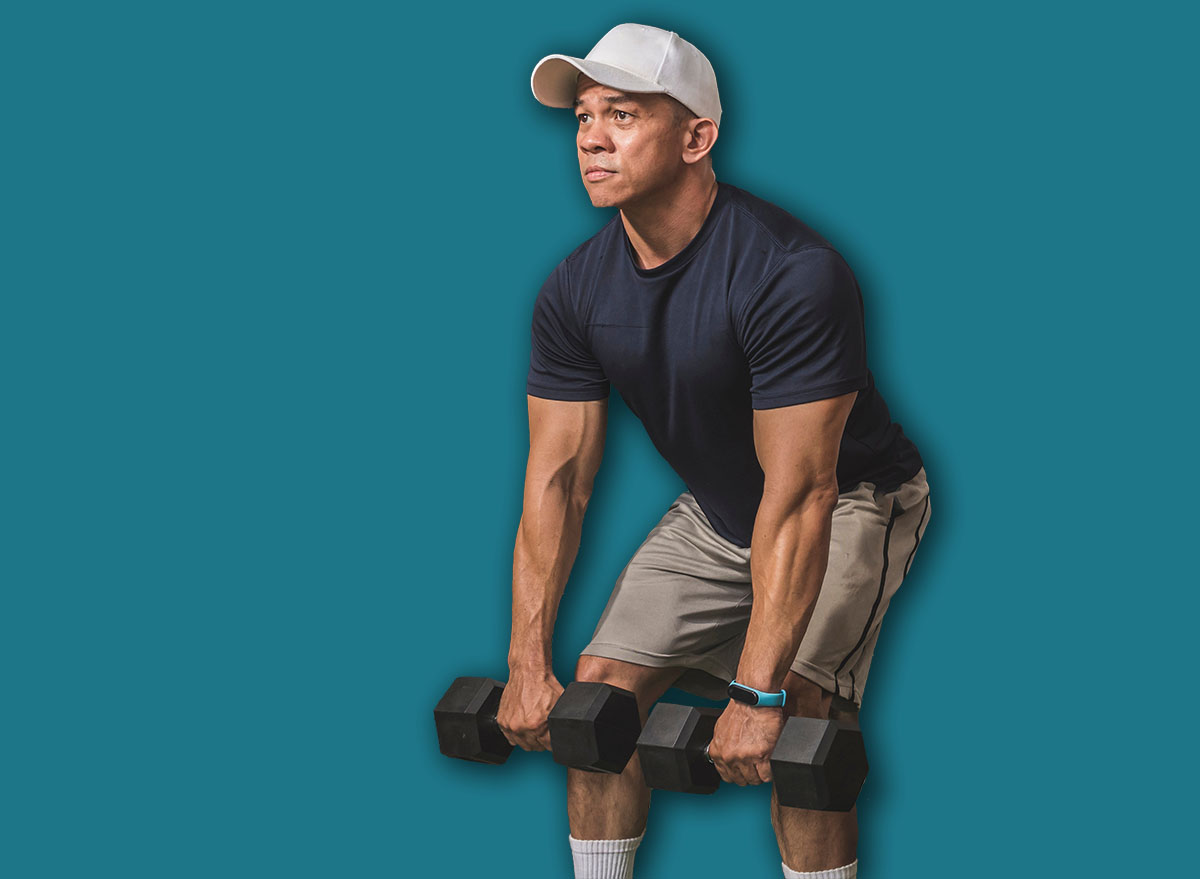
Glute and hamstring strength are vital for protecting the lower back and powering everyday movements. The Romanian deadlift (RDL) is a highly effective exercise for retraining the hip hinge, a movement pattern that often diminishes with prolonged sitting. Mastering the RDL can lead to visible improvements in muscle tone in the hips and thighs. To perform the RDL correctly, push your hips back while keeping your back straight and the dumbbells close to your legs. Maintain a neutral spine and breathe steadily. Drive through your heels to return to a standing position, squeezing your glutes at the top of the movement. This squeeze is crucial for activating the glutes and ensuring full hip extension.
How to Do It
- Hold dumbbells in front of thighs
- Slightly bend knees
- Push hips back
- Lower weights along legs
- Drive through heels to stand
- Squeeze glutes at the top.
Step-Ups: Building Practical, Unilateral Strength
Step-ups are a practical exercise that directly improves daily function, such as climbing stairs, stepping onto curbs, and hiking. They build unilateral (single-leg) power, which is essential for maintaining balance and stability. Programming step-ups frequently can rebuild leg drive without placing excessive stress on the joints. They likewise quickly reveal any imbalances between legs. To perform a step-up, place one foot firmly on a sturdy bench or step. Lean slightly forward to load the glutes, drive through the top heel to stand fully upright, and lower slowly before repeating on the other side. Control is paramount for maximizing effectiveness.
How to Do It
- Stand in front of a sturdy step
- Place one foot on top
- Lean slightly forward
- Drive through heel to stand
- Lower with control
- Switch sides.
Wall Sit: Isometric Endurance for Leg Conditioning
Isometric endurance, the ability to hold a muscle contraction for an extended period, is a key indicator of leg conditioning. The wall sit forces sustained engagement of the quadriceps while the glutes stabilize the hips. This exercise reveals true leg stamina. To perform a wall sit, slide your back down a wall until your thighs reach a parallel position to the floor. Keep your knees stacked over your ankles and your core braced. Avoid resting your hands on your thighs and hold the position with steady breathing and upright posture.
How to Do It
- Stand with back against wall
- Slide down until thighs are parallel
- Keep knees aligned
- Brace your core
- Hold steady
- Stand when form breaks.
Standing Calf Raises: Strengthening Lower Leg Muscles
Lower leg strength is often overlooked, yet it plays a critical role in balance and walking speed. Weak calves limit push-off power and increase the risk of falls. Committing to daily calf training can lead to noticeable improvements in gait and stability. To perform standing calf raises, stand tall and rise slowly onto your toes, pausing briefly at the top before lowering with control. Avoid bouncing, as this reduces the effectiveness of the exercise. Focus on a full range of motion and a strict tempo to build ankle strength and resilience.
How to Do It
- Stand tall with feet hip-width apart
- Rise onto toes slowly
- Pause at the top
- Lower under control
- Repeat steadily.
Maintaining leg strength is an ongoing process, but one that yields significant rewards in terms of independence, mobility, and overall health. By incorporating these five exercises into a daily routine, men over 55 can proactively combat age-related muscle loss and enjoy a more active and fulfilling life. The American Academy of Orthopaedic Surgeons recommends adults engage in muscle-strengthening activities at least two days per week. Find more information on strength training from AAOS.
As you begin or modify any exercise program, remember to listen to your body and adjust the intensity and duration as needed. If you experience any pain, stop the exercise and consult with a healthcare professional. The key to success is consistency and a commitment to prioritizing your lower body strength.
What are your experiences with maintaining leg strength as you age? Share your tips and questions in the comments below!
Related reading