Travelers seeking distinct landscapes during India’s monsoon season—typically spanning June through September—are increasingly looking toward regions that transform under heavy rainfall, according to data from the Ministry of Tourism, Government of India. While coastal and northern plains often face travel disruptions due to flooding, specific highland and forest regions offer unique biodiversity and lower tourism density. Choosing the right destination requires balancing ecological beauty with local infrastructure stability, as the India Meteorological Department (IMD) frequently issues heavy rainfall alerts for these specific corridors.
Selecting the best rainy season escapes in India requires understanding the geographical shift of the monsoon. As the seasonal winds progress, regions such as the Western Ghats and the lower Himalayas experience dramatic shifts in temperature and foliage. For international travelers, these areas provide a window into the country’s ecological health, though experts advise monitoring real-time weather updates to avoid transit delays caused by monsoon-related landslides, which are common in mountainous terrain during the July-August peak.
Munnar: The Western Ghats in Bloom
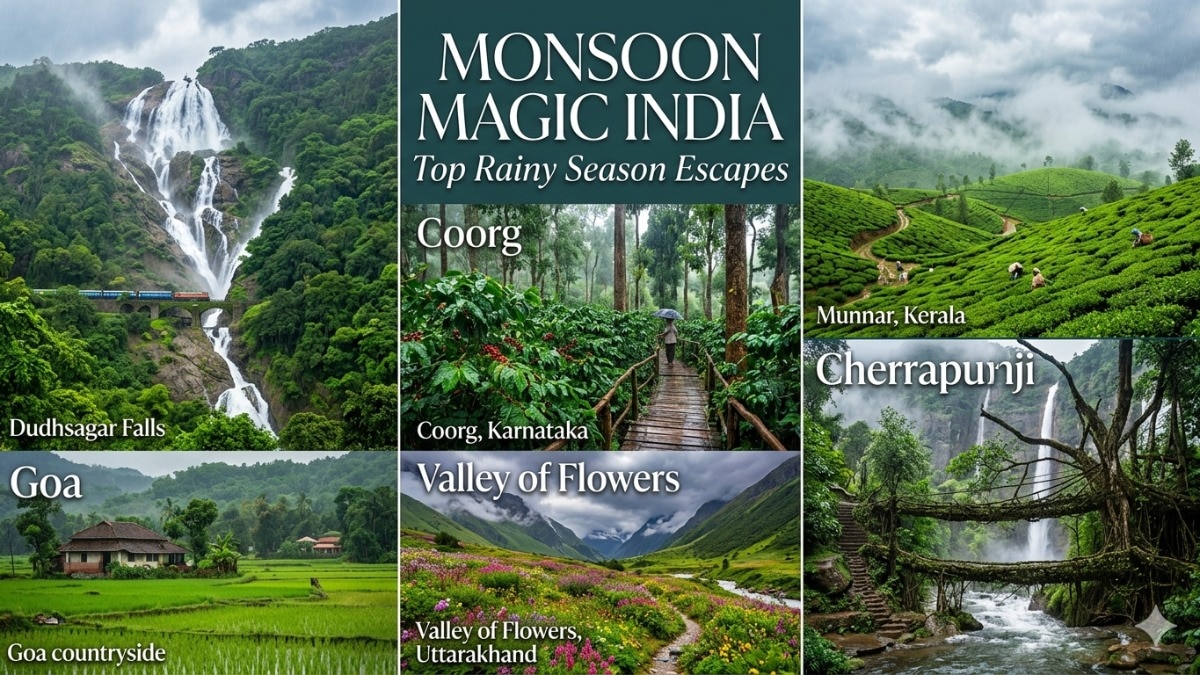
Munnar, located in the Idukki district of Kerala, is widely recognized for its tea plantations that turn a vibrant, deep green during the monsoon. According to the Kerala Tourism Department, the region experiences two monsoon spells, with the southwest monsoon providing heavy, consistent rainfall that sustains the local ecosystem. The elevation, ranging from 1,500 to 2,695 meters, helps mitigate the extreme humidity found in the plains. Travelers often visit during this time to observe the blooming of the Neelakurinji, though the plant’s flowering cycle is infrequent, occurring once every 12 years as noted by the Botanical Survey of India.
Coorg: A Hub for Biodiversity
Coorg, or Kodagu, in Karnataka, serves as a primary catchment area for the Cauvery River. During the rainy season, the district’s coffee estates and dense forest cover create a temperate climate that contrasts with the heat of the preceding summer months. Official records from the Karnataka State Tourism Development Corporation indicate that the monsoon months are critical for the region’s agricultural output, particularly for pepper and coffee crops. Visitors are advised to prioritize eco-resorts that adhere to sustainable waste management practices, as the influx of water places significant pressure on the local drainage systems.
Cherrapunji: Observing the Monsoon’s Peak
Cherrapunji, situated in the East Khasi Hills of Meghalaya, is globally noted for receiving some of the highest annual rainfall levels. According to the Meghalaya Tourism Department, the monsoon season is the period when the region’s famous living root bridges and cascading waterfalls are at their most active. The UNESCO World Heritage Centre recognizes the cultural and ecological significance of these root bridges, which are grown over decades by the local Khasi people to cross turbulent monsoon streams. Travelers should prepare for limited visibility and ensure their transport is handled by local operators familiar with the specific terrain of the Khasi Hills.
Udaipur: The City of Lakes in Transition
While often associated with arid landscapes, Udaipur in Rajasthan experiences a significant aesthetic transformation during the monsoon. The Rajasthan Tourism Department notes that the filling of the city’s interconnected lake system—including Lake Pichola and Fateh Sagar—is a major event for the local economy. The cooling effect of the rain allows for walking tours of the City Palace complex, which might be otherwise uncomfortable during the peak summer months. Unlike the dense rainforests of the south, the Aravalli hills surrounding Udaipur offer a dry-deciduous landscape that turns lush rapidly following the first heavy showers.
Valley of Flowers: A High-Altitude Phenomenon
The Valley of Flowers National Park in Uttarakhand, a UNESCO World Heritage site, is accessible primarily during the monsoon months of July and August. According to the Government of Uttarakhand, the park remains closed for the majority of the year due to snow, opening only when the alpine meadows bloom in response to the monsoon rains. The Wildlife Institute of India monitors the delicate balance of this ecosystem, as the trail to the valley requires trekking at altitudes exceeding 3,500 meters. Visitors are required to obtain permits from the forest department and are restricted to designated pathways to protect the endemic flora.

Risk Management and Travel Safety
Traveling in India during the monsoon involves inherent risks, primarily related to infrastructure resilience. The National Disaster Management Authority (NDMA) regularly publishes guidelines for monsoon travel, emphasizing the need for travelers to verify local road conditions before departure. In mountainous regions, the primary concern remains the risk of landslides, which can sever road access for several days. Travelers are encouraged to utilize the IMD’s district-level weather forecasting tools to plan itineraries that avoid areas currently under “red” or “orange” alerts. For those planning trips, checking the status of regional transport hubs via the Indian Railways website is essential, as heavy rainfall can lead to track saturation and service delays.
The next major update regarding monsoon progression and potential travel advisories will be issued by the India Meteorological Department in their weekly bulletin. Readers are encouraged to share their experiences with monsoon travel in the comments section below or join our newsletter for ongoing updates on regional infrastructure developments.
Keep reading