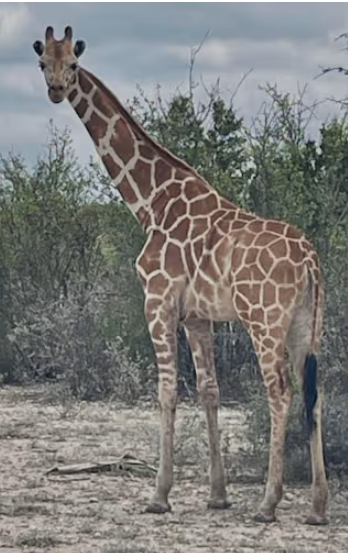
A private owner in Texas has offered a $5,000 reward for information leading to the recovery of a giraffe that escaped its enclosure two weeks ago. The animal, which went missing from a private ranch in the northern region of the state, remains at large as local authorities and animal welfare experts coordinate efforts to locate it safely. The owner, who has requested anonymity, confirmed that the search has been ongoing since the animal breached its perimeter fence in mid-October.
The Search for the Missing Exotic Animal
The disappearance of the giraffe has sparked significant concern among local residents and wildlife officials in Texas. According to reports from regional law enforcement, the animal was last seen near the outskirts of a rural property, prompting a wide-scale search involving drones and thermal imaging equipment. The owner’s decision to offer a $5,000 reward, as detailed in recent statements to local media, is intended to incentivize public reporting of any sightings without putting the animal or the public at risk. The Texas Animal Health Commission (TAHC), which oversees the regulation of exotic livestock, has been notified of the incident, though they have stated that the primary responsibility for recapture lies with the owner under state property laws.
Managing exotic species in Texas is governed by specific state statutes that require owners to maintain secure containment facilities. Under the Texas Health and Safety Code, owners of dangerous wild animals—a category that generally includes large non-native species—must adhere to strict registration and housing requirements to prevent public safety hazards. The current situation highlights the challenges associated with private exotic animal ownership, where the escape of a large mammal can lead to logistical difficulties in tracking and sedation. Experts from the Association of Zoos and Aquariums (AZA) emphasize that giraffes are highly social and sensitive animals, meaning the stress of being loose in an unfamiliar environment increases the urgency for a swift, non-traumatic recovery.
Regulatory Oversight of Exotic Species in Texas
While the search continues, questions have emerged regarding the regulatory framework for keeping giraffes on private land. According to the Texas Animal Health Commission, the state maintains oversight of animal movement and disease control, but local municipalities often hold the authority for zoning and public safety ordinances regarding exotic pets. The absence of a centralized federal registry for every exotic animal kept in private collections makes it difficult to track the total number of such animals currently residing in the state. Historically, similar incidents involving escaped exotic animals have prompted legislative debates in the Texas State Legislature regarding the necessity for more stringent permitting processes for private owners.
The financial incentive of $5,000 serves as a significant marker in the ongoing search efforts. When dealing with high-value exotic animals, such rewards are common practices used by private owners to engage the community, especially in rural areas where the animal may be roaming through large tracts of private land. Law enforcement officials have cautioned the public against attempting to approach or capture the animal independently, noting that a startled giraffe can pose a physical threat due to its size and powerful kick. Instead, residents are encouraged to contact local sheriff’s offices or the private owner’s designated search team immediately upon seeing the animal.
What Happens Next in the Recovery Effort
The search effort is expected to continue until the giraffe is located, with search parties utilizing specialized veterinary teams trained in the use of long-range tranquilizers. The use of such equipment requires specific permits and must be conducted by professionals to ensure the animal’s safety during the sedation process. According to guidelines from the United States Department of Agriculture (USDA), which regulates animal welfare in commercial and exhibition settings, the transport and handling of captive giraffes must prioritize the animal’s physical health to prevent capture-induced myopathy, a condition that can be fatal for large ungulates under extreme stress.
As of this week, no confirmed sightings have been reported to the authorities, and the search area has been expanded to include neighboring counties. The owner has set up a dedicated communication line for tips, emphasizing that the reward will only be paid upon the safe recovery of the animal. Updates regarding the search are expected to be provided by local law enforcement as new evidence becomes available. Readers with information are advised to monitor official social media channels of local county sheriff departments for credible alerts and to avoid sharing unverified rumors that could complicate the search operations.
This situation remains a developing story. As the search enters its third week, the primary focus for all parties involved remains the humane and safe return of the giraffe to a controlled environment. Further information will be released by the authorities as the investigation into the breach of the enclosure concludes and the search teams report their findings.
Related reading