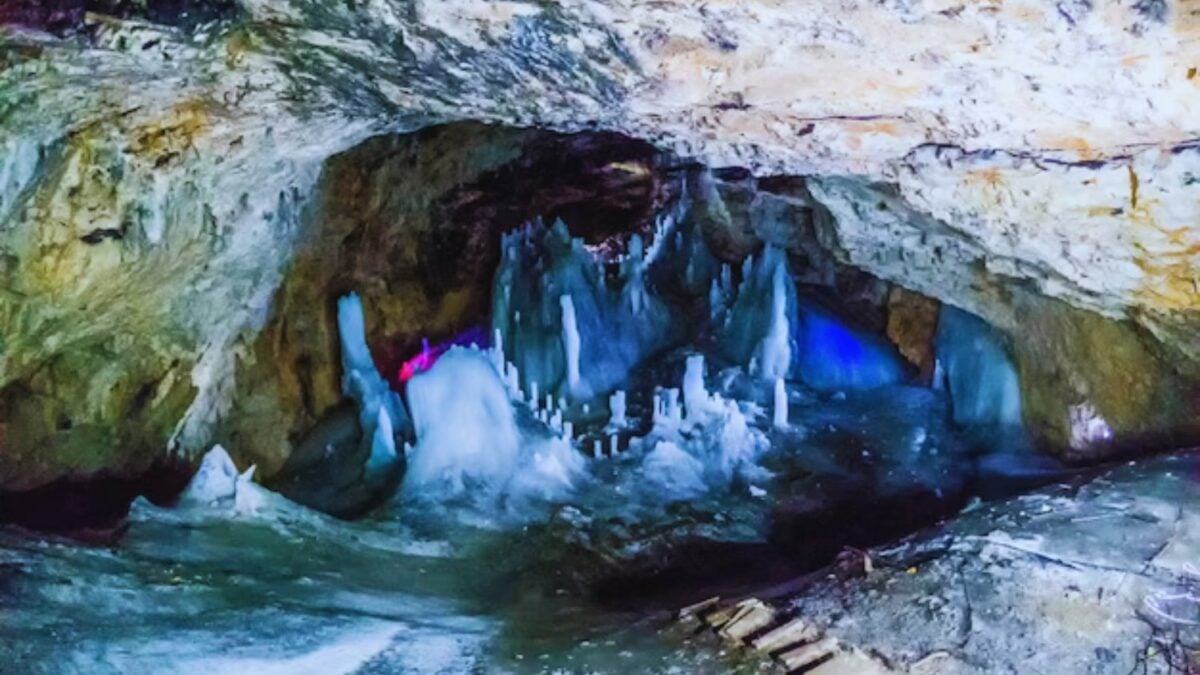
Deep beneath the surface of the Romanian landscape, within the frozen depths of the Scărișoara Ice Cave, scientists have awakened a biological relic that challenges our understanding of medical history. A 5,000-year-old bacterium, preserved in a prehistoric layer of ice, has been revived in a laboratory setting, revealing a startling contradiction: it is simultaneously a potential threat and a promising ally in the global fight against antimicrobial resistance.
The discovery of this 5,000-year-old bacterium in Romania highlights a critical reality in the evolutionary arms race between microbes and medicine. While modern medicine has spent decades developing antibiotics to kill pathogens, bacteria have been evolving their own defense mechanisms for millennia—long before the first pharmaceutical drug was ever synthesized. This ancient microbe, identified as Psychrobacter SC65A.3, provides a rare window into how resistance develops naturally in extreme environments.
For technology and science observers, this finding is more than a biological curiosity. It represents the intersection of advanced genome sequencing and environmental archaeology. By decoding the genetic blueprint of a creature that has been dormant since the Bronze Age, researchers are uncovering the “blueprints” for survival that could lead to the next generation of therapeutic treatments.
The Frozen Archive of Scărișoara Ice Cave
The recovery of the bacterium was the result of a precise geological and biological operation. Researchers from the Institute of Biology Bucharest (IBB) of the Romanian Academy targeted the “Great Hall” of the Scărișoara Ice Cave, a site known for containing the largest and oldest perennial block of ice in the region. To reach the ancient layers, the team removed a 25-meter (82-foot) ice core, carefully extracting samples from depths that had remained undisturbed for five millennia.
Once the samples were brought into the lab, the team used specialized isolation techniques to revive the dormant microbes. The most significant find was the Psychrobacter sp. SC65A.3 strain. To understand why this bacterium survived the extreme cold and how it functioned, the researchers employed genome sequencing—a process that allows scientists to map every gene within an organism to identify specific traits linked to survival and antimicrobial activity.
This method of “paleomicrobiology” allows scientists to treat ice caves as biological time capsules. Because the extreme cold slows biological processes to a near-halt, the genetic integrity of the bacteria is preserved, allowing modern researchers to study ancient evolutionary adaptations as if they were occurring in real-time.
A Paradox of Resistance and Therapy
The most alarming finding regarding Psychrobacter SC65A.3 is its inherent resistance to modern medicine. Despite predating the antibiotic era by thousands of years, the strain carries over 100 resistance-related genes, according to research published in Frontiers in Microbiology. In other words the bacterium can survive exposure to drugs currently used to treat serious modern infections, including those targeting tuberculosis and urinary tract infections (UTIs).
Dr. Cristina Purcarea, a senior scientist at the Institute of Biology Bucharest, noted that the strain shows resistance to multiple modern antibiotics despite its ancient origin. This discovery proves that antibiotic resistance is not merely a byproduct of the misuse of modern pharmaceuticals, but a natural evolutionary strategy that bacteria have utilized for millions of years to survive in competitive or hostile environments.
However, the bacterium is not merely a “superbug” threat. The researchers discovered a crucial secondary trait: the strain can actually inhibit the growth of several major, modern antibiotic-resistant superbugs. This suggests that while the bacterium is resistant to our drugs, it produces its own antimicrobial compounds that are effective against other dangerous pathogens.
Biotechnological Potential and the Path Forward
The ability of Psychrobacter SC65A.3 to suppress other bacteria opens a significant door for biotechnology. The researchers identified important enzymatic activities within the strain that could have vast industrial and medical applications. When a bacterium evolves to kill its competitors in a resource-scarce environment like an ice cave, it often does so by producing powerful, unique enzymes or antimicrobial peptides.
These naturally occurring compounds could serve as the foundation for new classes of antibiotics. Because these mechanisms evolved independently of modern medicine, they may bypass the resistance pathways that current superbugs have developed against existing drugs. This “bioprospecting” in extreme environments is becoming a cornerstone of modern drug discovery, as scientists look to the fringes of the Earth—from deep-sea vents to ancient glaciers—for molecules that can break the stalemate of antimicrobial resistance.
Beyond medicine, the enzymes produced by cold-loving (psychrophilic) bacteria are often highly efficient at low temperatures. This makes them valuable for industrial processes where heating is costly or where heat-sensitive materials are being processed, potentially leading to more energy-efficient chemical manufacturing.
Why This Discovery Matters for Global Health
The emergence of antimicrobial resistance (AMR) is widely considered one of the top global public health threats. As common infections become harder to treat, the risk of complications from routine surgeries and minor injuries increases. The findings from the Romanian Academy provide two critical insights into this crisis:

- Natural Baseline: It establishes a “natural baseline” for resistance, showing that the genetic tools for fighting antibiotics existed long before humans invented them. This helps scientists distinguish between human-induced resistance and natural evolutionary trajectories.
- New Weaponry: It demonstrates that the very environments that harbor resistant bacteria also harbor the tools to defeat them. The “arms race” of nature provides a library of chemical weapons that humans can study and replicate.
The study underscores the importance of preserving extreme environments. Every melting glacier or disturbed cave system potentially destroys a unique genetic library that could contain the cure for a future pandemic or a solution to the superbug crisis.
Key Takeaways from the Scărișoara Discovery
- Origin: A 5,000-year-old Psychrobacter strain was recovered from a 25-meter ice core in Romania’s Scărișoara Ice Cave.
- The Threat: The bacterium possesses over 100 genes that make it resistant to modern antibiotics used for UTIs and tuberculosis.
- The Opportunity: The strain can inhibit other dangerous superbugs and produces enzymes with high biotechnological potential.
- Scientific Value: The research, led by the Institute of Biology Bucharest, proves that antibiotic resistance is a natural evolutionary trait predating human medicine.
As the scientific community continues to analyze the genome of Psychrobacter SC65A.3, the next phase of research will likely focus on isolating the specific compounds the bacterium uses to suppress other pathogens. If these compounds can be synthesized or modified for human use, the “threat” from the ice cave may ultimately become one of our most effective shields against the rise of the superbugs.
The next confirmed milestone for this line of research involves further enzymatic profiling to determine the exact industrial applications of the strain’s proteins, with updated findings expected to be shared in upcoming microbiology symposiums.
Do you think we should be more concerned about “awakening” ancient microbes, or is the potential for new medicine worth the risk? Share your thoughts in the comments below.
Related reading