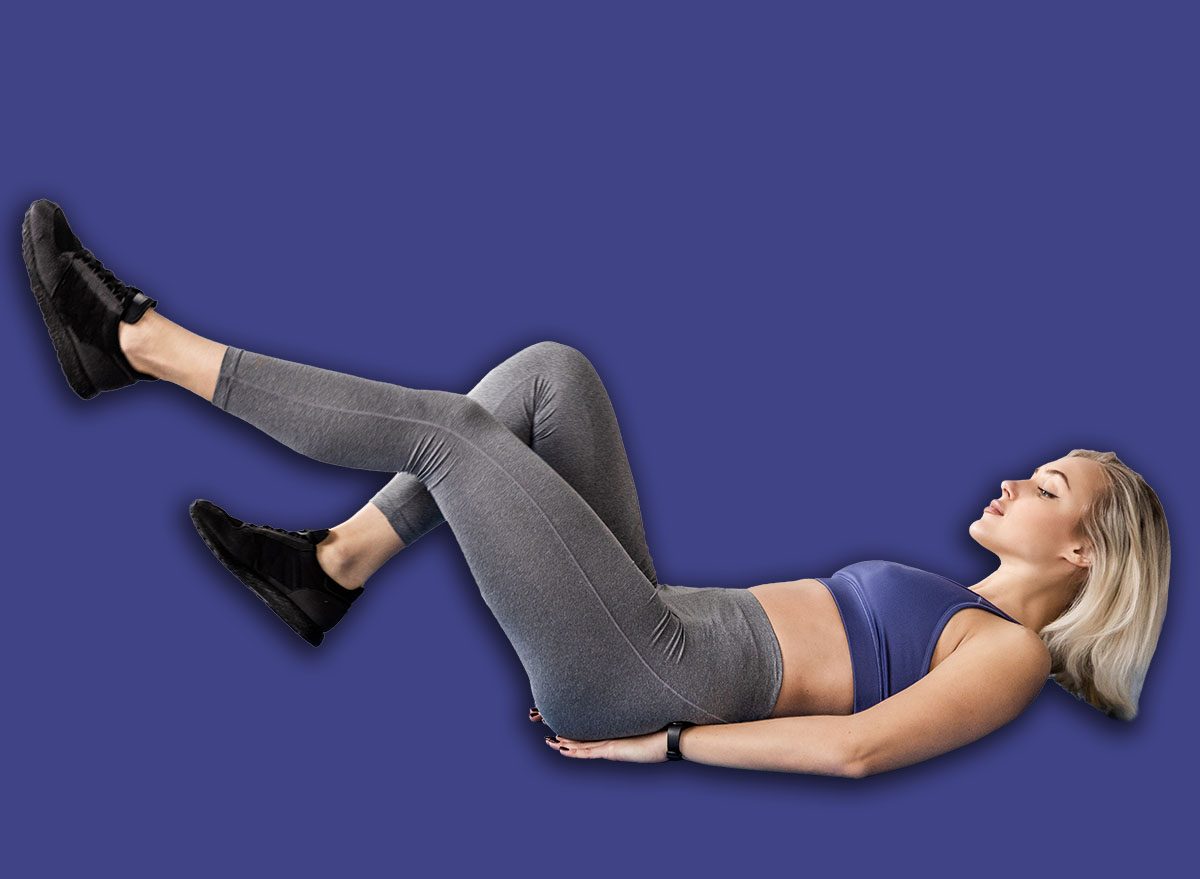
Maintaining a firm midsection after age 60 requires a shift in focus from traditional crunches to exercises that stabilize the deep core, as age-related hormonal shifts and natural muscle loss impact how the body stores fat. According to fitness professionals, addressing “belly overhang” or a panniculus involves targeted movements that support pelvic alignment and spinal stability, which can help firm belly overhang faster than yoga after 60.
As we age, the body undergoes significant changes in composition. Nicolle Lopez-Lamberty, Certified Pilates Instructor and Founder & CEO of NuPilates, explains that declining testosterone levels in women starting in their 30s lead to a reduction in muscle strength and mass. Following menopause, shifting estrogen levels cause the body to store more fat around the abdomen rather than the hips and thighs, while a naturally slowing metabolism and decreased core support further complicate the process. This structural shift is not merely cosmetic; an apron belly—or panniculus—is associated with serious health concerns like metabolic syndrome, cardiovascular disease, and type 2 diabetes.
Building Core Stability Through Targeted Movement
For those looking to improve abdominal support, the goal should be building real strength rather than chasing aesthetic “quick fixes.” Lizzie Gunderson, the Founder of LIZZIEVSTHEWORLD and a Pilates coach certified in Balanced Body 1, 2, and 3, emphasizes that a strong core improves posture and makes daily movement easier. “When the deep core is working well, posture improves, movement feels easier and the whole midsection has better support,” Gunderson says. Below are six foundational movements designed to engage the deep core muscles safely.
1. Heel Slides
Heel slides are an exercise that teaches the deep core to remain engaged while the legs are in motion. To perform, lie flat on your back with your legs on the mattress. Place your arms at your sides and gently press your lower back into the mattress. Slowly slide one heel back toward your hips before lengthening it back out, keeping the core stable throughout the movement.

2. Glute Bridges
Strong glutes take pressure off the lower back and help improve pelvic alignment. Begin by lying on your back with your knees bent and feet hip-width apart on the mattress. With your arms at your sides and palms pressing into the surface, press through your heels to lift your hips until your body forms a straight line from your head to your heels. Squeeze your buttocks at the top before lowering back to the starting position.
3. Bird-Dog
This movement challenges balance, coordination and core control while strengthening the muscles that stabilize the spine without putting unnecessary strain on the back. Start on all fours. Extend your left arm and right leg. Hold for a moment before returning to the start position. Switch sides and continue to alternate with controlled movements.
4. Side Plank
Side planks strengthen the obliques and deep stabilisers, which are essential for posture, balance and everyday movement. Lie on your side with your elbow positioned directly beneath your shoulder and your feet stacked. Lift your hips off the floor, keeping your body in a straight line from your head to your feet. Hold for the prescribed amount of time.

5. Pilates Criss Cross
To perform this movement, lie flat on your back with your hands behind your head and your knees bent. Lift your head, neck, and shoulders off the mattress. Lengthen your right leg out at a 45-degree angle while twisting to bring your right elbow to meet the opposite knee. Switch sides by extending your left leg and twisting your torso to bring your left elbow to meet your right knee, maintaining control throughout the rotation.
6. Double-Leg Stretch
The double-leg stretch is one of six daily exercises that can help firm belly overhang faster than yoga after 60.
Safety and Long-Term Health Considerations
Integrating these exercises into a daily routine can support better functional movement, provided they are performed with the focus on building real strength that Gunderson recommends.
Readers interested in further guidance on managing body composition and muscle health are encouraged to monitor updates from local health authorities regarding physical activity and nutrition. If you found these exercises helpful, please share this article with your community or leave a comment below regarding your own experiences with maintaining core strength.