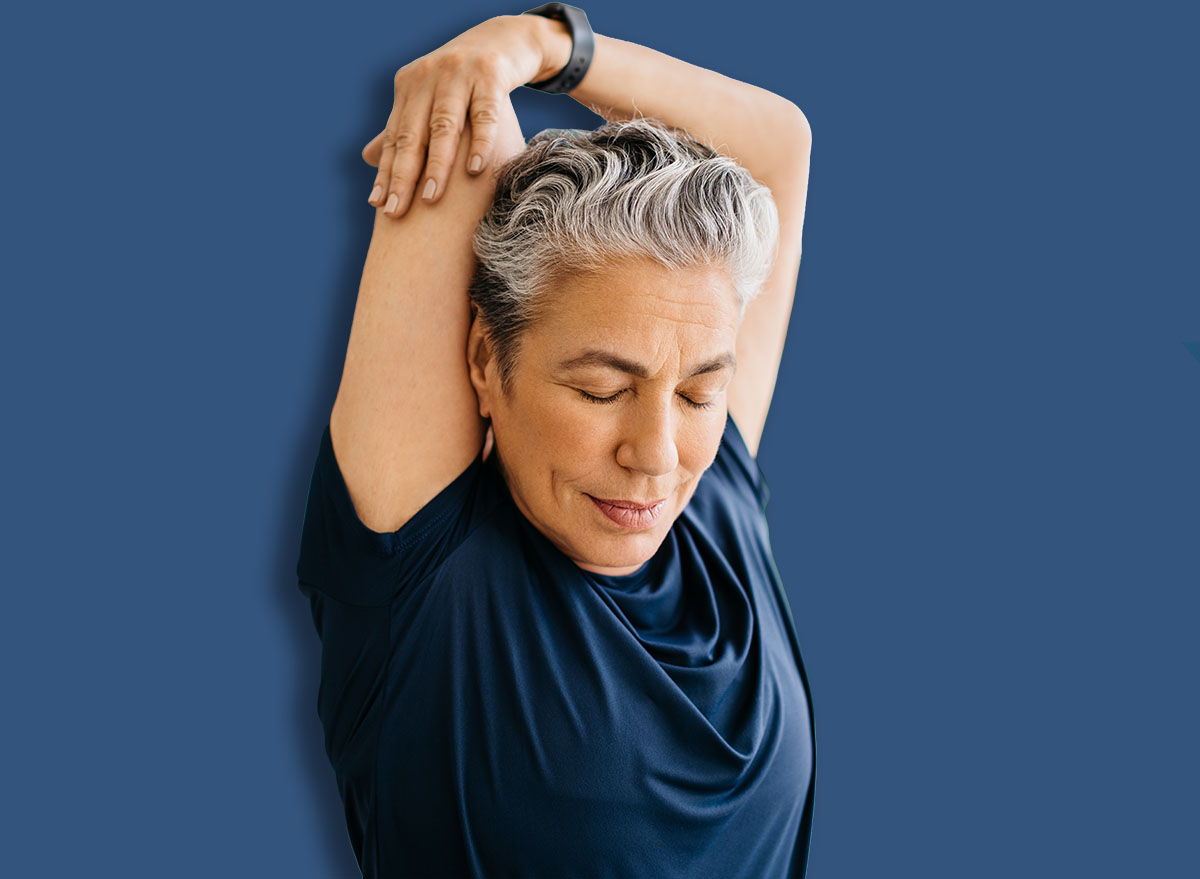
For many adults entering their 60s, the mirror reveals a frustrating change: the appearance of “arm jiggle.” Even as often dismissed as a simple matter of excess fat, this phenomenon is actually a complex physiological shift. As a physician and health journalist, I frequently encounter patients who believe the solution is simply “more reps” or lighter weights. However, the biology of the aging body requires a more nuanced approach to achieve visible results.
The loss of firmness in the upper arms is primarily driven by a combination of hormonal shifts, the natural degradation of collagen and the onset of sarcopenia—the age-related loss of skeletal muscle mass. When we combine this with dynapenia, which is the loss of muscle strength and power, the result is tissue that lacks the structural support to remain taut. To combat this, we must move beyond traditional high-rep weight training and focus on the mechanical principles of load, tension, and tissue pliability.
By targeting all three heads of the triceps—the lateral, medial, and long heads—and incorporating myofascial release, it is possible to improve tissue quality and muscle tone without needing a full gym membership. The goal is to provide the body with a sufficient reason to adapt, which requires a specific balance of mechanical strain and nutritional support.
Effective arm firming after 60 relies on 6 standing exercises that firm arm jiggle faster than weight training by emphasizing time under tension and fascial reorganization. By shifting the focus from quantity of movement to the quality of the strain, you can stimulate the hypertrophy and connective tissue resilience necessary to reshape the arms.
The Science of Aging Tissue: Why Traditional Weights Often Fail
To understand why some exercise routines fail after 60, we must look at the endocrine system. The natural decline in estrogen, testosterone, and growth hormone reduces the body’s ability to synthesize collagen and maintain muscle protein balance. This leads to decreased skin elasticity and a thinner dermal layer, making the underlying muscle loss more apparent.
A critical factor in this process is the role of protein. Without adequate amino acid intake, the body cannot repair the micro-tears created during exercise, effectively stalling any progress in muscle toning. Sarcopenia doesn’t just make muscles smaller; it alters the way muscles activate and produce force, meaning that “light weights” often fail to reach the threshold required for muscle adaptation.
To trigger a change at the tissue level, the body responds to three primary stimuli: load, time under tension, and strain. Load refers to the actual weight used; if it is too low, the muscle remains in a state of maintenance rather than growth. Time under tension is the duration the muscle is actively engaged under load. Moving too quickly through a rep eliminates this tension, robbing the muscle of the signal it needs to grow. Finally, strain is the mechanical deformation of the tissue, which tells the body to build more resilient connective tissue and stronger muscle fibers.
The Role of Fascia and Pliability
Muscle does not exist in a vacuum; it is encased in fascia, a web of connective tissue. If the fascia becomes stiff or disorganized—common in older adults—it acts like a restrictive container, limiting the muscle’s ability to contract and expand. This is why flexibility is not enough; we need pliability. Pliability allows the muscle and fascia to glide against one another, ensuring that the load applied during exercise is distributed efficiently across the tissue.
Myofascial stretching targets this connective tissue, helping to rehydrate the fascia and reorganize its structure. When the fascia is pliable, the muscle can accept a greater load through a fuller range of motion, which significantly increases the potential for toning and firming.
Targeted Strength: The Triceps Kickback Series
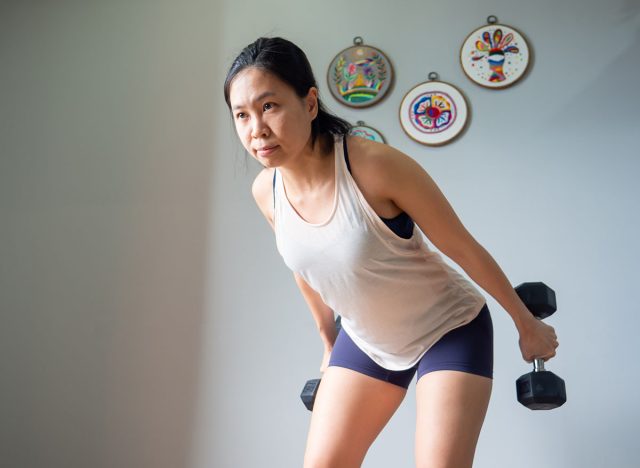
The triceps are composed of three distinct heads. To fully eliminate “jiggle,” each head must be targeted through specific grip variations. These exercises should be performed with a slight hinge at the hips, keeping the upper arm parallel to the floor and locked in place to ensure the elbow is the only joint moving.

1. Lateral Head Kickback (Pronated Grip)
The lateral head is the outermost part of the tricep. To isolate this area, utilize a pronated grip, where the palm faces backward.
- Execution: Hinge forward at the hips. Line the upper arm up with your back. Extend the elbow fully, keeping the upper arm stationary.
- Key Focus: Control the descent. Do not use momentum or swing the weight.
- Protocol: 8 to 12 reps per arm, 1 to 3 sets.
2. Medial Head Kickback (Supinated Grip)
The medial head is located on the inner portion of the arm. By switching to a supinated grip—palm facing the ceiling—you shift the mechanical load to this specific area.
- Execution: Maintain the hinged position. Keep the arm tight to the body and extend the elbow.
- Key Focus: The grip is the only variable that changes from the previous exercise; maintain the same strict form.
- Protocol: 8 to 12 reps per arm, 1 to 3 sets.
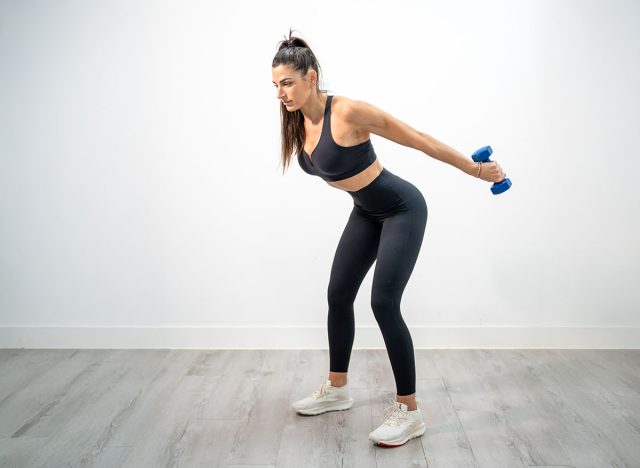
3. Long Head Kickback (Neutral Grip)
The long head provides the bulk of the tricep’s shape. A neutral grip—palms facing inward, similar to holding a hammer—is most effective here.
- Execution: From the hinged position, extend the elbow smoothly and fully.
- Key Focus: Prioritize a sluggish, controlled tempo to maximize time under tension.
- Protocol: 8 to 12 reps per arm, 1 to 3 sets.
Tissue Restoration: The Myofascial Stretching Protocol
Strengthening without stretching leads to rigidity. To ensure the muscles can actually “take shape,” we must employ myofascial stretching. Unlike traditional stretching, this approach emphasizes creating length in multiple directions simultaneously to improve the glide of the fascial layers.
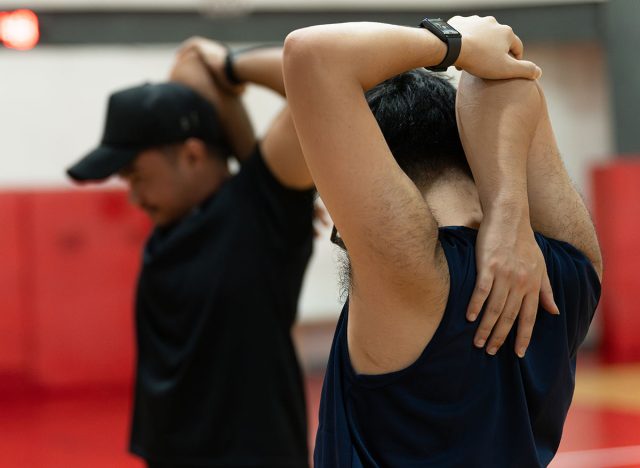
4. Myofascial Stretch: Pinky to Spine
This variation targets the triceps and the surrounding fascia by altering the angle of the arm’s position behind the head.
- Execution: Reach behind the head, placing the pinky finger toward the spine. Perform a slight pelvic tilt. Use the opposite hand to gently pull the elbow across the body.
- Dual-Directional Tension: Simultaneously reach the elbow toward the ceiling while pulling the shoulder blade (scapula) toward the floor.
- Hold: 30 seconds per side.
5. Myofascial Stretch: Thumb to Spine
By shifting the contact point to the thumb, you change the stretch angle, targeting a different segment of the tricep and fascial network.
- Execution: Reach behind the head and place the thumb toward the spine. Gently pull the elbow with the opposite hand.
- Focus: Maintain the push-pull dynamic between the elbow and the scapula.
- Hold: 30 seconds per side.

6. Myofascial Stretch: Palm to Spine
The final variation maximizes the surface area of the stretch by pressing the full palm against the spine.
- Execution: Press the palm flat against the spine. Gently pull the elbow across with the opposite hand.
- Focus: Ensure the shoulder remains depressed (away from the ear) while the elbow is encouraged upward.
- Hold: 30 seconds per side.
Integrating Nutrition and Recovery for Maximum Results
Exercise is the signal, but nutrition is the building block. To see the results of these 6 standing exercises that firm arm jiggle faster than weight training, you must optimize your internal environment. This means prioritizing high-quality protein sources—such as lean meats, legumes, and Greek yogurt—to provide the necessary amino acids for muscle protein synthesis.
hydration is essential for fascial health. Fascia is primarily composed of water and collagen; dehydration leads to “sticky” fascia, which increases stiffness and reduces the effectiveness of the myofascial stretches described above. A consistent intake of water and omega-3 fatty acids can help maintain the lubrication of the joints and the pliability of the tissues.
Summary of the Firming Protocol
| Component | Primary Goal | Key Action |
|---|---|---|
| Strength | Muscle Hypertrophy | Target 3 tricep heads with controlled load |
| Tension | Tissue Adaptation | Slow tempo; eliminate momentum |
| Pliability | Fascial Gliding | Myofascial stretching in 3 positions |
| Nutrition | Tissue Repair | Increase protein and hydration |
When these elements—load, tension, pliability, and nutrition—are aligned, the body is no longer guessing. It has a clear physiological reason to adapt, rebuild, and firm. This comprehensive approach ensures that the muscles don’t just get stronger, but actually start to take a more defined shape.
For those monitoring their progress, the next key checkpoint is the annual health screening, where muscle mass and bone density can be assessed via DXA scan to quantify the impact of these interventions. We encourage you to share your experience with these exercises in the comments below and let us know which variation you found most effective.