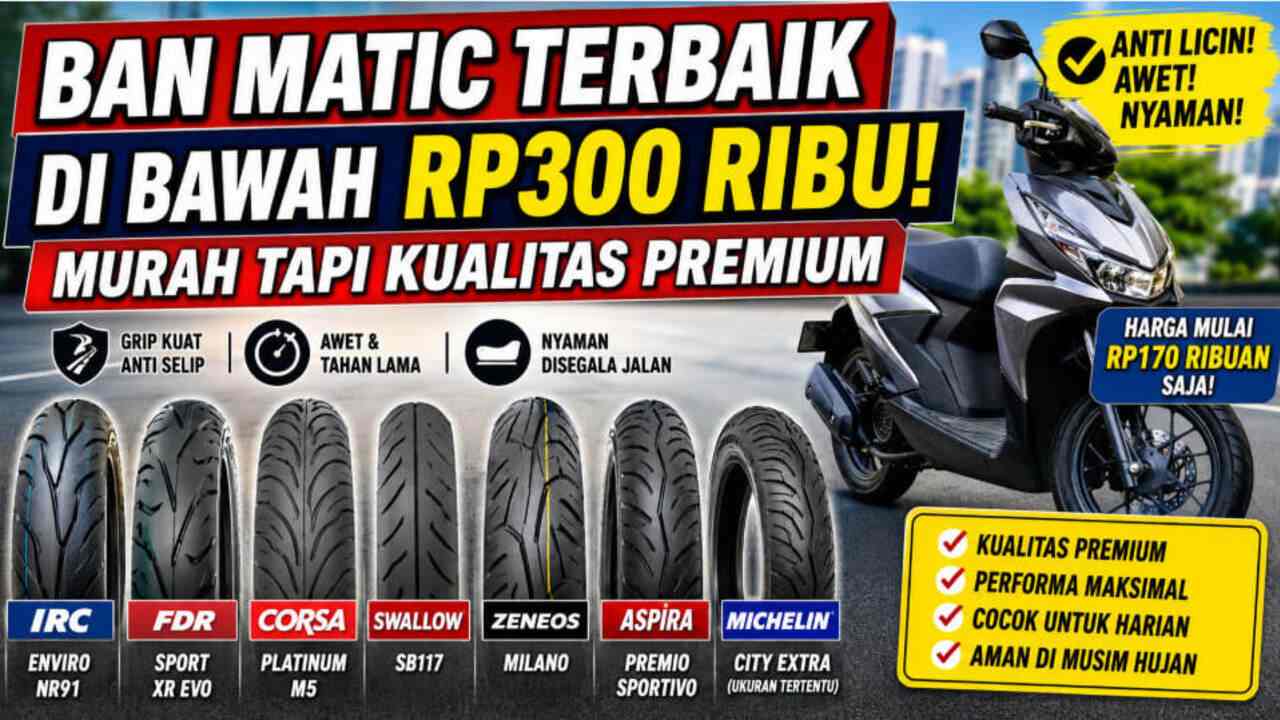
Finding the best budget-friendly motorcycle tires for automatic scooters in 2026 requires balancing cost-efficiency with safety standards, particularly for riders seeking options priced under Rp300,000. While premium performance is often associated with higher price points, several manufacturers now offer durable compounds that provide necessary grip for daily commuting and varied weather conditions. Selecting the right tire involves verifying load indexes, tread patterns suitable for wet road surfaces, and the specific rim size compatibility for popular automatic models in the Indonesian market.
Evaluating Tire Safety and Performance Standards
For motorcycle owners, the primary concern when selecting tires—especially at a lower price point—is the compound’s ability to maintain traction on wet asphalt. According to safety guidelines provided by the Indonesian Ministry of Transportation, tires must meet the Indonesian National Standard (SNI) to ensure they have undergone rigorous testing for durability and friction coefficients. When shopping for tires under Rp300,000, consumers should verify the production date code stamped on the sidewall, as rubber compounds naturally degrade over time, affecting their grip regardless of the price paid.

The performance of a tire in 2026 is largely determined by its tread pattern, which is engineered to displace water and prevent hydroplaning. Manufacturers such as IRC, FDR, and Corsa have established significant market presence by offering specialized variants for automatic scooters that prioritize longevity. These brands typically utilize a medium-hard compound that balances wear resistance for high-mileage users with enough flexibility to maintain a contact patch during cornering. It is essential to match the tire type—tubeless or tube-type—to the existing wheel rim specifications to avoid dangerous pressure leaks or bead failures while riding.
Choosing Between Local and Imported Brands
The Indonesian motorcycle tire market has seen a shift toward high-quality domestic production, which often provides a cost advantage over imported counterparts. Local brands have invested in research and development to tailor their tread designs to the unique tropical climate, characterized by high temperatures and frequent, intense rainfall. By opting for domestically produced tires, riders often secure a more recent manufacturing date, which is a critical factor in performance, as older imported stock may have spent significant time in shipping and warehouse storage.
When comparing options, riders should look for the “Treadwear Indicator” (TWI) mark on the sidewall. This small triangle or arrow points toward the tread grooves, where a raised rubber bar indicates that the tire has reached its legal wear limit. A tire priced under Rp300,000 that lacks clear TWI markings or official SNI certification may not provide the safety margins required for daily operation. Most reputable retailers provide a warranty against manufacturing defects, which serves as an additional layer of protection for the consumer.
Maintenance Tips for Extended Tire Life
Regardless of the initial purchase price, the longevity of a motorcycle tire is heavily dependent on proper maintenance. Tire pressure is the most significant factor in both safety and fuel efficiency. According to manufacturer recommendations, owners should check their tire pressure at least once every two weeks using a calibrated gauge. Riding with under-inflated tires increases rolling resistance and causes excessive heat buildup, which can lead to premature structural failure or sidewall cracking.
Furthermore, riders should avoid “overloading” their scooters beyond the manufacturer’s specified gross vehicle weight rating. Each tire is marked with a load index number that corresponds to the maximum weight it can support at the maximum rated speed. Regularly exceeding these limits will accelerate tread wear and diminish the tire’s ability to absorb road impacts. If a tire exhibits uneven wear patterns, it may indicate a misalignment of the scooter’s front fork or rear swingarm, which should be inspected by a professional mechanic to prevent further damage to new tires.
Future Market Outlook and Consumer Guidance
As of early 2026, the availability of affordable, high-quality tires remains stable due to robust local manufacturing capabilities. Consumers are encouraged to purchase from authorized dealers or official online marketplaces to avoid counterfeit products, which are often sold at suspiciously low prices. Official manufacturer websites typically feature a “dealer locator” tool to help riders find certified outlets that offer professional installation and balancing services.
For those seeking the latest updates on tire safety regulations or to report issues with product quality, the Indonesian Consumer Protection Agency (YLKI) provides resources and guidance on consumer rights regarding automotive parts. Before making a purchase, riders should consult their motorcycle’s service manual to confirm the exact tire size and speed rating recommended by the manufacturer. Engaging with local automotive communities can also provide real-world feedback on the performance of specific tire models in various road conditions. Please share your experiences with specific tire brands in the comments section below to assist other riders in making informed maintenance decisions.