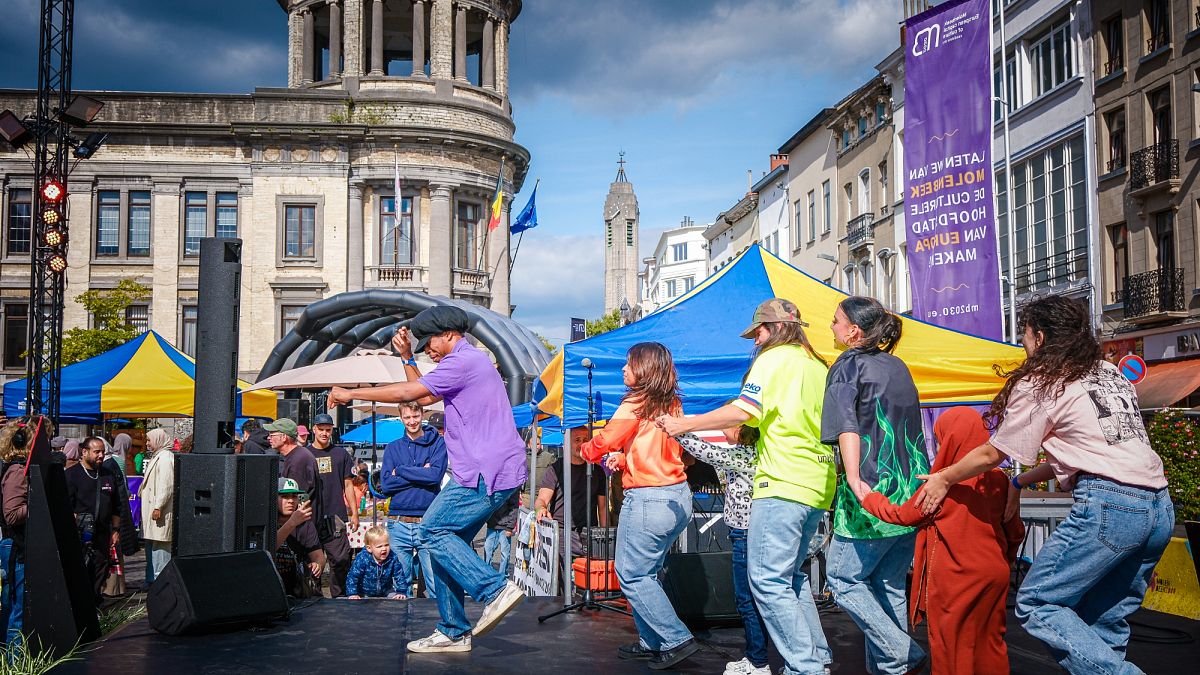
Molenbeek‘s Bold Bid to Reclaim its Narrative: A 2030 European Capital of Culture Campaign
Molenbeek, a vibrant and historically complex district of Brussels, is mounting a compelling campaign to become the European Capital of Culture in 2030. This isn’t simply about securing funding or hosting events; it’s a strategic effort to redefine the neighborhood’s identity, leverage its incredible diversity, and address pressing urban challenges facing cities across europe.
This article delves into Molenbeek’s journey, the innovative community-driven initiatives fueling its bid, and the broader meaning of the European Capital of Culture designation.
From Shadow of Crisis to Beacon of Culture
For many, Molenbeek’s name became synonymous with the aftermath of the 2016 Paris and Brussels terror attacks, as investigations revealed connections to the neighborhood. However, residents and cultural leaders are resolute to showcase a different narrative - one of resilience, creativity, and a thriving multicultural community.
“This candidacy is an opportunity to show another Molenbeek, that is rich in its diversity, its youth, its culture, its art,” explains Fatima Zibouh, co-mission holder of Molenfest2025, the festival central to the ECOC2030 campaign. The bid represents a conscious effort to move beyond a painful past and highlight the area’s immense potential.
Molenfest2025: A Community-Led Cultural Explosion
At the heart of Molenbeek’s cultural renaissance is Molenfest2025, a festival deeply rooted in community participation. Renowned artists are collaborating directly with residents – a remarkably diverse population representing 140 nationalities – to create everything from elaborate costumes and original choreography to captivating music.
This isn’t a top-down cultural imposition. Instead, Molenfest prioritizes:
public Space Activation: Events are intentionally staged throughout the neighborhood, making culture accessible to all.
Intergenerational Engagement: Projects actively involve residents of all ages, fostering a sense of shared ownership and pride.
Free Access: Removing financial barriers ensures inclusivity and broad participation. Diverse Artistic Expression: Parades, circus acts, dance, theater, and more showcase the breadth of Molenbeek’s creative spirit.
“What is most critically important is that there are a lot of projects in public spaces, a lot of projects that directly involve residents,” notes Jan Goossens, co-mission holder of Molenfest2025. This approach demonstrates a commitment to authentic cultural expression and community empowerment.
Why Molenbeek Matters: A Microcosm of European Challenges
Molenbeek’s ambition extends beyond local revitalization. Organizers believe the neighborhood embodies many of the critical challenges facing European cities today.
These include:
Navigating Diversity: How do we build cohesive communities in increasingly multicultural urban environments?
Addressing Socioeconomic Inequality: How do we create opportunities for all residents, particularly young people?
Integrating Nature into urban Spaces: How do we create more sustainable and livable cities?
Ensuring Security & Freedom: How do we balance safety with the preservation of civil liberties?
“Molenbeek symbolises all the challenges you face in other European cities,” Zibouh emphasizes. “How do we live together? How do we address inequalities? These are real European challenges.”
Leveraging cultural Heritage & Future investments
Molenbeek isn’t solely focused on contemporary art. The ECOC2030 bid also highlights the neighborhood’s rich cultural heritage, boasting 16 monuments and 9 historical sites.
Furthermore, important investments are underway to revitalize the area:
Kanal/Pompidou Center: The forthcoming Museum of Modern and Contemporary Art, opening in 2026, will serve as a major cultural hub for Molenbeek and surrounding neighborhoods.
Quartier Nord & laeken Revitalization: The museum is expected to catalyze broader urban renewal efforts.
Existing cultural Spaces: Dance studios, galleries, and theaters already contribute to a vibrant artistic ecosystem.
the European Capital of Culture: A catalyst for Change
The European Capital of Culture initiative, funded by the EU, offers a unique opportunity for cities to:
Celebrate Diversity: Showcase their unique cultural identities.
Generate Economic Benefits: Attract tourism and investment.
Related reading