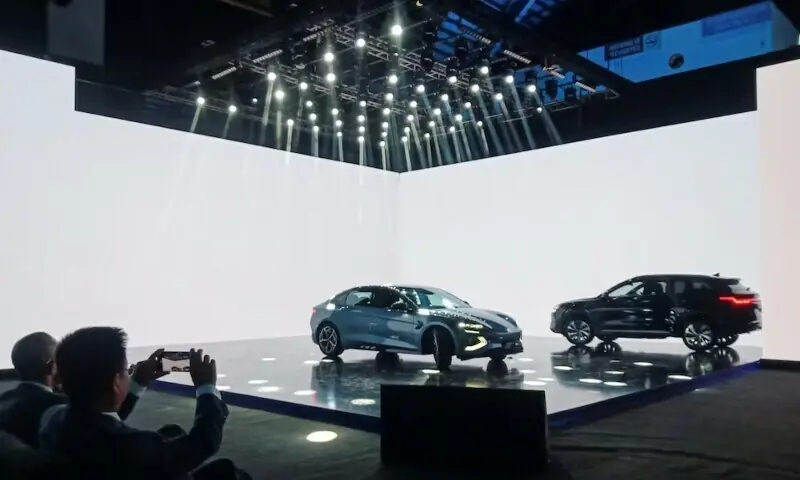
BYD‘s Rapid Rise in Pakistan: A Deep Dive into Local Assembly & EV Infrastructure Plans
Are you curious about the future of electric vehicles (EVs) in Pakistan? The landscape is shifting rapidly, and BYD – a global leader in new energy vehicles – is at the forefront. This article provides a comprehensive overview of BYD’s current performance, its ambitious local assembly plans, and the developing EV charging infrastructure, alongside updates on other key players like Sazgar Engineering. We’ll break down everything you need to know, from sales figures to investment details, and what it all means for Pakistani consumers.
BYD’s Notable Initial Traction
BYD has made a splash in Pakistan’s automotive market,achieving notable sales in a short period. Over 2,000 BYD vehicles have been sold in under six months. Demand remains strong, with over 500 pre-orders already confirmed for the highly anticipated Shark model. Currently, these vehicles are imported as Wholly Built Units (cbus) under standard import duties.
But this is just the beginning. BYD’s long-term strategy focuses on establishing a strong local presence through manufacturing.
Hubco & Mega Conglomerate: Powering BYD’s Local Assembly
Hub Power Company (Hubco), in a 50:50 joint venture with Mega Conglomerate, is spearheading the establishment of a Completely Knocked Down (CKD) assembly plant in Gharo, Sindh. This plant represents a substantial $150 million investment, financed with a 60:40 debt-to-equity ratio.
Here’s a breakdown of the key details:
Production Capacity: 25,000 units annually.
Financial Close: Expected in the final quarter of 2025. Funding: Secured through a term sheet with both local and international lenders.
Production Start: Anticipated within 24 months of financial close.
Interestingly, BYD has opted for a partnership model in Pakistan, unlike its strategy of 100% ownership in markets like Thailand and Brazil. This marks a unique approach for the company globally, demonstrating confidence in the potential of the Pakistani market and its local partners.
The Expanding EV Charging Network: A Critical Component
A robust charging infrastructure is vital for EV adoption.Hubco recognizes this and is actively working to address the current limitations.Initially sourcing chargers from Europe, the company has found more cost-effective options from chinese suppliers.
Here’s what you need to know about their charging plans:
Viability Threshold: EV charging stations become financially sustainable with an average usage of just three cars per day.
Karachi-Peshawar Corridor: Hubco plans to install charging stations every 150-200 kilometers along the Karachi-Peshawar motorway within the next six months. This will substantially improve long-distance EV travel.
Beyond BYD: Sazgar Engineering’s Contribution
BYD isn’t the only player expanding EV options in Pakistan. Sazgar Engineering Works Ltd is also making significant strides.
Haval H6: Launched its first CKD plug-in hybrid electric vehicle (PHEV), the Haval H6 1.5L, on August 16, 2025.
Future Models: Plans to introduce CKD models of the TANK-500 and CANNON PHEVs by March 31, 2026.
This diversification of EV offerings provides consumers with more choices and accelerates the transition towards sustainable transportation.
What Does This Mean for You?
The developments outlined above signal a promising future for the EV market in Pakistan. Increased local assembly will likely lead to:
Lower Prices: Reduced import duties and localized production will make EVs more affordable. Greater Availability: Local manufacturing will ensure a more consistent supply of vehicles.
* Economic Growth: The establishment of assembly plants and charging infrastructure will create jobs and stimulate economic activity.
As an EV owner or potential buyer, you can expect a more convenient and accessible EV experience in the coming years.
Evergreen Insights: The Global EV Revolution & Pakistan’s Position
The global automotive industry is undergoing a monumental shift towards electrification. Driven by environmental concerns, technological advancements, and government incentives, evs are rapidly gaining market share worldwide. Countries like Norway, China, and Germany are leading the charge
Keep reading
- L’Argentine ouvre la voie aux salaires en dollars américains : la Banque centrale autorise …
- South Asian programmes helped us settle into our new lives
- NASA and Roscosmos Crew Returns to Earth After 8 Months on ISS (newsdirectory3.com)
- Why CD Sales Are Suddenly Outgrowing Vinyl's in 2026 (daybreakwire.com)