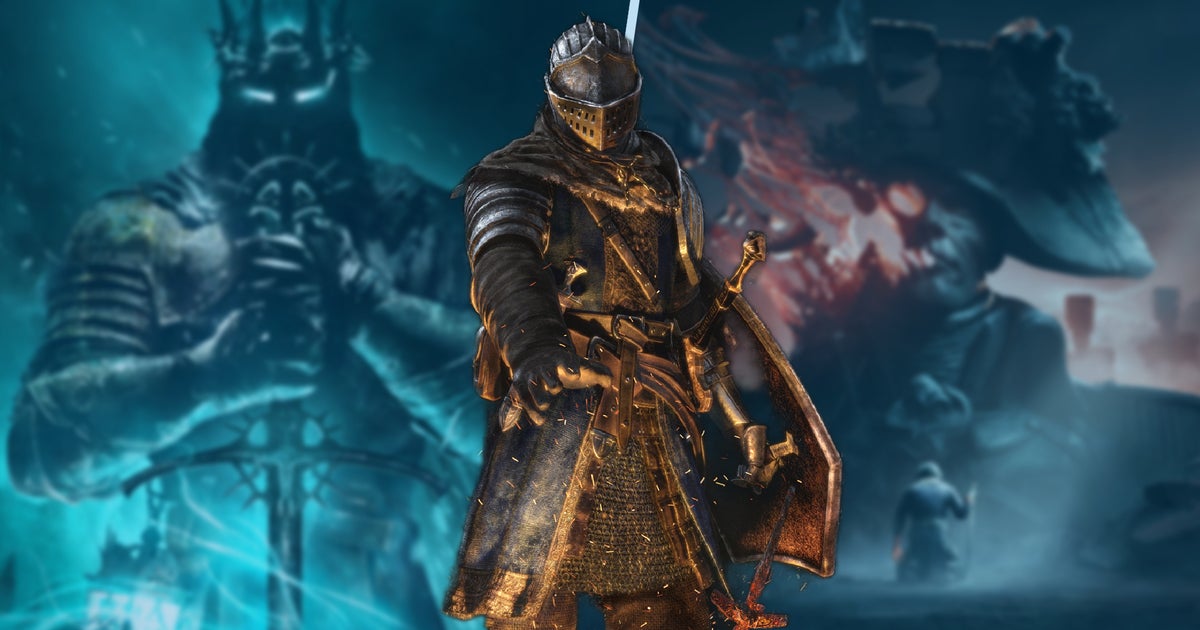
Beyond “Soulslike“: Why Gaming Needs New Ways to Define Difficulty and Action
The gaming landscape is evolving, and with it, the labels we use to categorize experiences. We’ve seen this before with the rise of the “Metroidvania,” a term born from translating Japanese genre classifications.Now, the question arises: is “Soulslike” serving its purpose, or is it time for a new descriptor for games inspired by Dark Souls? And perhaps more importantly, can we move beyond simple comparisons and appreciate games on their own merits?
The Problem with ”Soulslike”
Currently, “Soulslike” is ubiquitous. It’s a convenient shorthand,especially as more studios – especially those emerging from China and Korea – aim for a global audience. Tho, its overuse is creating fatigue and, frankly, becoming meaningless.
Here’s why the term is losing its impact:
Dilution of Meaning: Applying “Soulslike” to almost any challenging action-RPG diminishes its original significance.
Marketing Reliance: Studios lean on the label for instant recognition,hindering the ability to establish unique identities.
Genre Stagnation: Constantly referencing dark Souls can stifle innovation and discourage developers from truly breaking new ground.
Audience Fatigue: Players are growing tired of the expectation that every challenging game must be compared to FromSoftware’s masterpiece.
You might be wondering, is simply calling these games “action-RPGs” enough? Perhaps, but it lacks nuance. It doesn’t convey the specific elements – deliberate combat, stamina management, challenging boss encounters, and often, a somber atmosphere – that initially defined the subgenre.
The Rise of Chinese Studios and the Appeal of Action-RPGs
The influx of high-quality action-RPGs from Chinese developers is a significant factor in this discussion. Black Myth: Wukong’s success, for example, has demonstrably opened doors for other studios.
According to Liang, a developer interviewed by Eurogamer, action-RPGs are particularly attractive for this shift from mobile gaming:
Visual Fidelity: Console and PC platforms allow for significantly enhanced graphics and detail.
Control Schemes: More complex and satisfying control schemes are possible.
Storytelling Potential: These platforms enable richer and more immersive narratives.
studios in China and korea are actively seeking international recognition. leveraging the “Soulslike” label provides a quick way to signal quality and gameplay style to a wider audience. But this reliance is ultimately counterproductive.
A Call for Innovation and New Labels
Fortunately, some developers are recognizing the need for change. Game Science, the studio behind Black Myth: Wukong, announced Black Myth: Zhong Kui with a clear intention to experiment and forge a new path.
Their CEO, Feng Ji, even quoted Nintendo’s late president, Satoru Iwata: “There is no future in merely extending what already exists.” This sentiment is crucial.
What can we do?
Embrace Specificity: Instead of “soulslike,” focus on describing what makes a game unique. Is it the combat system? The world design? the narrative structure?
Support Originality: Reward developers who take risks and create experiences that aren’t simply imitations.
Refine Genre Definitions: As new games emerge, we need to be open to creating new, more accurate labels.
Appreciate Individuality: You, as a player, should approach each game with an open mind, recognizing its strengths and weaknesses without immediately comparing it to others.
Looking Ahead
The future of action gaming hinges on innovation. Labelling games is a natural human tendency, but it shouldn’t limit our appreciation for creativity. It’s time to move beyond the constraints of “Soulslike” and celebrate the diversity of experiences the industry has to offer. Let’s focus on what makes each game special, rather than simply where it fits on a pre-defined spectrum.[Image of Black Myth: Zhong Kui showing mythical figure riding a giant tiger. Image credit: Game Science] – Tiger, tiger, burning bright
Worth a look