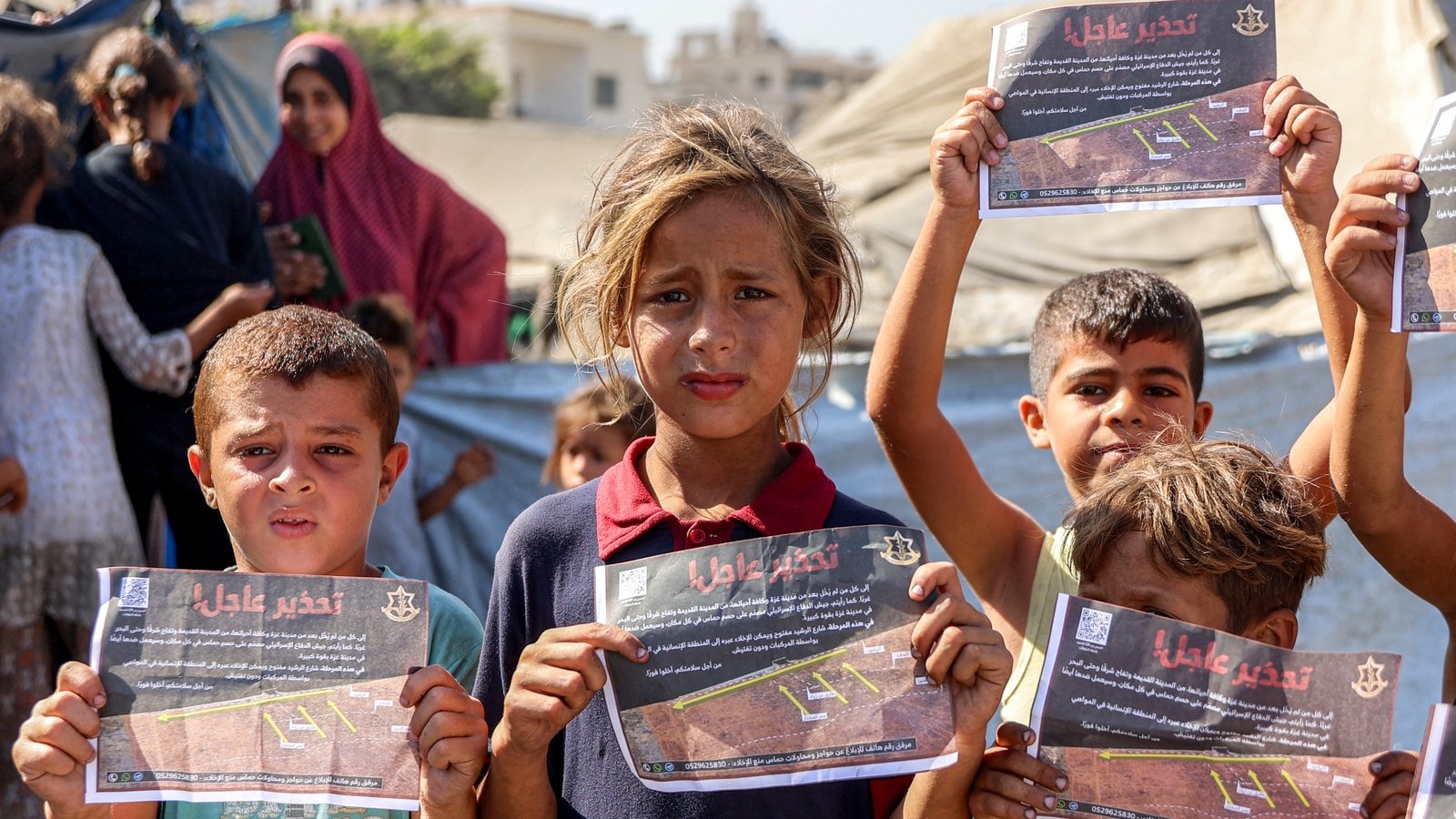
Gaza Under Relentless Bombardment: Humanitarian Crisis Deepens as Evacuations Continue
The situation in Gaza City remains dire, with residents reporting continuous, intense bombardment. As Israel continues its military operations, the humanitarian crisis is escalating, forcing displacement and raising fears for the lives of civilians. This article provides a comprehensive update on the latest developments, examining the impact on the ground, aid efforts, and the broader geopolitical context.
The Escalating Conflict: A City Under Siege
For the past 24 hours, the explosions have been non-stop, according to adel, a 60-year-old father of two in Gaza City near Beach refugee camp. He, like many residents, has chosen to remain anonymous for safety. The relentless attacks are creating a climate of fear, pushing families to flee their homes.
Adel’s testimony reflects a grim reality: many believe the bombardments are a deliberate tactic to force displacement. “by these bombardments they are telling people ‘You either leave your area or die there,'” he stated, highlighting the desperate choices facing Gazans.
Reports indicate at least 15 homes in Beach camp have been directly hit by airstrikes. Worse still, the Israeli army is reportedly warning residents that strikes on their homes are imminent, leaving them with little time to react.
Tragically, a single strike in the Al-Tuwam area of northern Gaza City claimed the lives of 14 civilians. Deadly strikes are also impacting the south of Gaza, where many are attempting to seek refuge from the fighting in the north.
Displacement and the Humanitarian Toll
The scale of the humanitarian crisis is staggering. Amjad Al-Shawa,head of the Palestinian NGOs Network,estimates that approximately 10% of Gaza City’s population has already left since Israel announced its plans for a takeover a month ago. This represents a meaningful internal displacement crisis, straining already limited resources.
the consequences of the ongoing conflict are devastating:
* Mass Casualties: Over 64,000 people have been killed, the vast majority of whom are civilians, according to health authorities in Gaza.
* widespread Hunger: A severe hunger crisis is gripping the territory, with at least 411 people, including 142 children, having died from malnutrition and starvation.
* Infrastructure Collapse: Much of Gaza has been reduced to rubble, crippling essential services and hindering aid delivery.
Aid Efforts and International Response
Israel has announced plans to expand “Crossing 147” in southern Gaza, aiming to increase aid flow into a designated humanitarian zone. The stated goal is to triple the current intake capacity to 150 trucks per day, prioritizing food supplies.
However, these efforts are widely seen as insufficient.The UN and numerous governments – even those traditionally allied with Israel – have condemned the evacuation order for Gaza City, calling for an immediate ceasefire and criticizing the conditions within the humanitarian zone.
Understanding the Roots of the Conflict
The current crisis stems from the October 7, 2023, Hamas attack on southern Israel. this attack resulted in the deaths of 1,200 people, primarily civilians, and the abduction of 251 hostages. While Israel has a right to defend itself,the scale and nature of its response have drawn widespread international criticism.
Recent Developments: West Bank Stabbing Attack
In a separate incident, Israeli police arrested an attacker from the West Bank following a stabbing attack on guests at a hotel near Jerusalem. Two people were hospitalized consequently. This highlights the broader regional instability and the potential for escalation beyond Gaza.
What You Need to Know & What’s Next
The situation in Gaza is rapidly evolving.You can stay informed by following these resources:
* RTE News – Middle East: https://www.rte.ie/news/middle-east/
* United Nations Relief and Works Agency (UNRWA): https://www.unrwa.org/
* International Committee of the Red Cross (ICRC): https://www.icrc.org/
The coming days will be critical. A sustained ceasefire,increased humanitarian access,and a commitment to long-term
Worth a look