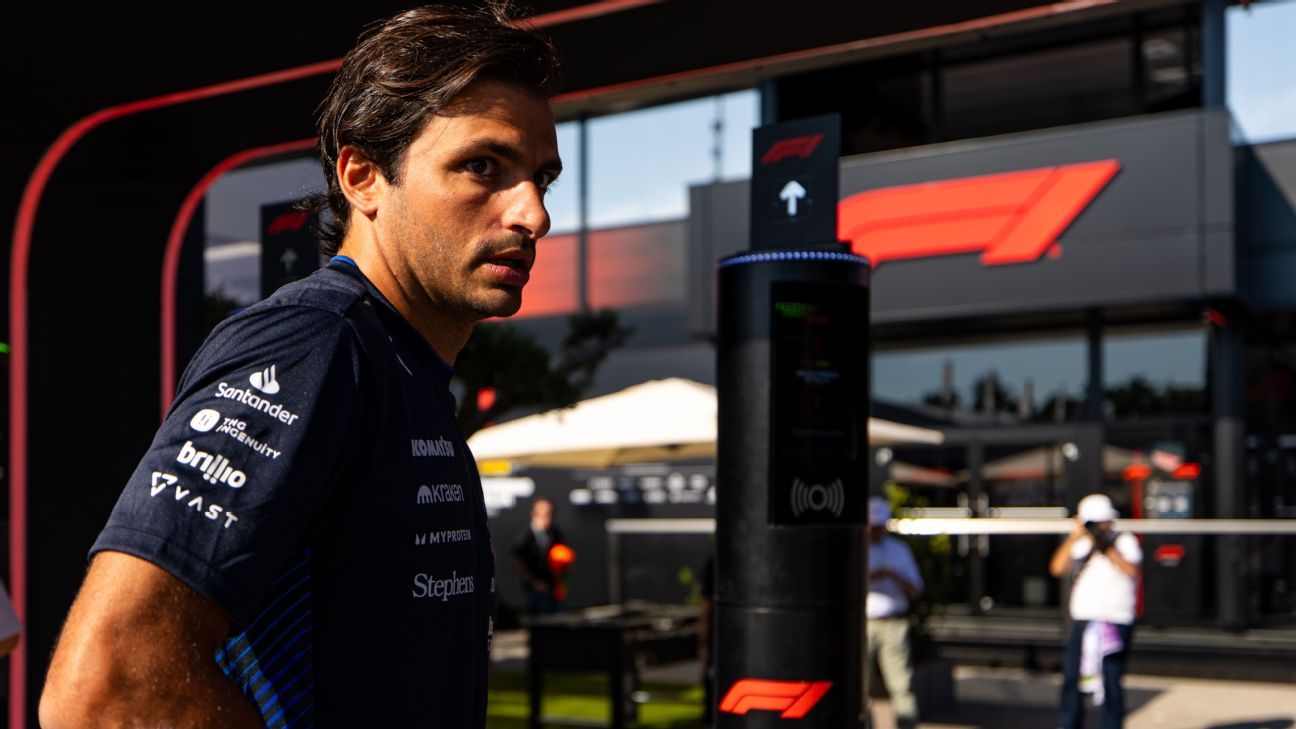
Carlos Sainz‘s Dutch Grand Prix Penalty Rescinded: A Deep Dive into the Controversy and its Implications
The Formula 1 paddock breathed a collective sigh of relief this week as the controversial 10-second penalty handed too Carlos Sainz at the Dutch Grand Prix was officially rescinded. The decision, reached after a thorough review and presentation of new evidence by Williams Racing, highlights the complexities of on-track incidents and the evolving process of race stewarding in F1. this wasn’t simply a reversal of fortune; it’s a case study in how new technology and diligent team work can challenge initial judgements and uphold the principles of fair racing.
The Initial Incident & Controversy
During the chaotic closing stages of the Dutch Grand Prix at Zandvoort, Sainz was penalized for causing a collision with Liam Lawson. The stewards initially deemed Sainz at fault for impeding Lawson while defending position, a decision that dropped the Ferrari driver from fifth to twelfth place, effectively erasing a strong points finish. Sainz himself vehemently protested the penalty, calling it “a complete joke” and questioning the logic behind the ruling.The frustration was palpable, not just for Sainz and ferrari, but for many fans who felt the incident was a racing accident.
Williams’ Persistent Pursuit of Justice
While accepting the served time penalty was irreversible,Williams Racing refused to let the matter rest. They believed the initial assessment lacked crucial data and embarked on a steadfast effort to present a more complete picture of the incident to the FIA. This wasn’t about sour grapes; it was about upholding the integrity of the sport and ensuring decisions are based on all available facts.
To trigger a review,Williams needed to present evidence deemed “new,relevant,and critically importent.” They successfully did so, submitting footage from two previously unavailable camera angles: a 360-degree camera mounted on sainz’s car and a rear-facing camera on Lawson’s vehicle. Crucially, they also included testimony from Sainz himself. While the stewards acknowledged driver testimony isn’t typically revisited during races due to the speed of decision-making, the new video evidence proved pivotal.
The Decisive Evidence: Lawson’s loss of Traction
The newly presented footage revealed a critical detail missed in the initial assessment: Lawson’s car experienced a momentary loss of traction and slid before making contact with Sainz. This slide, Williams argued, made the collision unavoidable for Sainz, regardless of his defensive positioning.
The stewards, after careful consideration, agreed. Their revised decision explicitly stated the collision was caused by Lawson’s “momentary loss of control.” However, they also acknowledged a degree of shared obligation, noting Sainz took a risk by driving closely to Lawson when there wasn’t sufficient “room” for such a maneuver. This nuance is important - the stewards didn’t absolve Sainz entirely, but determined he wasn’t wholly or predominantly to blame.
The outcome & Implications for Sainz and the Championship
The rescission of the penalty meant the 10-second time penalty remained served, and the race results weren’t altered. However, the two penalty points added to sainz’s Super License were removed, bringing his total to two within the past 12 months – avoiding the threshold of 12 points that triggers a race suspension.
This outcome is significant for several reasons:
* demonstrates the Power of Technology: The availability of increasingly complex onboard camera systems is revolutionizing incident analysis in F1. This case underscores the importance of utilizing all available data to make informed decisions.
* Highlights the Importance of Team Diligence: Williams’ commitment to pursuing a review, gathering evidence, and presenting a compelling case is a testament to their dedication to fairness and accuracy.
* Reinforces the Concept of Racing Incidents: The stewards’ final assessment correctly categorized the incident as a “racing incident,” acknowledging the inherent risks and complexities of wheel-to-wheel competition.
* Raises Questions About Stewarding Consistency: While the reversal is positive, it inevitably raises questions about the consistency of stewarding decisions.The FIA will likely review the process to identify areas for improvement and ensure similar incidents are assessed with the same level of scrutiny.
Looking Ahead: Improving Stewarding Processes
Williams Racing, while pleased with the outcome, emphasized the need for continued collaboration with the FIA to refine stewarding processes and racing rules. As team spokesperson stated, “mistakes are part of motor racing,” but a commitment to continuous improvement is essential.
This incident serves as a valuable learning experiance for the entire F1 community.