Russia Railway Disruptions: Sabotage, Derailments, and the Ukraine Conflict – A Deep Dive
The Russian railway system, a critical artery for both civilian and military logistics, is facing escalating disruptions. Recent incidents, including train derailments in the Leningrad region and an explosion in oryol, point to a pattern of sabotage impacting Russia’s ability to move troops and supplies. This article provides a extensive overview of these events, their potential implications, the context of the ongoing conflict in Ukraine, and what these disruptions mean for the broader geopolitical landscape.We’ll explore the details of the latest incidents, analyze Ukraine’s alleged involvement, and examine the strategic significance of Russia’s rail network.
Recent Incidents: A Timeline of Disruption
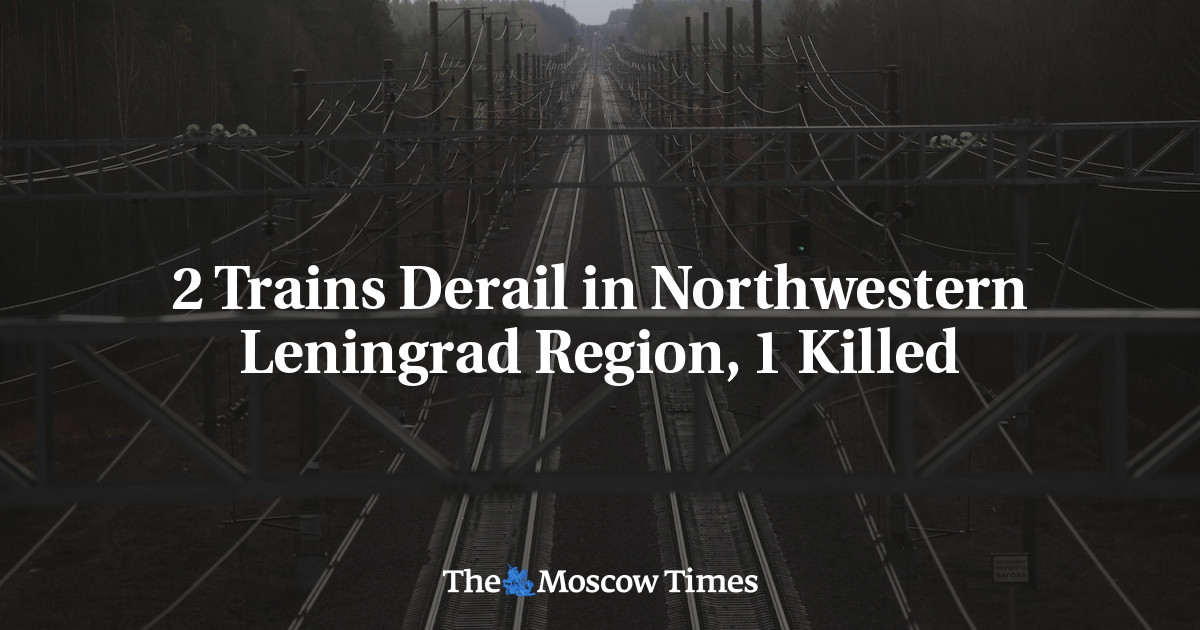
Early Sunday, September 14th, 2025, Russia’s western Leningrad region experienced two separate train derailments. Governor Alexander Drozdenko reported that a train driver tragically died after being trapped in the cabin of a diesel locomotive near Semrino station in the Gatchina district. Rescue efforts were immediately launched, but the driver succumbed to his injuries while en route to the hospital.
Hours prior, late Saturday, an explosive device detonated on a rail track in the Oryol region, resulting in the deaths of three Russian National Guard officers. Ukraine’s military intelligence agency (GUR) has claimed duty for the Oryol explosion and the derailment of a freight train carrying empty tank cars further south in Leningrad Oblast, between Stroganovo and Mshinskaya. While the GUR did not claim responsibility for the incident resulting in the driver’s death, a source within the agency stated the targeted railway infrastructure is vital for supplying Russian forces in the Kharkiv and Sumy directions. They anticipate these attacks will create ”important logistical difficulties” for Russia. Unverified social media footage depicts a train car overturned near the tracks, corroborating reports of the derailment.
Ukraine’s Alleged Role and the strategy of Disruption
While Kyiv doesn’t routinely claim direct responsibility for attacks within Russia, a pattern of acknowledging or subtly supporting such incidents has emerged. Ukraine argues that Russia has consistently exploited its railway network for military purposes since the full-scale invasion began in February 2022. This justification frames the attacks as legitimate targeting of military logistics, rather than indiscriminate acts of sabotage.
The GUR’s statement regarding the destruction of the tank cars and their fuel highlights a specific objective: hindering Russia’s ability to resupply its troops. This aligns with a broader Ukrainian strategy focused on degrading Russia’s logistical capabilities, aiming to slow down offensive operations and weaken their overall military strength. This strategy, often referred to as operational disruption, seeks to create bottlenecks and vulnerabilities in the enemy’s supply chain.
The Strategic Importance of Russia’s Railway Network
Russia possesses one of the world’s largest railway networks, spanning over 85,500 kilometers (approximately 53,100 miles). This network is absolutely crucial for several reasons:
* military Logistics: As Ukraine alleges, the railways are a primary conduit for transporting troops, equipment, fuel, and ammunition to the front lines. The vast distances involved in the conflict make rail transport considerably more efficient than road transport.
* Economic Lifeline: The railway is vital for moving goods and resources across Russia’s vast territory, supporting its economy and connecting remote regions.
* Strategic Depth: The railway network provides Russia with strategic depth, allowing for the rapid deployment of forces and resources in response to threats.
* Dual-Use Infrastructure: The inherent dual-use nature of the railway – serving both civilian and military purposes – makes it a complex target, raising ethical and legal considerations.
Disrupting this network, therefore, has a significant impact on Russia’s war effort and its overall economic stability. According to a recent report by the institute for the Study of War (ISW) https://www.understandingwar.org/backgrounder/russian-logistics-and-ukrainian-strikes (September 2025),ukrainian strikes targeting Russian logistics nodes,including railways,have demonstrably slowed down the pace of Russian offensives in several key sectors.
Beyond the Headlines: Analyzing the Tactics and Potential Escalation
The methods employed in these attacks – explosives placed on the tracks – suggest a relatively low-tech, but effective, approach to sabotage. This indicates that Ukraine may be relying on partisan networks or
Related reading