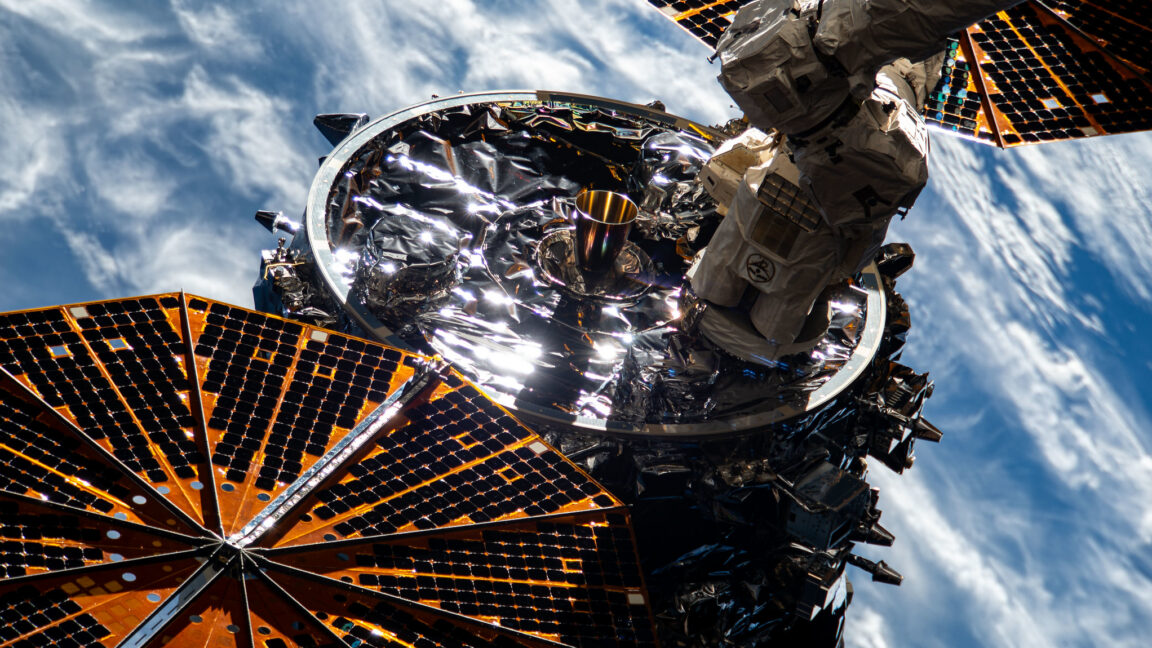
Northrop Grumman Cygnus NG-23 Mission: Navigating a Potential Engine Anomaly & record Payload
A recent setback has cast a shadow over Northrop Grumman’s latest resupply mission to the International Space Station (ISS), designated NG-23. Damage sustained during the transport of the Cygnus spacecraft‘s pressurized cargo module from Italy has raised concerns about the primary engine’s functionality. While Northrop Grumman is exploring repair options, the decision has been made to prioritize the launch of the next available Cygnus vehicle later this month, highlighting the critical need for consistent ISS resupply. This incident underscores the inherent risks of space logistics and the complex engineering involved in maintaining a continuous presence in low Earth orbit.
This mission is especially noteworthy as it marks the inaugural flight of the larger Cygnus XL variant. Boasting an additional 5.2 feet (1.6 meters) in length, the Cygnus XL offers a 33% increase in cargo capacity compared to its predecessor. as reported by Ars Technica, this translates to the heaviest load of supplies ever delivered to the ISS by a commercial cargo vehicle - a testament to the growing capabilities of commercial space transportation. The increased capacity is vital for supporting the ongoing research and operational needs of the orbiting laboratory.
Understanding the Cygnus Spacecraft & Propulsion System
The Cygnus spacecraft utilizes a reliable hypergolic propulsion system, employing a mixture of hydrazine and nitrogen tetroxide.This chemical combination ignites instantly upon contact,eliminating the need for an ignition source and contributing to the system’s renowned dependability. Beyond the main engine, Cygnus is equipped with smaller reaction control system (RCS) thrusters. These are typically used for fine-tuning the spacecraft’s orientation and making minor orbital adjustments during its journey to the ISS.
However, the potential main engine issue raises the question: could the RCS thrusters be employed as a workaround? While theoretically possible - using the RCS thrusters to gradually adjust the orbit for a final approach – the feasibility remains uncertain. This would require a significant expenditure of RCS propellant and a carefully calculated trajectory. A recent study by the Space Logistics Institute (September 2024) highlighted the challenges of prolonged RCS burns, noting potential impacts on mission duration and overall efficiency.
Unlike SpaceX’s reusable dragon capsule, the Cygnus is a disposable vehicle. Its final act involves being filled with waste from the ISS and then intentionally deorbited for a destructive reentry over the remote Pacific Ocean. This means any issue preventing the Cygnus from reaching the ISS results in the complete loss of its valuable cargo. The NG-23 mission carries essential provisions, including fresh food for the crew, hardware for a diverse range of scientific experiments – spanning biological research and technology demonstrations – and critical spare parts, such as components for the station’s life support systems, including the urine processor and toilet. Maintaining these systems is paramount for long-duration spaceflight.
Related Keywords: space station cargo, commercial resupply services, low Earth orbit logistics, spacecraft propulsion, ISS maintenance.
Evergreen Section: The Future of ISS Resupply
The reliance on commercial partners like Northrop Grumman and SpaceX for ISS resupply is a cornerstone of the current space program. Looking ahead, the development of new launch vehicles and spacecraft, such as Boeing’s Starliner and possibly Blue Origin’s future offerings, will further diversify the options and enhance the resilience of the supply chain. Furthermore, advancements in in-space manufacturing and resource utilization could eventually reduce the dependence on Earth-based resupply, paving the way for a more sustainable and autonomous presence in space. The ongoing evolution of these capabilities is crucial for enabling future deep-space exploration missions.
Conclusion:
The NG-23 mission’s potential engine anomaly serves as a stark reminder of the complexities and risks inherent in space travel. While the situation is being carefully assessed, the swift decision to prioritize the next launch demonstrates a commitment to maintaining uninterrupted ISS resupply. The Cygnus XL’s increased cargo capacity represents a significant step forward in commercial space transportation, and its successful deployment is vital for supporting the ongoing scientific endeavors and operational needs of the International Space Station. Are you following the latest developments in space exploration? Share your thoughts in the comments below!
FAQ Section:
Q: What is the primary purpose of the ISS resupply missions like NG-23?
A: These missions are crucial for delivering essential supplies – food, water, scientific equipment, and spare parts – to the astronauts living and working on the International Space Station.
**Q: What happens to the Cygnus spacecraft after it delivers its cargo to the ISS?
Worth a look