Russian Defense Sector Wages Decline: A Turning Point in War Production?
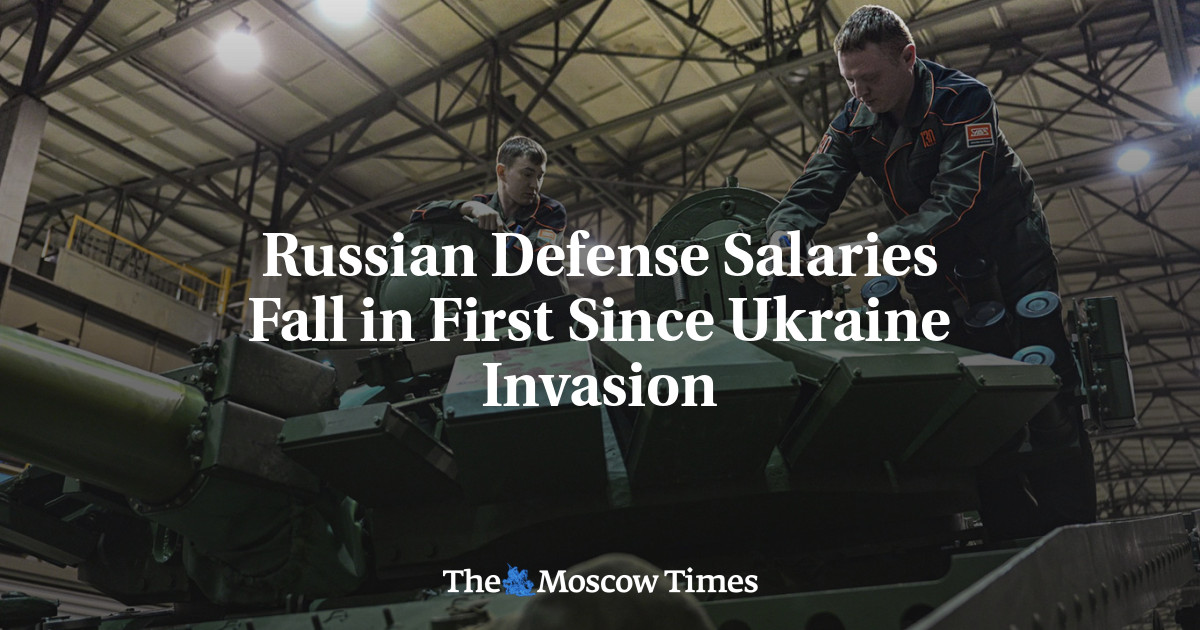
Recent data indicates a significant shift within Russia’s defense industry. For the first time since the full-scale invasion of Ukraine, wages at defense enterprises have fallen, even as national average salaries continue to rise. This unexpected trend, highlighted in a study by Novaya Gazeta Europe, signals a potential slowdown in the sector’s rapid expansion.
The Wage Decline: Key Findings
The Novaya Gazeta europe study analyzed nearly 600,000 job postings from 1,200 military enterprises on hh.ru, a leading Russian job platform. Here’s what the data reveals:
* 10% Decrease: Advertised salaries in the defense sector were down 10% in August 2025 compared to August 2024.
* Peak Hiring Passed: Defense hiring peaked in August 2022, representing almost 2% of all vacancies.
* Reduced Job Openings: Just 34,500 defense jobs were posted between May and August 2025, a significant drop from the 52,000 positions available during the same period in 2024. Even January 2022, before the invasion, saw higher hiring numbers.
This downturn challenges earlier predictions of a massive labor shortage. Late in 2024, the State Duma warned of a potential shortfall of 400,000 defense workers.However,by mid-2025,many factories had already reached their production capacity.
From Labor Shortage to Capacity Limits
the initial surge in state orders following the invasion created a fierce competition for workers, driving wages upward. This was a natural result of rapidly scaling up production. However,russia’s Deputy Industry Minister,Vasily Osmakov,recently stated the economy has reached “a turning point.”
Factories are now finding it arduous to increase output simply by adding more personnel and relying on overtime. This suggests a shift from a labor-constrained environment to one limited by other factors – potentially supply chain bottlenecks, logistical challenges, or inherent production capacity.
the Drone and Missile Exception
Not all segments of the defense industry are experiencing this slowdown. Drone and missile producers are bucking the trend.
* Revenue Growth: Revenues at drone manufacturers have increased 2.5 times since 2022, according to Novaya Gazeta Europe and the Institute for the Study of War.
* Continued Wage Increases: Wages in these specialized areas are still climbing, reflecting the high demand for skilled labor in these critical sectors.
This divergence highlights the evolving priorities within the Russian defense industry, with a growing emphasis on advanced technologies like unmanned systems.
What Does This Mean for You?
If you’re following the conflict in Ukraine, this data offers a crucial insight into Russia’s ability to sustain its war effort. A decline in wages and reduced hiring in the broader defense sector could indicate limitations in its long-term production capacity. While drone and missile production remains strong, the overall trend suggests a stabilization – and potential future contraction - of the Russian defense industrial base.
Evergreen Insights: The Dynamics of Wartime Economies
Wartime economies are rarely lasting in the long term. The initial boost in production and employment often gives way to challenges like inflation, resource depletion, and labor market distortions. Historically,countries engaged in prolonged conflicts have faced significant economic strain,even if they initially experience short-term gains in specific sectors. Understanding these dynamics is crucial for assessing the long-term implications of the conflict in Ukraine and its impact on Russia’s economic future. The shift from a labor-hungry market to one facing capacity constraints is a classic sign of this transition.
Frequently Asked Questions (FAQ)
1. What is the primary keyword?
The primary keyword is “Russian defense industry wages.” This article comprehensively addresses trends and changes within this sector.
2. Why are wages falling in the Russian defense sector?
Wages are falling because factories have largely reached their production capacity and are no longer experiencing the same labor shortages that drove up pay in the initial stages of the war.
3. Is the entire Russian defense industry affected by this wage decline?
no. Drone and missile
Worth a look