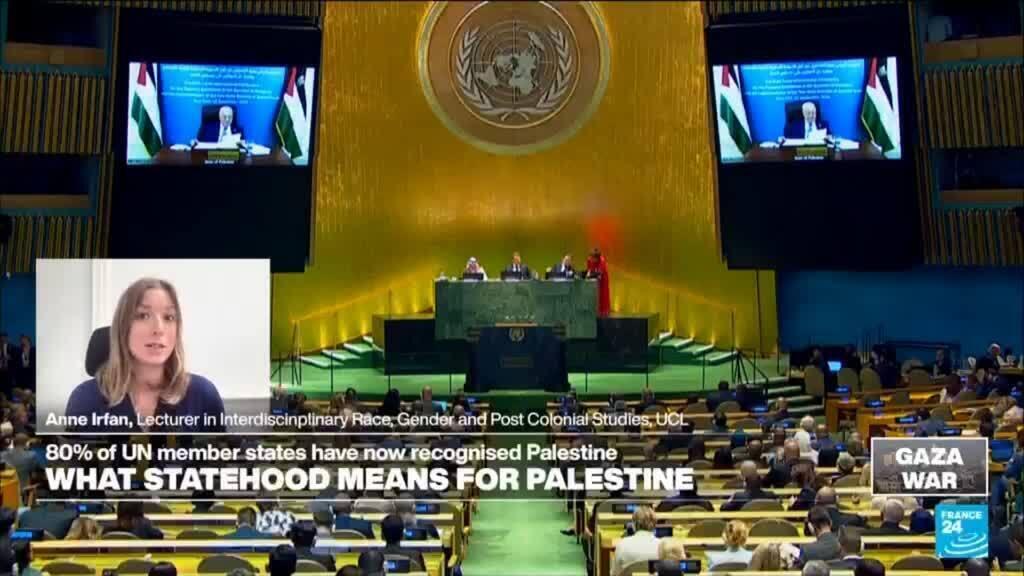
The Shifting sands of Recognition: Why Now for Palestine?
The recent wave of Western nations extending recognition to the State of Palestine – a move occurring amidst the ongoing crisis in Gaza - has ignited a crucial debate. Is this a genuine step towards a lasting two-state solution, or merely a symbolic gesture masking decades of political inaction? As of september 23, 2025, the timing of these recognitions, coupled with the protracted nature of the Israeli-Palestinian conflict, demands a critical examination of motivations and potential consequences. This article delves into the historical context, geopolitical factors, and the critical need for substantive action beyond symbolic recognition of Palestine.
Decades of Delay: A history of Symbolic Support
For approximately three decades, many nations have publicly voiced support for a two-state solution – a framework envisioning an independant Palestinian state alongside Israel. though,the actual implementation of this vision has remained elusive. As succinctly pointed out, “It’s striking that many of the states now recognizing Palestine have said for about 30 years that they support a two-state solution. Which begs the question: if you’ve supported it for so long, why has it taken this long to recognize one of those states?”
This question underscores a essential disconnect between rhetoric and action.
The historical reluctance to formally recognise Palestine stemmed from a complex interplay of factors, including strong lobbying efforts by pro-Israel groups, concerns about regional stability, and a perceived lack of a viable Palestinian state capable of self-governance. However, the current situation – characterized by the devastating humanitarian crisis in Gaza and increasing international pressure – has demonstrably altered the calculus for many governments. The October 7th, 2023 attacks by Hamas and Israel’s subsequent military response have forced a reassessment of long-held positions.
The Geopolitical Landscape and the Current crisis
The recent recognitions by countries like Norway, Spain, and Ireland are not occurring in a vacuum. They are inextricably linked to the escalating humanitarian catastrophe in Gaza, where over 36,000 Palestinians have been killed as October 2023 (UNRWA data, September 2025). This immense suffering, coupled with accusations of potential war crimes, has created a moral imperative for many nations to take a stronger stance.
Moreover, the shifting geopolitical landscape plays a significant role. The growing influence of the Global South, especially nations in the Middle East and africa, who have historically supported Palestinian rights, is exerting pressure on Western governments. The BRICS nations, for example, have consistently advocated for a more equitable resolution to the conflict. this dynamic is challenging the traditional dominance of Western powers in shaping international policy.
Beyond Recognition: the Need for Accountability and Substance
Dr. Anne Irfan, a Lecturer in Interdisciplinary Race, gender and Postcolonial Studies at UCL, cautions against viewing recognition as an end in itself. She warns that recognition, without substance or legal accountability, risks leading to another empty chapter where states signal virtue while sidestepping responsibility.
This is a critical point. Formal recognition, while symbolically critically important, does not automatically translate into tangible improvements for Palestinians.
What is required now is a concerted effort to address the fundamental issues underpinning the conflict:
* Ending the Occupation: The ongoing Israeli occupation of Palestinian territories remains the primary obstacle to peace.
* Establishing a viable Palestinian State: This requires defining clear borders, ensuring territorial contiguity, and granting Palestinians full sovereignty.
* Addressing the refugee Issue: A just and lasting solution must be found for Palestinian refugees who were displaced during the 1948 and 1967 wars.
* Ensuring accountability for War Crimes: Investigations into alleged war crimes committed by all parties are essential to deter future violations and promote justice. The International Criminal Court’s (ICC) examination into the situation in Palestine, initiated in 2021, is a crucial step in this direction.
* Economic Progress: Investing in the Palestinian economy is vital to create opportunities and improve living conditions.
The recent decision by several European nations to suspend funding