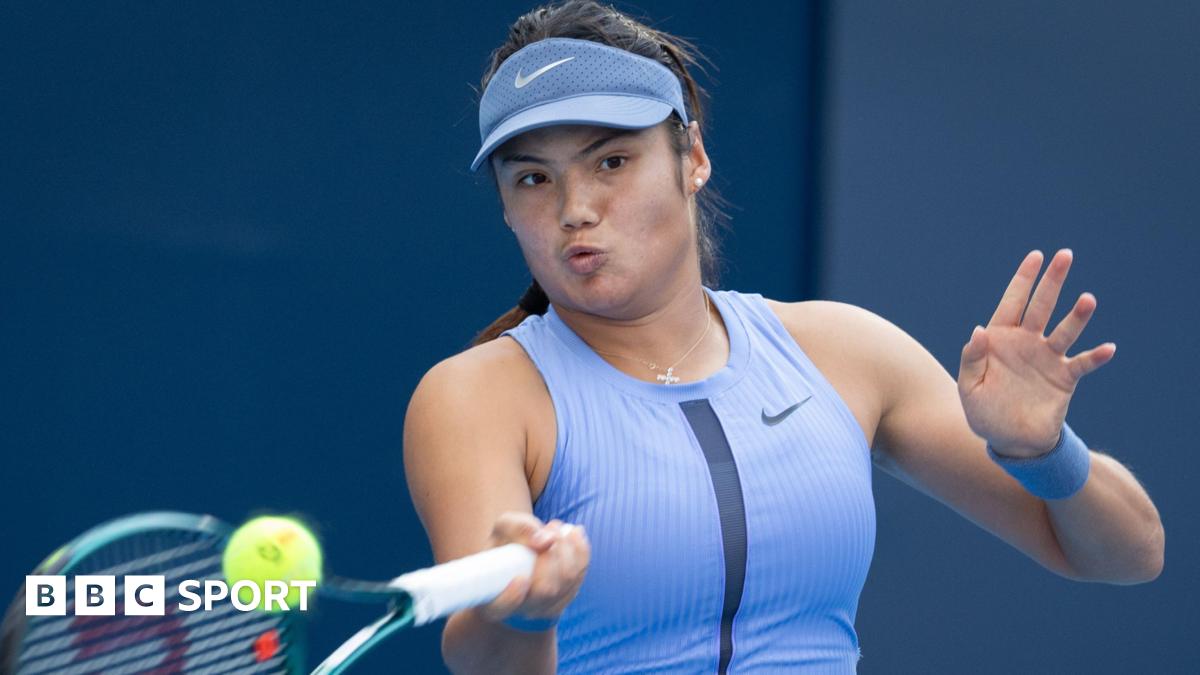
Emma Raducanu‘s Close call at the China Open: Analyzing a Tough Loss and What It Means for Her Season
Emma Raducanu faced a heartbreaking defeat at the China Open, falling to jessica Pegula in a grueling last-32 match. Despite a strong start and multiple match point opportunities, Raducanu couldn’t close out the victory, losing 6-3, 6-7 (9-11), 0-6. This loss follows a similar pattern from earlier in the month against Barbora Krejcikova, raising questions about her ability to finish strong in tight contests. But what exactly happened in Beijing, and what does this mean for the rest of Raducanu’s season?
A Match of Contrasts: Raducanu vs. Pegula
The match was a rollercoaster of momentum shifts.Raducanu took the first set convincingly, showcasing her aggressive baseline game. However, Pegula, ranked seventh in the world, battled back, demonstrating the resilience that has made her a consistent top-10 player.
The second set was particularly dramatic. Both players fought fiercely, with Pegula visibly frustrated at times – even throwing her racquet after a tough fifth game. This emotional display highlighted the intensity of the competition. Ultimately,a nail-biting tie-break decided the set,with Pegula saving three match points before seizing control. The third set saw a stark shift, with Pegula dominating Raducanu to close out the match.
The Crucial Tie-Break: Where the Match Turned
The tie-break proved to be the pivotal moment. Pegula’s ability to elevate her game under pressure was key. She saved two match points with stunning backhand winners and another on Raducanu’s serve. This clutch performance showcased her experience and mental fortitude.
As Pegula herself noted, “That was really intense. I got myself back into the tie-break and just wanted to keep the pressure on.” She acknowledged a bit of luck with those backhand winners, but emphasized her determination to keep fighting.
What Does This mean for Raducanu?
This loss is undoubtedly a setback for Raducanu. While she demonstrated flashes of brilliance, particularly in the first set, her inability to convert match points is a recurring concern.It highlights a potential area for enhancement in her game: closing out matches against top-tier opponents.
Here’s a breakdown of key takeaways:
* Mental Toughness: Raducanu needs to develop greater mental resilience to navigate high-pressure situations.
* Closing Ability: Converting match points is crucial. Practicing these scenarios in training could be beneficial.
* Consistency: Maintaining a high level of play throughout the entire match is essential.
However,it’s important to remember that Raducanu is still a young player with immense potential. She’s navigating the challenges of establishing herself as a consistent force on the WTA tour.
Beyond Raducanu: Other british Success at the China Open
While Raducanu’s campaign ended in disappointment, ther was positive news for British tennis. Sonay Kartal advanced to the round of 16 with a victory over Maya Joint, showcasing the growing depth of British talent. This is a promising sign for the future of british tennis.
Looking Ahead: The Rest of the Season
Raducanu’s season has been marked by both highs and lows.Injuries and inconsistent form have hampered her progress. However, she continues to show glimpses of the talent that propelled her to the US Open title in 2021.
The remaining tournaments of the season will be crucial for Raducanu to build momentum and confidence heading into 2024. Focusing on her physical conditioning, mental game, and closing ability will be key to unlocking her full potential.
Are you a tennis fan following Raducanu’s journey? What do you think she needs to work on to reach the next level? Share your thoughts in the comments below!
Evergreen Insights: The Psychology of Match Points
The pressure surrounding match points is immense. Players often tighten up, altering their technique and making unforced errors. This phenomenon is well-documented in sports psychology.
Several factors contribute to this:
* Increased Anxiety: The fear of losing the match
Worth a look
- What happened to Brandon Aiyuk? How ex-All-Pro went from $120 million to on the outside looking in on NFL
- ONLINE: MFK Dukla Banská Bystrica – ŠK Slovan Bratislava dnes, Niké liga LIVE (1. kolo) – SPORTNET
- China’s US Treasury Holdings: A Tool to Dismantle the Dollar (newsdirectory3.com)
- China Launches Commercial Space Debris Monitoring Constellation (archyde.com)