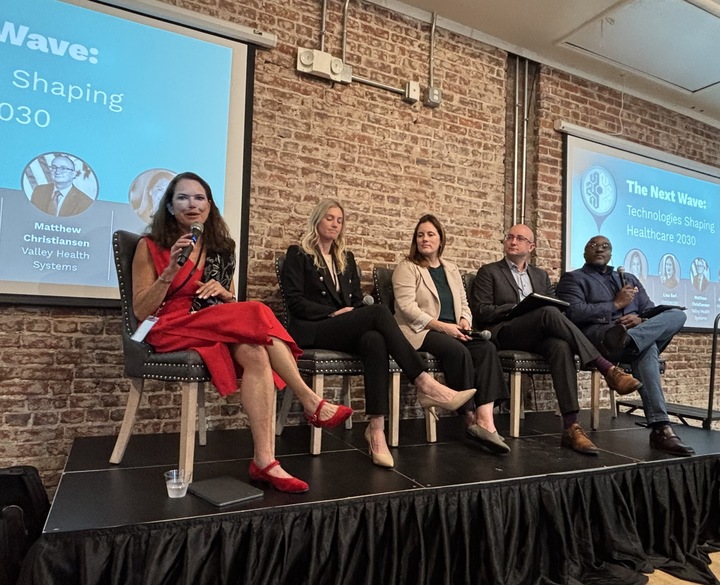
The Future of Healthcare: Experts Weigh In on Promising Technologies & Critical Challenges
The healthcare landscape is rapidly evolving, driven by technological advancements poised to reshape how we prevent, diagnose, and treat illness. at the recent Healthcare 2030 Summit hosted by the Digital Medicine Society in Washington, D.C., leading experts discussed the most exciting innovations on the horizon – and the hurdles we must overcome to realize their full potential. This article distills their insights, offering a comprehensive look at the future of healthcare, grounded in practical considerations and expert perspectives.
The Rise of continuous, Real-Time Health Monitoring
One of the most compelling trends is the move towards continuous data collection. We’re moving beyond episodic check-ups to a world of constant health insights.
* Implantable Sensors: Amy Abernethy, co-founder of Highlander Health, envisions a future with implantable chips capable of continuously tracking over 130 metabolites in real-time.Think of it as a substantially more advanced version of a continuous glucose monitor.
* Longitudinal Data Streams: Combining these advanced sensors with data from other sources promises a wealth of longitudinal data, offering a holistic view of an individual’s health over time.
However, this influx of data presents a important challenge.Current healthcare systems aren’t equipped to effectively interpret and act upon this constant stream of details.Existing evidence frameworks are outdated, leaving clinicians uncertain about how to translate new metrics into actionable care plans.
Unleashing the Power of Existing Health Data with AI
Electronic Medical Records (EMRs) have long been a source of frustration for clinicians. They’re often clunky, inefficient, and expensive. But they also represent a treasure trove of untapped data.
Matthew Christiansen, VP of Health Affairs and CMO at valley Health System, believes Artificial Intelligence (AI) holds the key to unlocking this potential.
* AI-Powered Efficiency: AI can analyze EMR data to streamline clinical workflows, reducing administrative burdens and improving efficiency.
* Proactive Insights: AI can flag critical information, like missing screening records, ensuring patients receive timely preventative care.
* Cost Reduction: By optimizing processes and reducing administrative overhead, AI can contribute to significant cost savings.
Prioritizing Cost Reduction Through Smart Technology
Simply adding new technology to healthcare isn’t enough. In fact, it can exacerbate the already pressing issue of rising costs.
Lisa Bari, Head of Policy and External affairs at Innovaccer, emphasizes the need for technologies that demonstrably reduce the underlying cost of care.
* Focus on Value: New tools must improve outcomes and lower expenses. “Shiny and new” isn’t a sufficient justification.
* Data Connectivity: Tools that effectively connect and make data usable at the point of care are particularly promising.
* Enduring Solutions: The goal is to build a more affordable and accessible healthcare system, not simply add layers of complexity.
The Convergence of wearables and AI: A Shift to Preventative Care
Wearable technology, like smartwatches and fitness trackers, is already empowering individuals to take a more active role in their health. But the real potential lies in combining these devices with the power of AI.
Annie Tilton,Director of Clinical Outcomes Research at Oura,highlights this exciting convergence.
* From Reactive to Preventative: Wearables enable a shift from treating illness after it occurs to proactively preventing it.
* Enhanced Patient Engagement: Wearables keep patients engaged with their health outside of the clinical setting.
* Multimodal AI Systems: We’re moving beyond simple predictive models to sophisticated AI systems that can provide personalized support to both patients and providers between visits.
* Privacy & Trust: Crucially, AI tools must be accessible, trusted, and practical to have a meaningful impact on healthcare.
Key Takeaways & The Path Forward
The experts at the Healthcare 2030 Summit painted a picture of a future where healthcare is more personalized, proactive, and efficient. However, realizing this vision requires addressing critical challenges:
* Data Interpretation: Developing robust frameworks for interpreting the vast amounts of data generated by new technologies.
* Cost Control: Prioritizing technologies that demonstrably reduce the cost of care.
* Accessibility & Trust: Ensuring AI tools are accessible,trustworthy,and seamlessly integrated into clinical workflows.
* Ethical Considerations: Addressing privacy concerns and ensuring equitable access to these advancements.
The future of healthcare isn’t