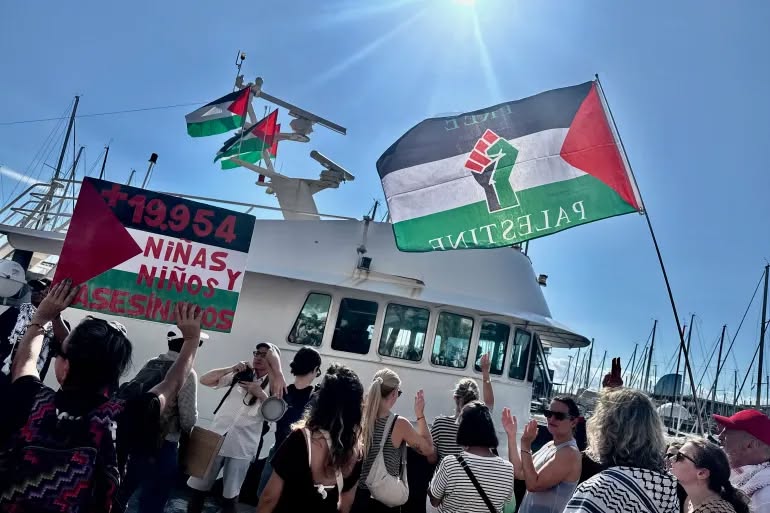
The Sumud Flotilla: A Bold Response to the Gaza Crisis and Governmental Inaction
The situation in Gaza remains a harrowing humanitarian crisis, and recent events highlight a growing frustration with international response. A powerful example of this is the Sumud Flotilla, a civilian aid mission that recently faced direct attacks while attempting to deliver crucial supplies to Gaza. This article delves into the details of the flotilla’s mission, the challenges faced, and the broader implications for international law and humanitarian aid, focusing on the courage of activists challenging the gaza blockade.
Recent reports from the UN (October 26, 2023) indicate that over 1.5 million Palestinians are internally displaced in gaza, facing severe shortages of food, water, and medical supplies. This escalating crisis has spurred independent initiatives like the Sumud Flotilla, aiming to circumvent restrictions and deliver aid directly to those in need. The flotilla’s story, as shared on the PalCast podcast featuring Sinn Féin Senator Chris Andrews, underscores the desperation driving such actions and the risks involved.
Facing Drone Strikes and International Law
Senator Andrews, participating directly from the sumud Flotilla, recounted harrowing experiences of repeated drone attacks, with his vessel struck four times during a single night. Despite the danger, the over twenty Irish participants, alongside others, remained steadfast in their commitment. This incident raises critical questions about the legality of targeting civilian vessels in international waters and the responsibility of governments to protect their citizens engaged in humanitarian work.
Andrews sharply criticized the Irish government’s response, characterizing it as limited to ”empty statements” while failing to provide concrete protection or challenge Israel’s actions. He contrasted this with Italy’s proactive deployment of a naval frigate to safeguard its citizens involved in similar aid efforts. This disparity highlights a perceived double standard and fuels the argument that the flotilla was effectively performing a duty governments should have undertaken long ago – delivering aid and amplifying the voices of those suffering in Gaza. The concept of humanitarian intervention, even in a non-military capacity, is central to understanding the flotilla’s motivations.
The situation in Gaza City is described by Andrews as a “genocide and a man-made famine,” a stark assessment reflecting the devastating impact of ongoing bombardment and the purposeful restriction of essential resources. This echoes concerns raised by Francesca Albanese, UN Special Rapporteur for the occupied palestinian territories, who stated in a report (November 2023) that the scale of destruction and the intent behind the actions raise serious questions about potential war crimes. The flotilla’s mission, thus, isn’t simply about delivering aid; it’s about documenting and exposing the realities on the ground, challenging the narrative frequently enough presented in Western media. Related terms like Gaza humanitarian crisis, siege of Gaza, and Palestinian aid are crucial for understanding the context.
The PalCast episode, available on Apple Podcasts and Spotify, provides firsthand accounts of the fear and frustration experienced by those on board, as well as a powerful indictment of the perceived indifference of Western governments and media. It’s a vital resource for understanding the human cost of the conflict and the determination of activists refusing to remain silent. For further information on the legal aspects of the blockade, see the International Committee of the red Cross’s resources on International Humanitarian Law.
Practical Tips for supporting gaza:
* Donate to reputable aid organizations: Organizations like UNRWA (https://www.unrwa.org/) and the Palestine Red Crescent Society (https://www.palredcrescent.ps/) are providing critical assistance on the ground.
* Contact your elected officials: Urge them to advocate for a ceasefire and increased humanitarian aid to gaza.
* Share information: Raise awareness about the situation by sharing accurate information and challenging misinformation.
* Support organizations advocating for Palestinian rights: Groups like the American-Arab Anti-Discrimination Committee (https://adc.org/) work to combat discrimination and advocate for justice