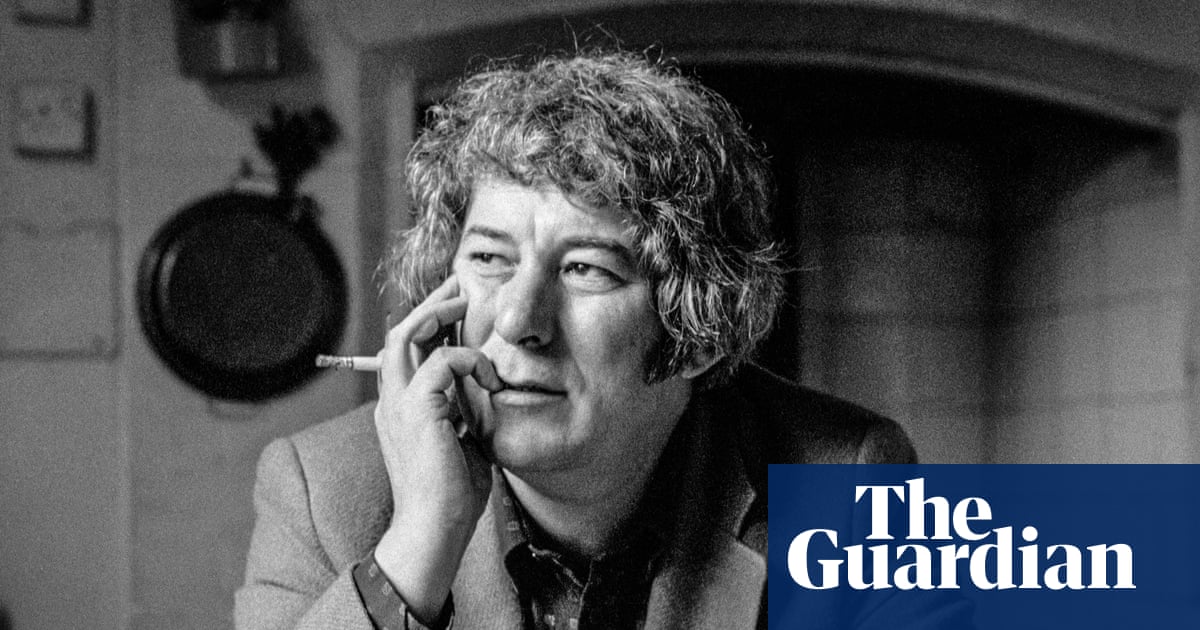
The Enduring Legacy of Seamus Heaney: A Deep Dive into His Collected Poems
Seamus Heaney remains a towering figure in 20th and 21st-century poetry. A new complete collection, The Poems of Seamus Heaney, edited by Rosie Lavan, Bernard O’Donoghue, and Matthew Hollis, offers an unprecedented opportunity to revisit and understand the breadth of his work.This isn’t just a compilation; it’s a meticulously researched exploration of his poetic process.
This collection confirms Heaney’s masterful ability to distill complex emotions into remarkably simple language. You’ll notice this especially in his “Squarings” – twelve-line poems where he achieves a striking transparency. Consider these lines: “Roof it again. Batten down. Dig in. / Drink out of tin.Know the scullery cold.” It’s a starkness reminiscent of stripping away layers, revealing the essential core.
Heaney as Translator: A Bold Reimagining of Classics
Heaney’s influence extends beyond his original compositions.His translations, notably his award-winning Beowulf, are profoundly impactful. He didn’t simply render texts; he trans-shifted them, as alice Oswald describes, breathing new life into ancient narratives.
his reworking of Dante in Station Island exemplifies this approach. Similarly,in poems like “The Riverbank Field,” Heaney reimagines Virgil’s Aeneid. He deftly replaces the classical Lethe with the Moyola River in Ireland:
Ask me to translate what Loeb gives as
“In a retired vale…a sequestered grove”
And I’ll confound the Lethe in Moyola
By coming through Back Park down from Grove Hill
Across Long Rigs on to the riverbank –
Which way, by happy chance, will take me past
The domos placidas, “those peaceful homes”
Of Upper Broagh. Moths then on evening water
It would have to be, not bees in sunlight …
This isn’t imitation, but a vibrant conversation across time and place.
Troubled Landscapes and Personal History
Heaney’s poetry often grapples with the weight of history, particularly the Troubles in northern Ireland. “Route 110” beautifully illustrates this. He finds a secondhand Virgil in Belfast and, during a bus journey, seamlessly blends the classical underworld with the realities of contemporary conflict.
The poem poignantly asks, “And what in the end was there left to bury / Of Mr Lavery, blown up in his own pub?” This superposition of virgil’s shades and the victims of the Troubles is a testament to Heaney’s ability to connect the personal and the political.
A Scholar’s insight into the Creative Process
What truly sets this collection apart is its extensive 500 pages of notes. Don’t be intimidated! These notes aren’t academic hurdles, but rather a window into Heaney’s meticulous process. You’ll witness his “anglings, aimings, feints and squints” – his constant experimentation and refinement.
Heaney often revisited ideas,abandoning drafts onyl to return to them later. This reveals a dedication to craft and a willingness to wrestle with language until it perfectly captured his vision. The notes demonstrate how he built his poems, layer by layer.
Why This Collection Matters
The Poems of Seamus Heaney is a landmark publication. it allows you to trace the evolution of a poetic genius.It’s a resource for scholars, students, and anyone who appreciates the power of language.
This collection isn’t just about understanding Heaney’s work; it’s about understanding the very act of creation. it reminds us that Heaney wasn’t simply a recorder of the world, but an enricher of it – a true keeper and expander of the “word-hoard.”
**You can find The Poems of Seamus Heaney, edited by Rosie Lavan, Bernard O’Donoghue, and Matthew Hollis, at [guardianbookshop.com](https://guardianbookshop.com/the-poems-of-seamus-heaney-9780571