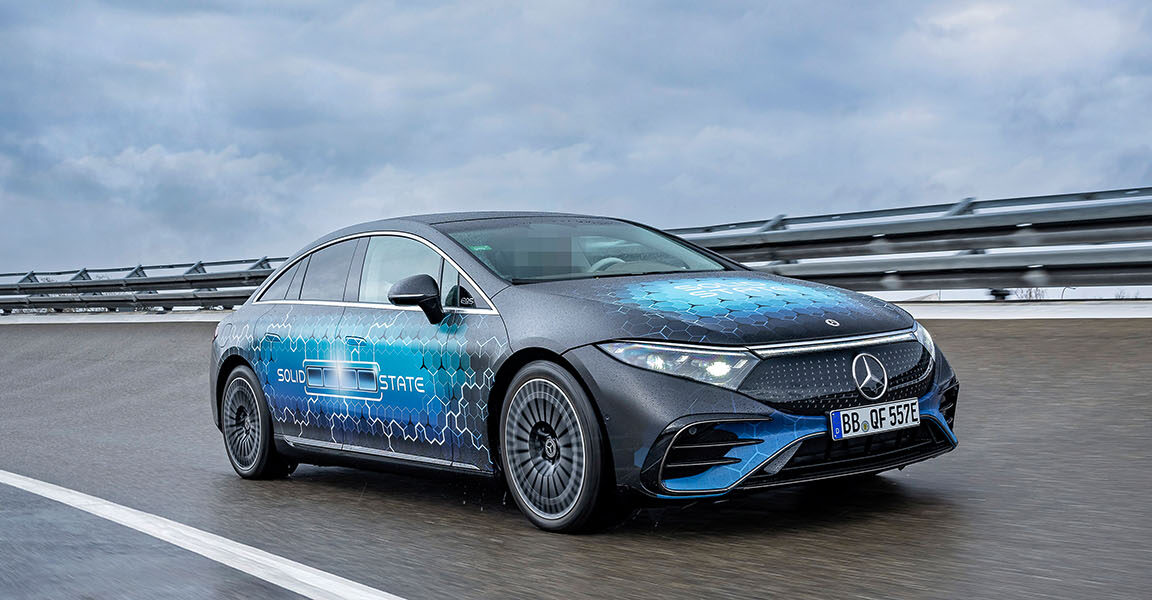
The Future of EV Batteries: Why Lithium-Ion Still Reigns, and What Solid-State Needs to Offer
Electric vehicles (EVs) are rapidly becoming mainstream, and at the heart of this revolution lies battery technology.But what’s driving the advancements in EV battery performance, and is the hyped-up solid-state battery truly poised to overtake the current leader – the lithium-ion battery? The answer, as with most technological shifts, is nuanced. While solid-state batteries hold meaningful promise,current progress suggests lithium-ion technology isn’t going anywhere soon. Let’s dive into the factors shaping the future of EV power.
Beyond Chemistry: The Power of Manufacturing Scale
For years, the focus has been on breakthrough chemistry to improve battery performance. However, experts like Mauro Pasta, an applied electrochemist at the University of Oxford, emphasize a different story. “Most of these advancements haven’t really been down to any essential chemistry improvements,” he states. “What’s changed the game has been the economies of scale in manufacturing.”
This is a critical point. The ability to produce batteries quickly, reliably, and at a lower cost is proving to be just as important – if not more important – than discovering a revolutionary new material. Take the roll-to-roll process used for cylindrical batteries, the workhorse of many current EVs. As explained by researcher Liu,this method involves creating a slurry,casting it into thin films,and then rolling those films together at high speed. “You can make hundreds and thousands of cells very, very quickly with very high quality,” Liu explains. This efficient manufacturing process is a key driver behind the increasing affordability and availability of EVs.
Safety Concerns: Lithium-ion vs. Gasoline
A common concern surrounding lithium-ion batteries is their safety. The flammable electrolyte within these batteries can lead to fires, especially in the event of a crash. However, a recent comparison reveals a surprising statistic: only about 25 out of every 100,000 evs sold experience a fire, compared to a staggering 1,500 fires per 100,000 conventional gasoline-powered cars. This is largely due to the elegant circuit breakers and safety mechanisms built into modern EV battery packs. While lithium-ion fires are challenging to extinguish, thay are statistically less frequent than fires in traditional vehicles.
Is Solid-State Already behind?
Despite the ongoing research and advancement, some industry experts question whether solid-state batteries can truly compete with the established lithium-ion technology. “EVs are going to scale today,” says McCalla, “and they’re going with the technology that’s affordable today.” Battery manufacturers are already aggressively expanding their lithium-ion production capacity, making it challenging for solid-state to catch up. as McCalla succinctly puts it, “So I wonder if the train has already left the station.”
This isn’t to say solid-state technology is without merit.
The geopolitical Appeal of solid-State
Ying Shirley Meng, a materials scientist at the University of Chicago and Argonne National Laboratory, highlights a crucial factor: geopolitical strategy. currently,China dominates approximately 70% of lithium-ion battery manufacturing. For countries seeking to establish leadership in the next generation of battery technology, solid-state presents a compelling prospect to diversify the supply chain and reduce reliance on a single dominant player. It’s a chance to “lead the next battery revolution,” as Meng puts it.
Performance Plateau and the need for Innovation
Beyond geopolitical considerations,solid-state batteries offer the potential to overcome the performance limitations of current lithium-ion technology. As EV buyers demand longer ranges and faster charging times, lithium-ion batteries are approaching a performance plateau. To achieve further improvements, significant material innovations are required – the very innovations that solid-state batteries are aiming to deliver.
Looking Ahead: A Combined Future?
The future of EV batteries likely won’t be a simple case of one technology replacing another. It’s more probable that we’ll see a combination of approaches,with lithium-ion continuing to dominate the market in the short to medium term,while solid-state batteries gradually gain traction in specific applications where their unique advantages – such as increased energy density and improved safety – are most valuable.
Evergreen Insights: Battery Technology Beyond the Headlines
The evolution of battery technology isn’t just about lithium-ion versus solid-state. Researchers are actively exploring a range of option chemistries, including sodium-ion, magnesium-ion, and even zinc-air batteries. Each of these technologies offers unique advantages and
Keep reading