The hidden World Revealed: Rice Weevil Photomicrograph Wins Nikon’s 2025 small World Contest
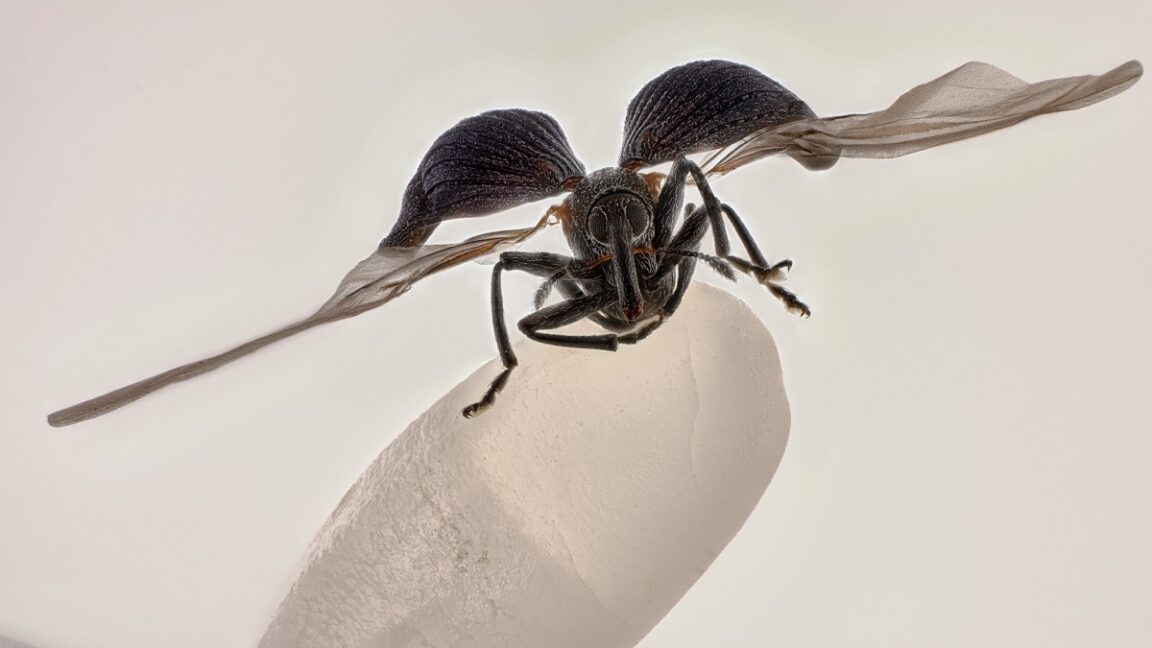
A breathtaking image of a rice weevil, magnified to reveal intricate detail on a single grain of rice, has captivated the scientific and artistic communities alike.Zhang You of Yunnan, China, secured the top prize in the 2025 Nikon Small World Photomicrography Contest with this stunning visual, offering a fresh and compelling perspective on a common agricultural pest. But this isn’t just about a lovely picture; it’s a window into the fascinating world of entomology and the power of photomicrography to illuminate the unseen.
This winning image isn’t merely aesthetically pleasing; it provides valuable insight into the morphology and behavior of Sitophilus oryzae, the rice weevil. Understanding these details is crucial for developing effective pest management strategies. Did you know that rice weevils can cause up to 70% yield loss in stored rice if left unchecked? (Source: FAO, 2024). This highlights the importance of research and observation,beautifully captured in You’s work.
The Art and Science of Seeing Small
“It pays to dive deep into entomology: understanding insects’ behaviors and mastering lighting,” Zhang you explained in a statement.”A standout work blends artistry with scientific rigor,capturing the very essence,energy,and spirit of these creatures.” His success underscores a critical point: effective scientific imaging isn’t just about powerful equipment, but also about a keen eye and a deep understanding of the subject matter.
The serendipitous nature of the winning shot – a weevil preserved on a windowsill, wings naturally spread - also speaks to the importance of observation and being prepared to capture unexpected moments. you noted the difficulty of manually preparing specimens with spread wings, making this finding notably blessed.
A History of Revealing the Invisible: Photomicrography Explained
Nikon’s annual contest, established in 1974, serves as a platform “to showcase the beauty and complexity of things seen through the light microscope.” But what exactly is photomicrography? it’s the technique of attaching a camera to a microscope – be it optical or electron – to capture images at incredibly high resolutions. This allows us to visualize structures and details invisible to the naked eye.
The roots of this technique stretch back to the mid-19th century, with British physiologist Richard Hill Norris being among the first to utilize it in his studies of blood cells around 1850. However, it wasn’t until the 1970s that photomicrography truly began to gain recognition as an art form.The subsequent decades have witnessed remarkable technological advancements, particularly with the rise of digital imaging, leading to increasingly sophisticated and visually stunning results. Recent innovations in computational microscopy, like those developed at UC Berkeley (reported in Nature Biotechnology in late 2024), are pushing the boundaries of resolution and image clarity even further.
related Keywords: insect photography, microscopic imaging, entomological research, agricultural pests, high-resolution imaging.
Beyond the Image: Implications for Agriculture and Research
The image of the rice weevil isn’t just a visual marvel; it has practical implications. Detailed photomicrographs like this aid researchers in understanding the weevil’s anatomy, lifecycle, and vulnerabilities. This knowledge is vital for developing more targeted and effective pest control methods, reducing reliance on broad-spectrum pesticides.
Furthermore, the increasing accessibility of high-quality microscopy and imaging techniques is empowering citizen scientists and amateur entomologists to contribute to valuable research. Platforms like iNaturalist allow users to share observations and contribute to a growing database of species distribution and behavior.
**Are you interested in learning more about citizen science opportunities in entomology? Let
Related reading
- ¿Cazador o carroñero? Un hallazgo en Wyoming revela las verdaderas costumbres del Tyrannosaurus rex – Infobae
- Alpha Nomos confirma su llegada a PS5 y Xbox con un combate rítmico que promete …
- Kokoro Nakazawa’s Stunning Goal: Japan vs. Czechia | World Lacrosse Women’s Championship (archyde.com)
- Surgical Management and Outcomes of Rare Small Intestinal Disorders: A 6-Year Study (archynewsy.com)