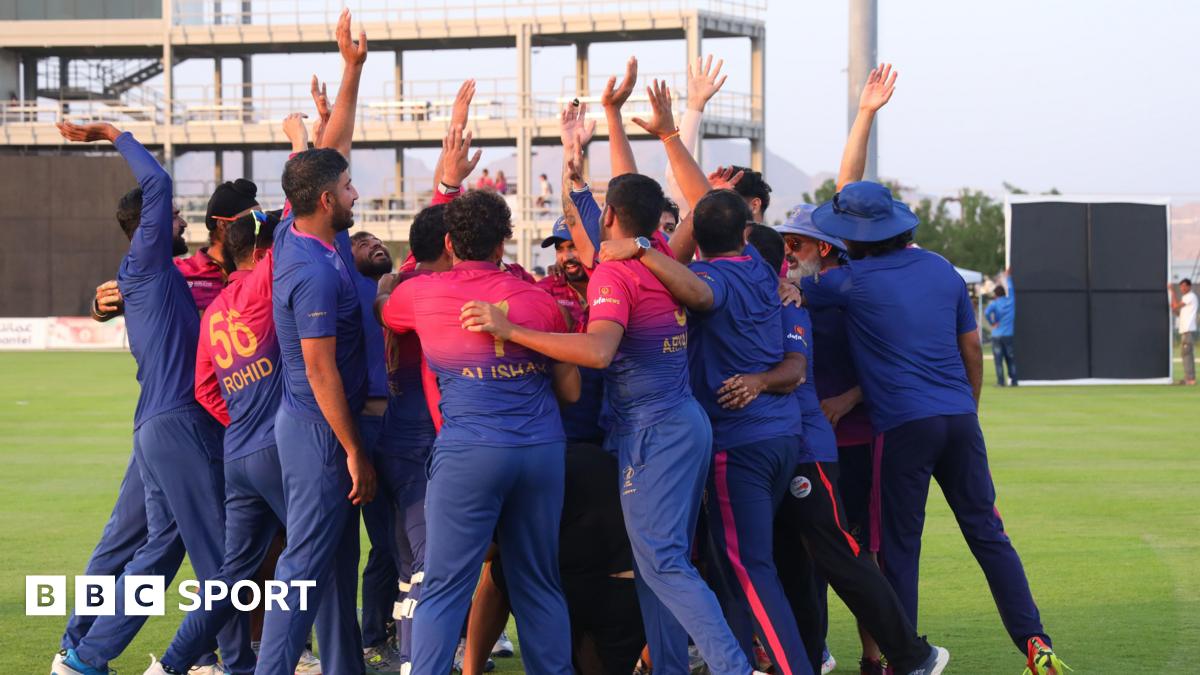
UAE Secures Final T20 World Cup 2026 Spot: A Deep Dive into the Qualification Pathway
The United Arab Emirates (UAE) has clinched the final automatic qualifying spot for the 2026 ICC Men’s T20 World Cup, defeating japan in a decisive match in Oman. this victory marks a significant moment for UAE cricket and completes the roster of teams heading to the tournament, co-hosted by India and Sri Lanka. But how did we get here, and what does this mean for the future of T20 cricket? Let’s break down the qualification process, the key players, and what you can expect from the upcoming tournament.
The Road to the 2026 T20 World Cup: A Complex Qualification System
The qualification pathway for the 2026 T20 World Cup was multifaceted, involving a combination of automatic qualifications, rankings-based entries, and regional qualifying tournaments. Understanding this system is crucial to appreciating the UAE’s achievement and the broader landscape of international T20 cricket.
Here’s a breakdown of how teams secured their place:
* Automatic Qualifiers: India and Sri Lanka, as co-hosts, received automatic berths.
* 2024 Super 8 Teams: England, Australia, Afghanistan, Bangladesh, South Africa, United States, and West Indies all qualified based on their performance in the 2024 T20 World Cup, specifically reaching the Super 8 stage.
* ICC Rankings: Ireland, Pakistan, and New Zealand secured their spots through the ICC T20I rankings.
* Regional Qualifiers: Canada, Italy, Netherlands, Namibia, and Zimbabwe emerged victorious from their respective regional qualifying tournaments.
* Asia & East Asia-Pacific Qualifier: Oman, nepal, and now the UAE, successfully navigated this challenging qualifier.
this complex system ensures a balance between rewarding established cricketing nations and providing opportunities for emerging teams to compete on the global stage.
UAE’s Triumph: Overcoming Challenges and Securing Qualification
The UAE’s journey to qualification wasn’t without its hurdles. Facing a determined Japan side, they needed a strong performance to secure their place. Japan, aiming for their first major tournament appearance, presented a formidable challenge.
The match unfolded as follows:
* Japan’s Innings: Japan struggled to build momentum, slumping to 58-8. Spinner Haider Ali‘s impressive 3-20 played a key role in restricting their scoring. Wataru Miyauchi’s resilient 45 not out helped them reach a modest total of 116-9.
* UAE’s Chase: A strong opening partnership of 70 between Alishan Sharafu (46) and Muhammad Waseem (42) set the tone for the chase. Despite losing both batsmen, UAE comfortably reached the target in 12.1 overs, securing their spot in the 2026 World Cup.
This victory demonstrates the UAE’s growing strength in T20 cricket and their ability to perform under pressure. They previously participated in the 2014 and 2022 T20 World Cups, and will be looking to make a significant impact in 2026.
Secondary Keywords: T20 World Cup Qualification, UAE Cricket Team, Japan Cricket, ICC T20 Rankings, T20 World Cup 2026 Schedule
Beyond the Qualification: Key Trends in T20 Cricket (Recent Data)
The expansion of the T20 World Cup to 20 teams is a significant advancement. According to a recent report by the ICC (November 2023),the global T20 audience is projected to reach 5.3 billion by 2030. This growth is fueled by the game’s fast-paced nature and increasing popularity in non-customary cricketing nations.
Here are some key trends shaping the landscape:
* Rise of Associate Nations: The success of teams like Nepal and the UAE highlights the growing competitiveness of Associate nations. Investment in grassroots cricket and player development is crucial for these teams to continue their progress.
* Impact of Franchise Leagues: Leagues like the indian Premier league (IPL), the Big Bash League (BBL), and the Caribbean Premier League (CPL) are driving innovation in T20 cricket and providing valuable exposure for players from around the world