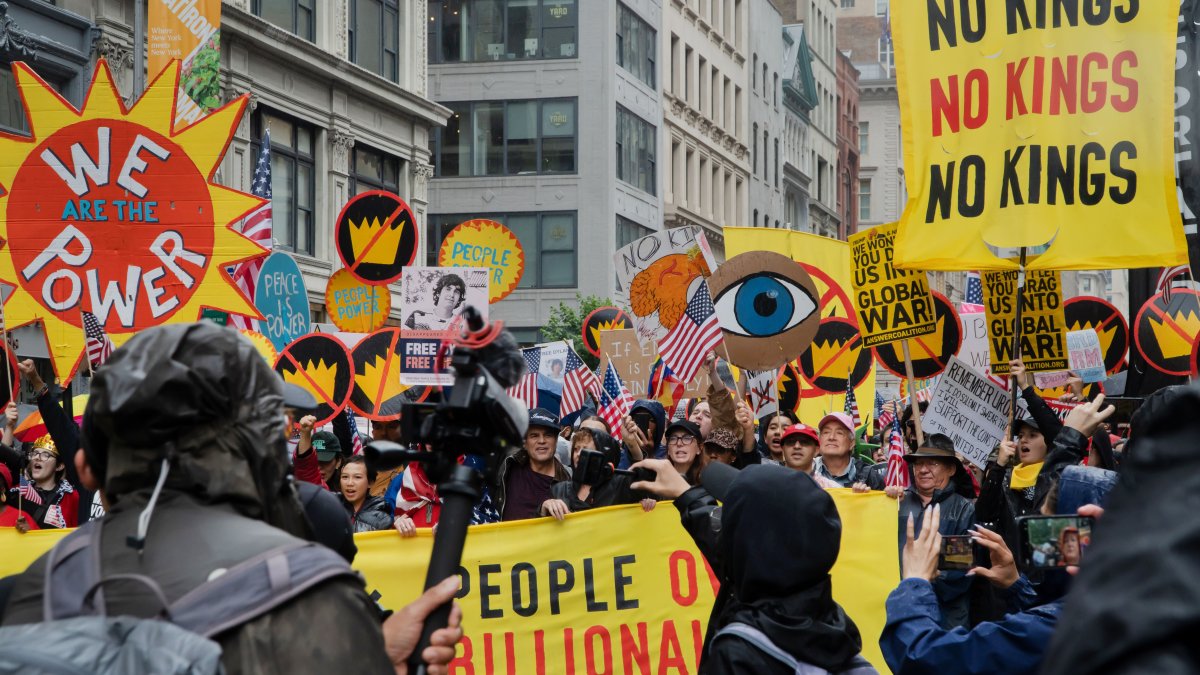
“No Kings” Movement Prepares for Nationwide Demonstrations Against Perceived Authoritarianism
The “No Kings” movement is gearing up for a second wave of nationwide protests, aiming to build sustained political engagement following their initial demonstrations in June. Organizers emphasize that the true measure of success won’t be the size of the protests themselves, but rather the degree to which participants become consistently involved in the political process. This article delves into the movement’s origins, the escalating tensions with the current governance, and the safety measures being implemented to protect protestors.
The Genesis: June Protests and Concerns Over Executive Power
The first major “No Kings” protests unfolded on June 14th, spanning thousands of cities and towns across the United States.These demonstrations were largely a response to a military parade in Washington D.C.,commemorating the Army’s 250th anniversary and coinciding with a former president’s birthday. Organizers viewed the parade as a symbolic “coronation,” reflecting what they perceive as a dangerous expansion of executive power and a move towards authoritarianism.
Fortunately, confrontations during the June protests were minimal, and the events were overwhelmingly peaceful. However, the underlying concerns that fueled those initial demonstrations have only intensified in the months since.
Escalating Tensions: Federal Response and Crackdowns on Dissent
Since the June marches, the administration’s response to protests, particularly in cities led by Democrats, has become increasingly assertive. National guard troops have been deployed to Washington D.C. and Memphis, Tennessee. Attempts to send troops to Chicago and Portland, Oregon, have faced legal challenges in federal court, while threats of deployment to New York City remain.
Furthermore, federal immigration agents have dramatically increased their activity in Chicago, arresting over 1,000 individuals since September. These actions have been characterized by increasingly aggressive tactics, leading to intense clashes between protestors and law enforcement outside a suburban federal immigration processing center.
“People are angrier,” explains Denise Poloyac of Indivisible Chicago. “it feels so much more immediate. They’re very concerned about what’s happening in Chicago and around the country.” This heightened sense of urgency is a key driver behind the renewed protest efforts.
Prioritizing Safety and Empowering Participants
Recognizing the potential for escalated tensions, “No kings” organizers are prioritizing the safety of participants. They’ve partnered with the American Civil Liberties Union (ACLU) to conduct numerous virtual safety trainings.
These trainings cover crucial facts, including:
* Your rights during a protest: Understanding what you are and aren’t required to do when interacting with law enforcement. (Requirements regarding ID and mask-wearing vary by state.)
* De-escalation techniques: Strategies for navigating possibly volatile encounters with police.
* Emergency protocols: Each official protest will have a designated safety plan, including trained medics and pre-steadfast emergency meeting points.
You can find more information and resources on the “No Kings” website. The goal is to empower protestors with the knowledge and tools they need to exercise their rights safely and effectively.
This renewed wave of protests represents a critical moment for the “No Kings” movement. Whether it can translate public concern into sustained political action remains to be seen, but organizers are determined to build a movement that extends far beyond a single day of demonstration.
Contributing to this report were Associated press writers: Hannah Schoenbaum (Salt Lake City), Christopher Weber (Los Angeles), Juan A.Lozano (Houston, Texas), Terry Chea (San Francisco), and Sophia Tareen (Chicago).