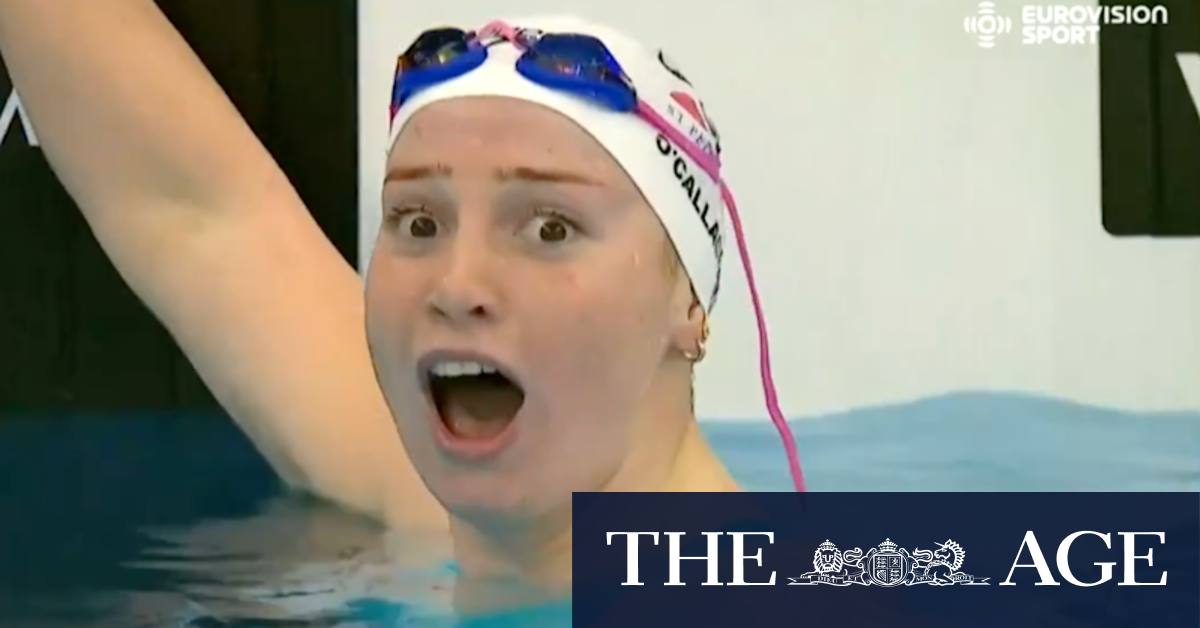
Mollie O’Callaghan‘s Record-Breaking Swim amidst a Targeted Disinformation Campaign
Australian swimmer Mollie O’Callaghan recently shattered expectations, achieving a new personal best of 1:50.77 and solidifying her position as a force in the world of competitive swimming. However, this triumph is shadowed by a disturbing and escalating campaign of fabricated news stories circulating online, highlighting the growing issue of disinformation targeting athletes. What impact does this have on athlete wellbeing and the integrity of sports reporting?
O’Callaghan’s recent success isn’t isolated. She’s part of a wave of Australian swimming talent dominating international competitions, alongside stars like Kaylee McKeown. McKeown recently secured a close second place in the women’s 100m backstroke final, narrowly beaten by American Regan Smith who equaled her short-course world record with a time of 54.02 seconds. While a silver medal might seem disappointing, it’s crucial to remember McKeown’s consistent dominance in long-course events – she’s defeated Smith in major championships as 2019, including victories at the Tokyo 2021 and Paris 2024 Olympics, and the 2023 World Aquatics Championships in Singapore.
However, the focus has unfortunately shifted from athletic achievement to a malicious online smear campaign. A Facebook page boasting approximately 13,000 followers has been relentlessly publishing false narratives about O’Callaghan. These fabricated stories range from outlandish claims of a $13.5 million Netflix documentary deal to accusations of harassment and the use of illegal performance-enhancing devices.
Perhaps most concerning, several posts falsely attribute statements to O’Callaghan regarding transgender athlete Lia Thomas, alleging she would boycott the 2028 Los Angeles Olympics if a transgender swimmer were allowed to compete. This is a completely fabricated claim, designed to ignite controversy and possibly incite harassment. The deliberate linking of O’Callaghan to the ongoing debate surrounding transgender inclusion in sports is a notably insidious tactic.
Swimming Australia swiftly condemned these posts, issuing a statement confirming that O’Callaghan had never provided commentary on transgender athletes and that the attributed quotes were entirely fabricated. They have reported the fake news to Meta, requesting the removal of the offending content. This incident underscores the vulnerability of athletes to online attacks and the urgent need for platforms to address the spread of disinformation.
The Rise of Athlete Disinformation: A Growing Threat
This isn’t an isolated incident. A recent report by the International Center for Journalists (ICJ) found a 60% increase in documented cases of online abuse targeting athletes in the past year. https://www.icfj.org/news/online-violence-against-women-journalists-and-athletes-continues-rise This abuse frequently enough takes the form of harassment, threats, and, increasingly, the deliberate spread of false information.
The motivations behind these campaigns are varied, ranging from political agendas to personal vendettas. Though, the consequences are consistently damaging, impacting athletes’ mental health, performance, and overall wellbeing. The speed and reach of social media amplify these attacks, making it tough for athletes to control the narrative and defend their reputations.
Protecting Athletes: What Can Be Done?
Addressing this issue requires a multi-faceted approach:
* Platform Accountability: Social media platforms must take greater responsibility for monitoring and removing disinformation. This includes investing in robust fact-checking mechanisms and implementing stricter policies against the creation and dissemination of fake news.
* Media Literacy: Promoting media literacy among athletes, fans, and the general public is crucial. Individuals need to be equipped with the skills to critically evaluate information and identify false narratives.
* Legal Recourse: Exploring legal options for athletes who are targeted by disinformation campaigns can provide a deterrent and offer a pathway to redress.
* Athlete Support: Providing athletes with access to mental health resources and support networks is essential to help them cope with the emotional toll of online abuse.
* Proactive Dialog: Athletes and their representatives should proactively manage their online presence and be prepared to respond to false narratives quickly and effectively.
What is the role of sports governing bodies in protecting their athletes from online harassment? Sports organizations like Swimming Australia need to actively collaborate with social media platforms and law enforcement to address these issues. They also have a responsibility to educate their athletes about the risks of online abuse and provide them with the resources they need