Protecting Our Coasts: Innovative Modeling & Insurance for a Resilient Future
Coastal communities face escalating threats from increasingly severe weather events. But what if we could not only predict these risks, but financially protect the natural defenses that buffer us from the worst impacts? That’s the driving force behind cutting-edge research leveraging high-resolution modeling and a novel approach to insurance – protecting coral reefs as vital infrastructure.
The Challenge of Predicting a Changing Climate
Accurately forecasting the impact of storms is becoming increasingly complex. As Dr. Michael Beck explains, “high-resolution modeling is very tricky.” It’s no longer enough to simply map weather patterns. We need to simulate potential scenarios and the effectiveness of solutions designed to mitigate damage. This requires meaningful computational power and a deep understanding of interconnected systems.
Insuring Nature: A Revolutionary approach to Reef Preservation
A groundbreaking solution is emerging: insuring coral reefs based on their inherent value as natural coastal protection. This isn’t just about environmental conservation; it’s about recognizing the economic benefits reefs provide.
Here’s how it’s working in practice:
* The Mesoamerican Barrier Reef (Mexico): Researchers presented detailed visualizations of hurricane impacts – with and without healthy reefs – to stakeholders including hotel owners, the Mexican government, and the World Bank Group.
* Parametric Insurance: This led to the implementation of a parametric insurance policy. If winds exceed 100 knots, a payout is automatically triggered to fund reef restoration efforts.
* Expanding Adoption: Similar policies are now being explored throughout the Caribbean and Hawaii.
This approach ensures funding is readily available after a storm, allowing for rapid reef repair and continued protection of coastal communities. It’s a proactive strategy that shifts the focus from reactive disaster relief to preventative investment.
what Reef Restoration Entails
Restoring a damaged reef is a complex undertaking.It involves:
* Coral Relocation & Reattachment: Damaged coral heads are either moved to nurseries for recovery or carefully cemented back onto the reef structure.
* Debris Removal: Storm surges bring a deluge of debris – from fishing nets to household appliances – that must be cleared to allow the reef to recover.
These efforts are crucial for maintaining the reef’s ability to absorb wave energy and protect shorelines.
Modeling for Resilience: The CoSMoS ADAPT Project
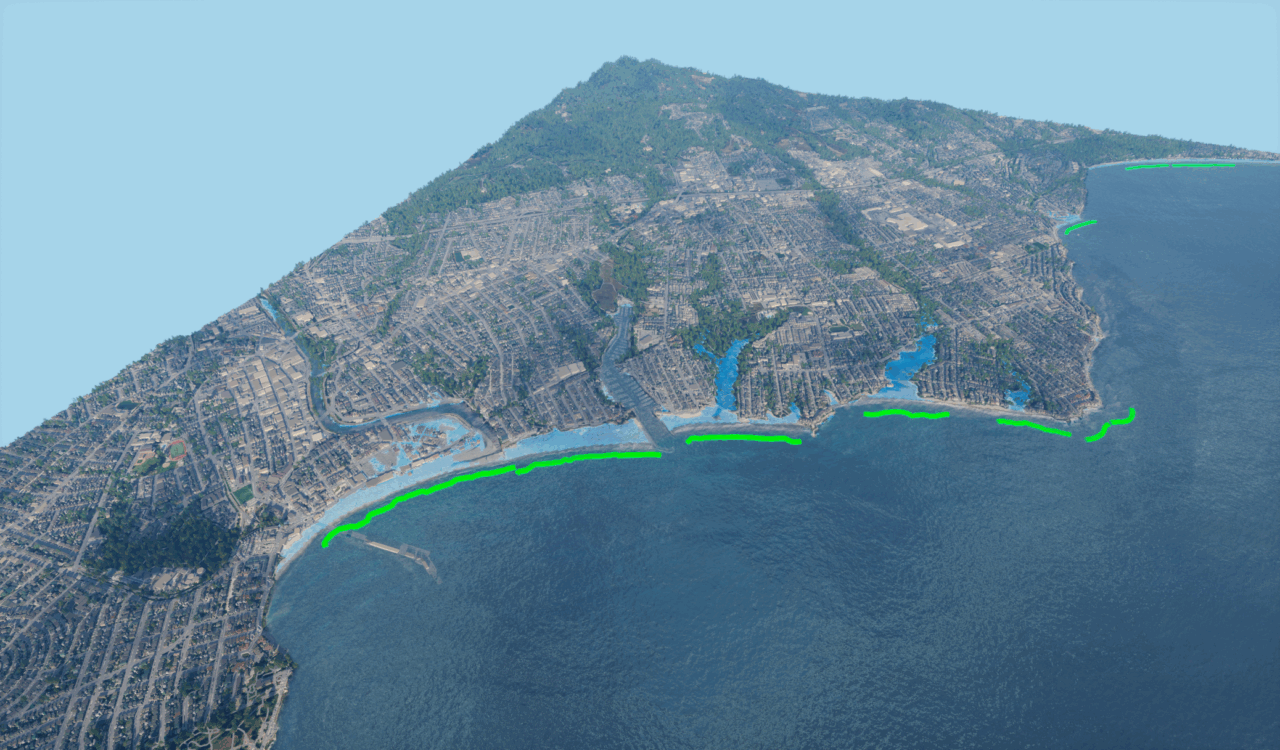
Researchers are now extending this modeling approach to California’s coastline through the CoSMoS ADAPT project. This initiative aims to enhance the USGS’s Coastal Storm Modeling System (CoSMoS), a powerful toolkit for evaluating the cost-effectiveness of various coastal adaptation strategies.
Here’s what makes cosmos ADAPT so valuable:
* Predictive Capabilities: CoSMoS forecasts future risks based on current trends.
* Solution integration: The project incorporates the impact of various solutions – dunes, seawalls, and reefs – into the modeling process.
* Computational Demands: Accurately simulating these complex interactions requires significant computational resources and accelerated processing.
Ultimately, CoSMoS ADAPT will provide decision-makers with the data they need to prioritize investments in the most effective coastal protection measures.
The Power of Visualization & Understanding Risk
“To motivate action, you have to understand and visualize a bit more about the increasingly risky storm events that we’re facing right now,” Beck emphasizes. Seeing the potential consequences – and the benefits of proactive solutions – is key to driving investment and fostering resilience.
Advance Your Research: NVIDIA Academic Grant Program
Are you a faculty member working on cutting-edge research in AI and related fields? The NVIDIA Academic Grant Program is currently accepting proposals. funding is available in these key areas:
* Generative AI & Model Development
* Generative AI Alignment & Inference
* robotics & Edge AI
Learn more and apply by December 31st: https://www.nvidia.com/en-us/industries/higher-education-research/academic-grant-program/
[Watch the video showcasing a 2D wave and flood model used to assess reef benefits in Christiansted, Saint Croix, U.S. Virgin Islands.]
Investing in nature-based solutions, coupled with advanced modeling and innovative financial instruments like reef insurance, is no
Keep reading
- US to Let Private Companies Launch Cyberattacks on Foreign Criminals Under New Policy
- NASA Curiosity Rover Captures Mysterious Object on Mars: What Is It?
- Emmerdale Spoiler Alert: Mack and Ross’s Relationship in Shambles – What’s Next for the Torrey Twins? Emmerdale Latest Drama, Mack and Ross Change, Ross Griffin Update (archyworldys.com)
- RFU Warns of Player Injury Risks on Hard Rugby Pitches (newsdirectory3.com)