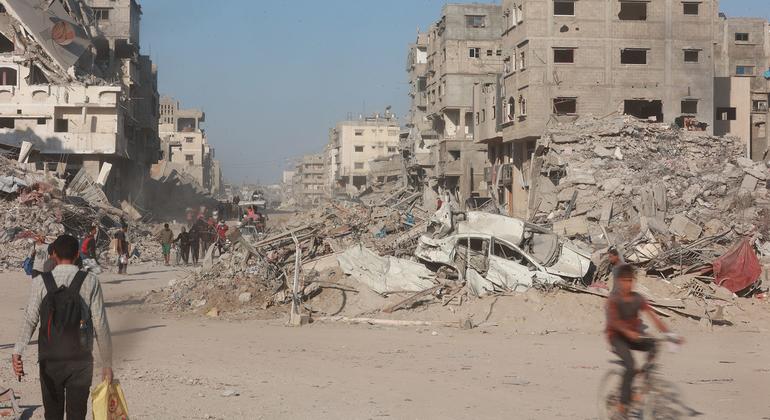
Gaza ceasefire Under Strain: UN Condemns Renewed Violence Amid Humanitarian Crisis
(Updated October 29, 2025)
The fragile ceasefire in Gaza is facing severe strain following recent Israeli airstrikes that have resulted in a devastating loss of civilian life, including a significant number of children. The United Nations has strongly condemned the violence, emphasizing the urgent need for all parties to uphold their commitments and prioritize the protection of civilians. But is this ceasefire enough to address the escalating humanitarian needs on the ground? And what concrete steps are needed to ensure lasting peace?
UN Secretary-General António Guterres, through Spokesperson Stéphane Dujarric, expressed his deep concern over the killings, stating a firm condemnation of “all actions that undermine the ceasefire and endanger civilian lives.” This statement underscores the precarious situation and the critical importance of maintaining the cessation of hostilities.
“These commitments must be upheld in full,” Dujarric stressed, highlighting the necessity of adhering to the agreed-upon terms. Any actions that harm civilians or impede the delivery of vital humanitarian aid are unacceptable and must be avoided.
Renewed Calls for Ceasefire Adherence & Accountability
The condemnation extends beyond the Secretary-General. UN High Commissioner for Human Rights, Volker Türk, reiterated the fundamental principles of international humanitarian law, emphasizing the “paramount importance” of protecting civilians and civilian infrastructure. Türk warned against allowing this possibility for peace to slip away, urging all stakeholders to work towards a “more just and secure future.”
The recent violence, occurring despite the ceasefire agreement, has left a harrowing toll. According to the UN aid coordination office (OCHA), airstrikes across the Gaza strip on Monday and overnight resulted in over 100 deaths and 250 injuries. This grim reality underscores the immediate and urgent need for a durable resolution.
The Deepening Humanitarian Crisis in Gaza
Beyond the immediate casualties, the situation in Gaza remains a dire humanitarian crisis. While aid organizations are working tirelessly to scale up assistance, significant challenges persist.
UN child protection partners have reached 1,500 children and 700 caregivers with crucial psychosocial and mental health support, recognizing the profound trauma inflicted by the ongoing conflict. Food security teams are currently producing approximately 130,000 two-kilogramme bread bundles daily, attempting to address the widespread hunger.
However, access to essential nutrients remains severely limited. While bread is being distributed freely, families are largely reliant on cereals, pulses, and minimal dairy products, lacking the vital protein and fresh produce needed for adequate nutrition. This nutritional deficiency poses a significant threat, notably to vulnerable populations like children and pregnant women.
The UN Office for Project Services (UNOPS) has distributed over 200,000 litres of fuel to support critical operations, including healthcare, sanitation, food distribution, and dialog networks. This fuel is essential for maintaining basic services and enabling the continued delivery of aid.
Obstacles to Aid Delivery & The Path Forward
Despite increasing aid delivery, OCHA reports that “impediments remain.” The success of the 60-day humanitarian plan hinges on a sustained ceasefire. As Dujarric emphasized, “we need the ceasefire to hold.”
Specifically, the following are critical for effective aid delivery:
* More Border Crossings: Expanding the number of entry points for aid is crucial to increase the volume of supplies reaching Gaza.
* Safe Routes Inside Gaza: Establishing secure corridors for aid convoys is essential to ensure the safety of aid workers and the uninterrupted delivery of assistance.
* Unimpeded Access for Aid Workers: Aid organizations require full and unrestricted access to all areas of Gaza to assess needs and deliver assistance effectively.
What can you do? Share this article to raise awareness about the ongoing crisis in Gaza. Consider donating to reputable humanitarian organizations working on the ground. Let your representatives know you support a lasting and just peace for all.
Evergreen: Understanding the Gaza Conflict & Ceasefire Dynamics
The current situation is rooted in a decades-long conflict with complex political, social, and economic dimensions. Understanding the ancient context – including the Israeli-Palestinian conflict, the blockade of Gaza, and the role of regional and international actors – is crucial for comprehending the current challenges.
Ceasefires, while providing temporary respite from violence, are often fragile and require sustained commitment from all parties. Accomplished ceasefires necessitate not only a cessation of hostilities but also a comprehensive approach that addresses the underlying causes of the conflict, promotes economic advancement, and fosters trust-building measures. The current ceasefire’s vulnerability highlights the need for a more robust and sustainable solution.