The Trump Management,South Africa,and a Controversial Refugee Policy: A Deep Dive
The relationship between the United States and South Africa experienced a significant strain during the Trump administration,centered around a highly contentious issue: the perceived plight of white farmers in South Africa and the subsequent US response. This situation sparked international debate,accusations of racial bias,and a re-evaluation of US refugee policy. Let’s break down the key events, the underlying concerns, and the broader implications.
The Spark: Concerns Over Farm Attacks & Trump’s Response
In Febuary, then-President Trump announced the suspension of critical aid to South Africa.Concurrently, he floated the possibility of offering refuge in the US to members of the Afrikaner community – predominantly white descendants of Dutch and french settlers. This move stemmed from claims, amplified by right-wing media, that white farmers were being systematically targeted and murdered in South Africa.
Though, the narrative presented by the Trump administration was quickly challenged. The situation is complex, and the claims of widespread, racially motivated persecution were disputed by the south African government and many observers.
Escalating Tensions & Diplomatic fallout
The situation rapidly escalated. South Africa’s ambassador to Washington, Ebrahim Rasool, was expelled after publicly accusing Trump of “mobilising a supremacism” and employing a “dog whistle” to appeal to white supremacist sentiments.
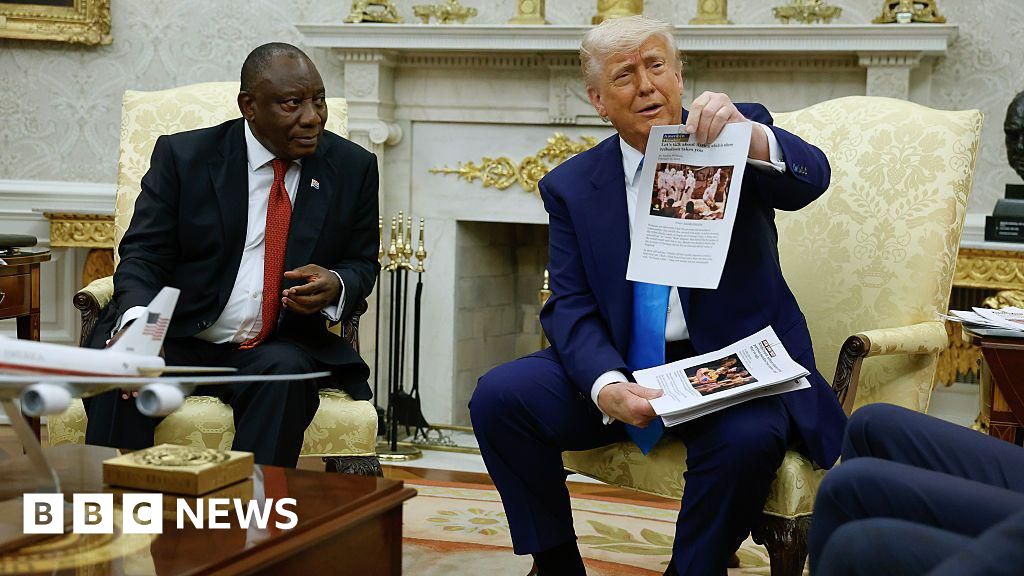
Further fueling the fire, a tense Oval office meeting in May saw Trump directly confront South African President Cyril Ramaphosa, reiterating his claims of white farmer persecution. The White House even presented video footage purporting to show burial sites of murdered farmers.
This footage, however, was later revealed to be misleading. It depicted scenes from a 2020 protest, with the crosses representing farmers killed over multiple years, not a recent surge in violence. Prior to this meeting, the US had already granted asylum to 60 Afrikaners.
The numbers & The Reality of Farm Violence
It’s crucial to understand the context of farm violence in South Africa. While farm attacks do occur, the South African government consistently maintains that Afrikaners and other white South Africans are not being systematically persecuted.
Here’s a look at the data from October to December 2024 (the most recent available):
* Total Murders: 7,000
* Farm Attack Deaths: 12
* Farmers Killed: 1
* Farm Dwellers Killed: 5
* Farm Employees Killed: 4 (likely to have been Black)
These figures demonstrate that while farm attacks are a serious concern, they represent a small fraction of overall violent crime in South Africa. Moreover, the victims are not exclusively white farmers, and many are farm workers who are likely to be Black. The South African government does not release race-based crime statistics, adding to the complexity of the issue.
A Shift in US Refugee Policy & Concerns of Bias
Beyond the specific situation in South Africa, the Trump administration’s actions signaled a broader shift in US refugee policy. On his first day in office, Trump issued an executive order suspending the US Refugee admissions Program (USRAP), citing concerns about the US’s capacity to absorb refugees without compromising resources and security for American citizens.
This,coupled with the prioritization of Afrikaner asylum claims,raised serious concerns about fairness and discrimination. Refugee advocacy groups argued that:
* The US was effectively closing its doors to other persecuted groups.
* Individuals fleeing violence in countries like Afghanistan, Venezuela, and Sudan were being unfairly disadvantaged.
* Even former allies who assisted US forces in conflict zones were facing increased barriers to asylum.
Krish O’Mara Vignarajah, CEO of Global Refuge, powerfully stated that this decision “lowers our moral standing” and undermines the core purpose of the refugee program. The focus on one group, she argued, diminished the program’s credibility at a time of global crisis.
The Land Question & Underlying Tensions
Adding another layer of complexity, President Ramaphosa signed a controversial law earlier in the year allowing the South African government to seize privately-owned land without compensation in certain circumstances. This policy, aimed at addressing past land inequalities stemming from apartheid, fueled anxieties among some white farmers and contributed to the narrative of persecution.
It’s crucial to note that the land reform policy is a sensitive issue with a long
Keep reading