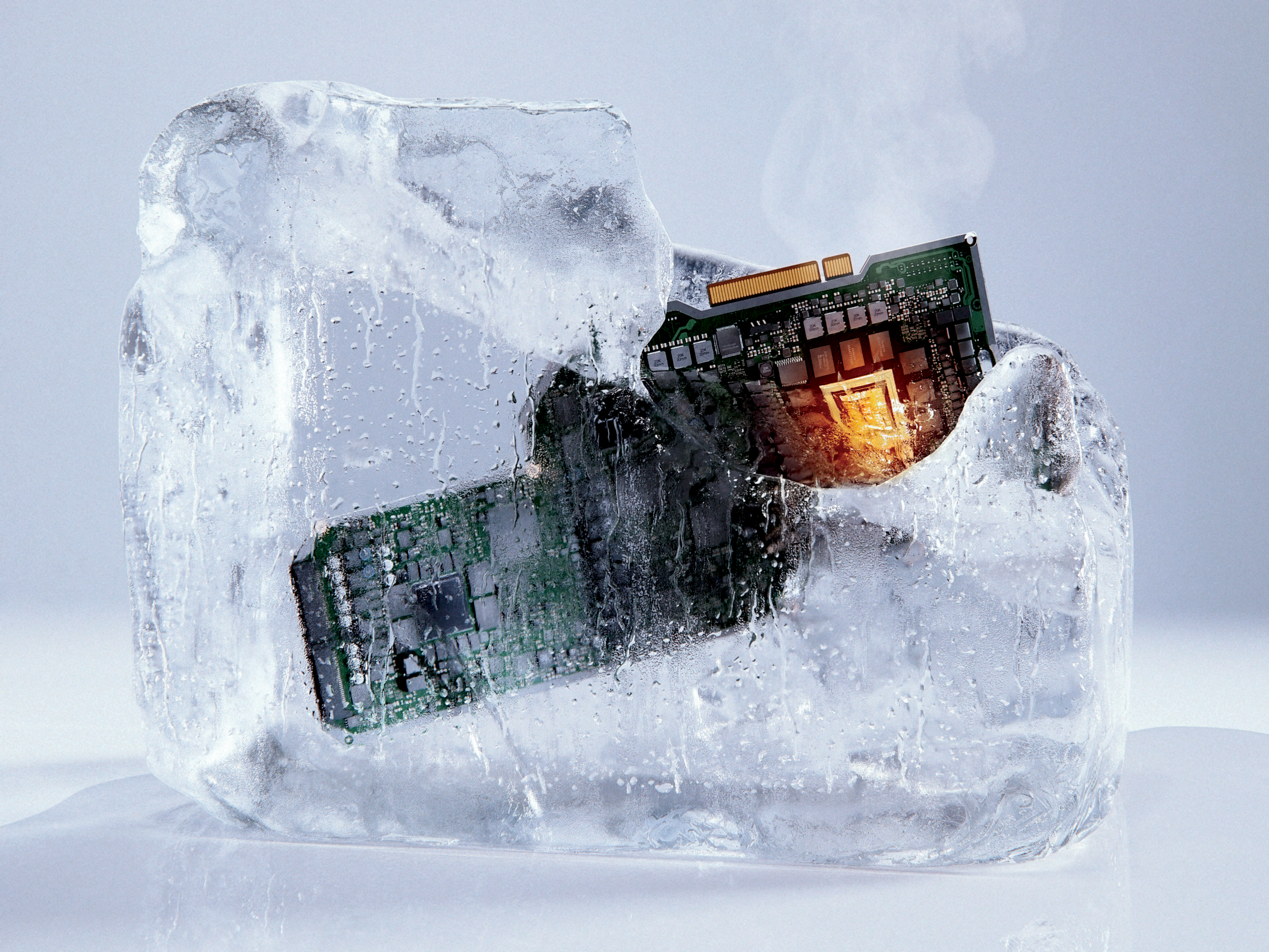
The Escalating Heat Crisis in chip Design: Innovative Cooling Solutions for a Demanding Future
the relentless pursuit of miniaturization in chip technology has unlocked unprecedented processing power, but it’s also created a critical bottleneck: heat dissipation. As we cram billions of transistors into increasingly smaller spaces – a trend accelerating with the boom in Artificial Intelligence (AI) – managing thermal loads is no longer a secondary concern, but the defining challenge for the semiconductor industry. This article delves into the cutting-edge techniques being explored to keep chips cool,from unconventional materials like diamonds to advanced liquid cooling systems,and examines their implications for everything from data centers to your smartphone. The future of computing hinges on solving this chip cooling problem.
The Physics of the Problem: Why Heat is the Enemy
The fundamental issue is simple: as transistors switch on and off, they generate heat. More transistors, faster switching speeds, and denser packing all translate to exponentially increasing heat density. This heat, if not effectively removed, leads to performance throttling (slowing down the chip to prevent damage), reduced reliability, and ultimately, failure. Historically, improvements in chip manufacturing processes – shrinking transistor sizes – provided some inherent cooling benefits. Though, Moore’s Law is slowing, and simply making transistors smaller is no longer sufficient. We’re now entering an era of 3D chip designs, where transistors are stacked vertically, exacerbating the heat problem significantly. As Samuel K. Moore, a veteran semiconductor journalist with over 25 years of experience, points out, “As we start doing more 3D chips, the heat problem gets much worse.”
Emerging Technologies in Chip Thermal Management
The industry is responding with a diverse range of innovative solutions. Here’s a breakdown of some of the most promising approaches:
* Advanced Heat spreaders: Traditional heat spreaders, frequently enough made of copper, are reaching their limits. Researchers are exploring alternatives like:
* diamond: As mentioned, diamond boasts exceptional thermal conductivity. While currently prohibitively expensive for widespread use, advancements in synthetic diamond production are slowly bringing costs down. Companies like Element Six are pioneering thes technologies.
* Carbon Nanotubes (CNTs): CNTs offer high thermal conductivity and lightweight properties. However, challenges remain in achieving uniform alignment and integration with existing chip architectures.
* Graphene: Another carbon-based material with notable thermal properties, graphene faces similar integration hurdles as CNTs.
* Microfluidic Cooling: This involves embedding tiny channels within the chip itself, circulating a coolant (typically water or a specialized dielectric fluid) directly over the heat-generating components. This is significantly more efficient than traditional air cooling. Companies like Asetek and CoolIT Systems are leaders in this space, providing liquid cooling solutions for high-performance CPUs and GPUs.
* Phase-Change Materials (PCMs): PCMs absorb heat by changing phase (e.g., from solid to liquid). They offer passive cooling, requiring no external power, but have limited heat capacity and can be slow to respond to temperature fluctuations.
* Two-Phase Cooling: This utilizes a coolant that boils and condenses within the chip, leveraging the latent heat of vaporization for highly efficient heat removal. This is notably effective for high-power applications like AI accelerators.
* Laser cooling: A more futuristic approach, laser cooling uses lasers to selectively remove heat from specific areas of the chip. while still in the early stages of development, it holds the potential for highly targeted and efficient cooling.
* Immersion Cooling: Entire servers are submerged in a dielectric fluid, offering exceptional cooling performance. This is gaining traction in large-scale data centers, as highlighted by a recent report from 451 Research (now part of S&P Global Market Intelligence) showing a 40% increase in adoption of immersion cooling technologies in 2024. https://www.spglobal.com/marketintelligence/en/research-features/latest-news-and-research/050824-data-center-cooling-market-set-to-boom-as-ai-demand-heats-up
Keep reading