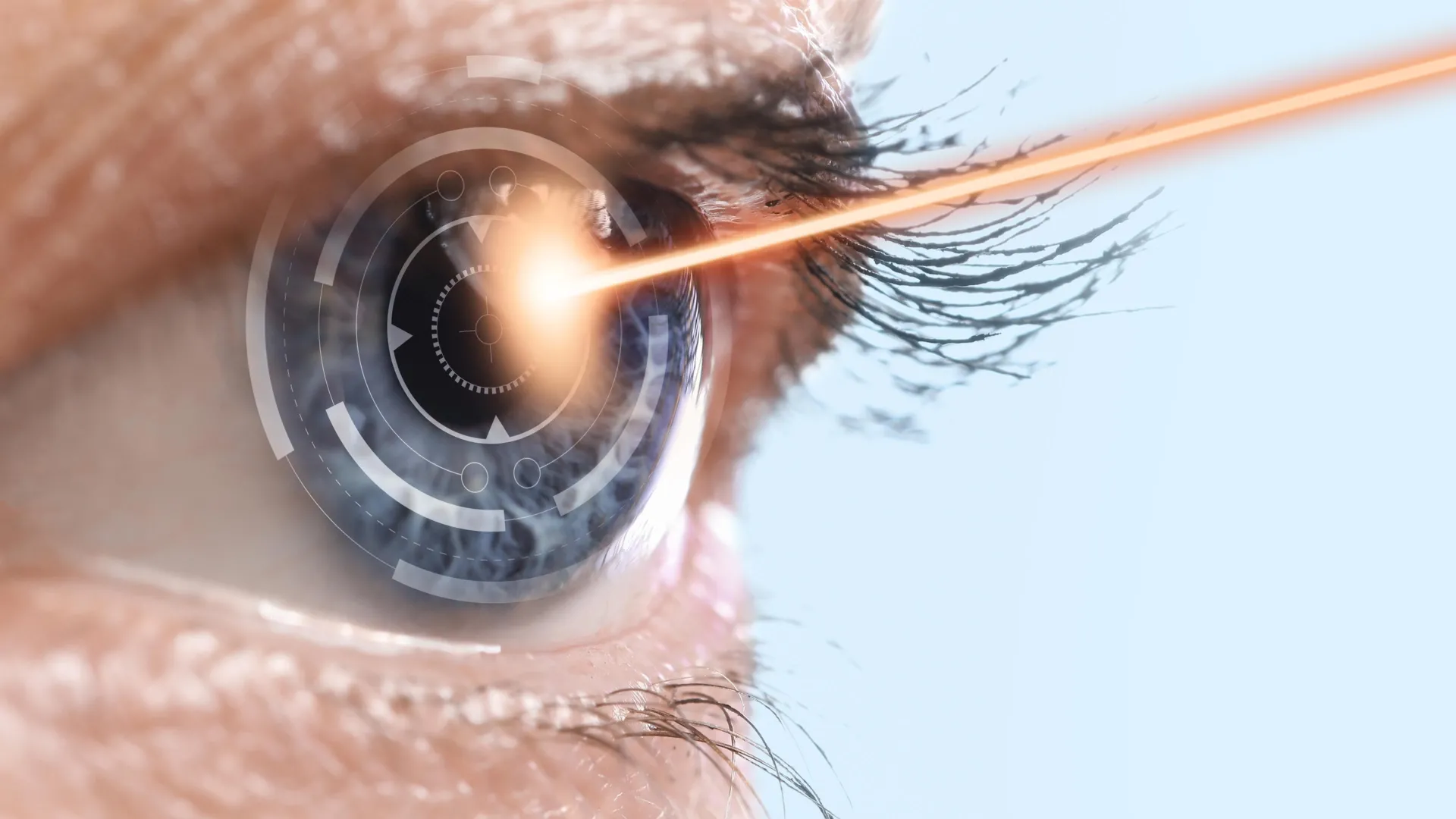
A Potential Breakthrough in Dry Age-Related Macular Degeneration: Harnessing Heat to Restore Cellular Repair
Age-related macular degeneration (AMD) is a leading cause of vision loss for older adults, impacting millions worldwide. While a prevalent “wet” form exists with available treatments, the far more common “dry” AMD remains a meaningful clinical challenge. Currently, there are no effective therapies to halt or reverse its progression. Though, groundbreaking research from Aalto University in Finland offers a promising new avenue for intervention, focusing on bolstering the eye’s natural defense mechanisms through precisely controlled heat application.
Understanding the Devastating Impact of Dry AMD
Approximately one in three individuals over the age of 80 will develop AMD, with roughly 20 million adults aged 40 and older in the United States currently living with the condition. Dry AMD, accounting for the vast majority of cases, is characterized by a gradual deterioration of the macula – the central part of the retina responsible for sharp, detailed vision.This leads to increasing difficulty with tasks requiring central vision, such as reading, driving, and recognizing faces.
The underlying pathology of dry AMD involves a complex interplay of factors, ultimately leading to the accumulation of drusen – fatty protein deposits – beneath the retina. these deposits are a hallmark diagnostic criterion for the disease. But what triggers their formation? The answer lies in the aging process and the resulting vulnerability of retinal cells.
The Role of Oxidative Stress and Protein Dysfunction
As we age, the protective systems within our cells weaken. This diminished capacity leaves the retina susceptible to oxidative stress – an imbalance between the production of free radicals and the body’s ability to neutralize them. These highly reactive molecules damage vital cellular components, particularly proteins.Damaged proteins misfold and begin to aggregate, initiating a cascade of events that contribute to AMD development.
“Cellular functionality and protective mechanisms weaken with age, which exposes the fundus [the inside surface at the back of the eye] to intense oxidative stress,” explains Professor Ari koskelainen of Aalto University, leading the innovative research. “Free oxygen radicals damage proteins, which causes them to misfold and aggregate, then fatty protein deposits called drusen begin to accumulate.”
Activating the Eye’s Intrinsic Repair Systems with Targeted Heat
Professor Koskelainen’s team has pioneered a novel approach to combat dry AMD: strategically applying controlled heat to the affected retinal tissue. This isn’t about simply raising the temperature; it’s about triggering the eye’s inherent repair mechanisms at a cellular level. The challenge, however, lies in the delicate nature of the retina and the difficulty of accurately measuring temperature behind the eye.
“Temperatures above 45 degrees Celsius can damage tissue,” Koskelainen notes. to overcome this hurdle, the team developed a refined method utilizing near-infrared light and real-time temperature monitoring. This allows for safe, precise heating, activating cellular responses without causing harm.
Harnessing Heat Shock Proteins and Autophagy: The Cellular Cleanup Crew
The treatment leverages two crucial cellular processes: the production of heat shock proteins and autophagy.
When proteins misfold due to stress, cells initiate a response by producing heat shock proteins. These molecular chaperones assist in refolding damaged proteins back into their functional conformation. If refolding is unsuccessful, the misfolded proteins are flagged for degradation and recycling into amino acids.
However, when protein buildup occurs, a more comprehensive cleanup process is required: autophagy. Discovered by Nobel laureate Yoshinori Ohsumi in 2016, autophagy is essentially the cell’s self-cleaning mechanism. It involves enclosing the accumulated damaged proteins within a lipid membrane, forming a structure that signals lysosomal enzymes to break down and remove the cellular debris.
“We were able to show that we can activate not only the production of the heat shock proteins, but also autophagy using the heat shocks. This process is like waste disposal,” Koskelainen explains. By carefully applying heat, the researchers effectively stimulate both the repair and removal of damaged proteins, addressing the root causes of drusen formation.
Promising Preclinical Results and the Path to Clinical Application
The Aalto University team has demonstrated the efficacy of this technique in preclinical studies using both mice and pigs.Results have been highly encouraging, showing a measurable activation of heat shock proteins and autophagy in the treated retinal tissue.
Human clinical trials are slated to begin in Finland in Spring 2026. the initial phase will prioritize safety assessment, followed by investigations into optimal treatment frequency for sustained benefits.
“The treatment needs to be repetitive, since the response can already begin to decline some days after the treatment,” Koskelainen cautions, highlighting the importance of ongoing stimulation of the cellular repair processes.
The research,published in Nature Communications on October 29th,has already spurred