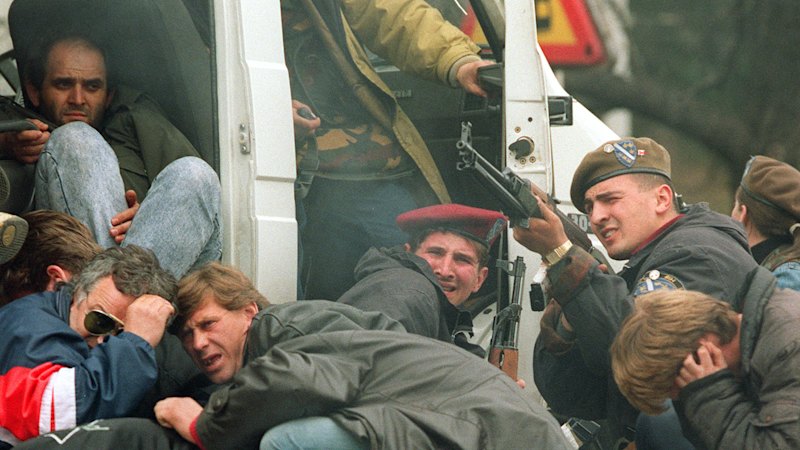
The Dark Allegations of “Sarajevo Safaris”: Foreigners Paying to Shoot at Civilians During the Bosnian War
The siege of Sarajevo, a harrowing chapter of the Bosnian War (1992-1995), was marked by relentless shelling and sniper fire. But a disturbing and largely unconfirmed allegation has resurfaced: that some foreigners paid to participate in what have been termed “Sarajevo safaris” – essentially, the opportunity to shoot at civilians trapped within the besieged city. This article delves into the claims, the evidence, and the ongoing controversy surrounding this deeply unsettling possibility.
The Initial reports & Concerns About “Weekend Snipers”
Reports first surfaced suggesting the presence of individuals with limited combat experience taking up positions around Sarajevo. One observer noted that these individuals appeared more suited to forest warfare than the complex urban environment, and handled thier weapons “like a novice.”
Italian military intelligence (SISMI) reportedly confirmed the existence of these “weekend snipers” at the time, raising immediate concerns about the motivations and origins of these individuals. Were they simply ill-trained volunteers, or something far more sinister?
Limited Confirmation & Expert Perspectives
While the idea of paying to shoot at civilians seems almost unbelievable, some evidence and expert testimony suggest it wasn’t entirely unfounded. Tim Judah, a veteran British expert on the Balkans, acknowledged the possibility of foreigners paying for such opportunities.
However, Judah, who spent considerable time in the Bosnian Serb headquarters in Pale, stated he didn’t personally encounter evidence of this practice. He noted the presence of Russian and Greek volunteers fighting with the bosnian Serb forces, but not individuals seemingly engaged in targeted civilian shootings for profit.
* Judah believes the numbers involved, if the practice existed, were likely small.
* He emphasizes the difficulty of confirming such clandestine activities.
A Documented Case: Eduard Limonov
One case stands as a documented example of a foreigner actively participating in violence against Sarajevo. In 1992, Eduard limonov, a Russian nationalist, was filmed firing a machine gun towards the city.
Crucially, Limonov was accompanied by Radovan Karadžić, the Bosnian serb leader later convicted of genocide and crimes against humanity. This incident, while not directly linked to a “safari” payment scheme, demonstrates a willingness by some foreigners to engage in opposed acts against Sarajevo’s civilian population.
The “Sarajevo Safari” Documentary & New Allegations
The 2022 documentary Sarajevo Safari, directed by Slovenian filmmaker Miran Zupanic, reignited the controversy. The film presents allegations from an unnamed American former intelligence officer who claims to have witnessed tourists paying to shoot at civilians in the Grbavica neighborhood.
Zupanic himself initially struggled to believe the claims, describing the idea of “hunting people” as an “urban legend.” However,the allegations prompted him to investigate,and the resulting documentary has sparked intense debate.
Strong reactions & Denials
The documentary elicited a furious response from Bosnian Serbs. veljko Lazic, head of a veterans’ organization, vehemently denounced the film as “an absolute and heinous lie.”
He characterized the allegations as an “insult” to Republika Srpska,the Serb entity within Bosnia-Herzegovina,its army,and the Serb victims of the war.These strong denials highlight the sensitivity and deeply entrenched divisions surrounding the Bosnian conflict.
What Does This Mean for you?
The allegations surrounding “Sarajevo safaris” are profoundly disturbing. While definitive proof remains elusive, the combination of initial reports, the Limonov case, and the recent documentary raise serious questions about the extent of foreign involvement in the siege of Sarajevo.
it’s vital to remember:
* The siege of Sarajevo was a horrific event. Hundreds of thousands of civilians were subjected to relentless violence.
* Allegations of this nature require continued investigation. Uncovering the truth, however painful, is essential for reconciliation and justice.
* Understanding the complexities of the Bosnian war is crucial. The conflict involved multiple actors and motivations, and simplistic narratives often fail to capture the full picture.
Further Resources:
* Balkan Insight – Provides in-depth reporting on the Balkans.
*[TheTelegraph[TheTelegraph[TheTelegraph[TheTelegraph
Related reading