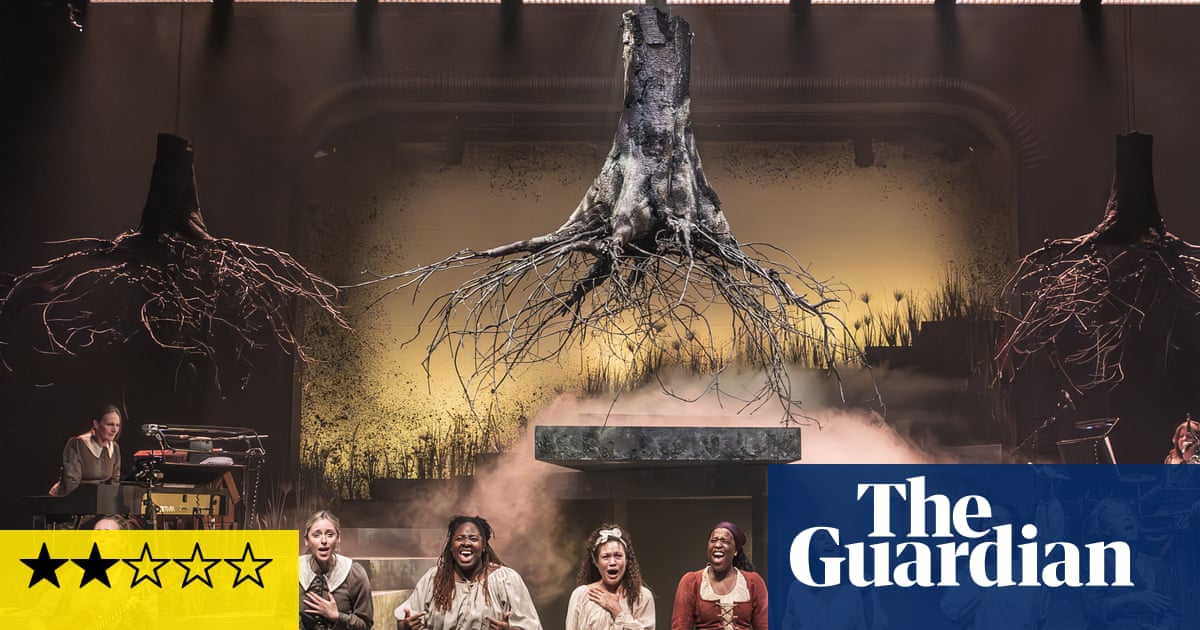
“Coven” at the National Theater: A Bold, Yet Uneven, Reckoning with the Pendle Witch Trials
The National Theatre’s new musical, “coven,” attempts a vital reimagining of the infamous 17th-century Pendle witch trials. It strives to elevate the accused women beyond ancient footnotes, presenting them as complex individuals unjustly condemned. Though,despite commendable ambition and strong performances,the production ultimately feels fragmented and tonally inconsistent.
A Stage Set for Tragedy
the story unfolds within the confines of a Lancashire jail, where a group of women await their grim fates. Among them are Frances, a devout woman accused by her own husband and haunted by loss; Rose, heavily pregnant and facing an uncertain future; Maggie, a herbalist practicing traditional medicine; and Nell, a midwife or servant.A new arrival, Jenet, promptly disrupts the established dynamic. She’s infamous for previously testifying against her own family under accusations of witchcraft, now facing the same terrifying charges.
Untapped Potential & A disjointed Narrative
Several powerful themes emerge, including the coercion of children and the systemic targeting of vulnerable, disempowered women. Sadly,these threads feel underdeveloped,lost within a sprawling narrative. The production’s attempt at a comic tone, reminiscent of “Blackadder,” introduces a jarring glibness that undermines the potential for genuine horror.
Director Miranda Cromwell delivers a production that, despite a vibrant onstage band and extraordinary vocal work, feels persistently off-kilter.
focusing on Individual Stories – and Losing it
Initially, “Coven” promises an ensemble piece, delving into the individual worlds of each woman. Jenet’s story takes center stage, presented through a striking psychodramatic sequence featuring a puppet representing her younger self. This innovative approach offers a glimpse into the trauma that shaped her.
However, the narrative momentum falters as the focus shifts repeatedly. Scenes depicting Maggie’s childbirth, complete with anthems to Mother Earth, and broad comedic portrayals of historical misogynists feel disconnected. Even a cameo from King James I, endorsing the witch hunts, feels strangely out of place.
A Soup of ideas, rather Than a Cohesive Whole
The musical is brimming with ideas, but they lack cohesion. What could have been a dynamic piece of gig-theatre devolves into a disjointed collection of ballads and scenes.
ultimately, “Coven” presents a commendable effort to reclaim the narratives of these women. But its ambition exceeds its execution, leaving you with a sense of unrealized potential.
Key Takeaways for the Audience:
* Historical Context: The Pendle witch trials were a dark chapter in English history, fueled by fear, superstition, and social anxieties.
* Thematic Exploration: The musical touches on crucial themes of power, gender, and the dangers of unchecked authority.
* Performance Quality: The cast delivers strong vocal performances, even if the overall production feels uneven.
* Narrative Structure: Be prepared for a fragmented narrative that jumps between storylines and tones.
While “Coven” doesn’t fully deliver on its promise, it sparks critically important conversations about historical injustice and the enduring power of storytelling.