Medicaid Faces rising Costs & Federal Cuts: A Looming Fiscal Challenge for States
The post-pandemic landscape is reshaping Medicaid, presenting states with a complex interplay of declining enrollment, escalating costs, and impending federal funding reductions. A recent 25th annual Medicaid Budget Survey from KFF reveals a critical juncture for the program, demanding strategic fiscal management and possibly impacting access to care for millions of Americans.
Enrollment Declines & spending Surges
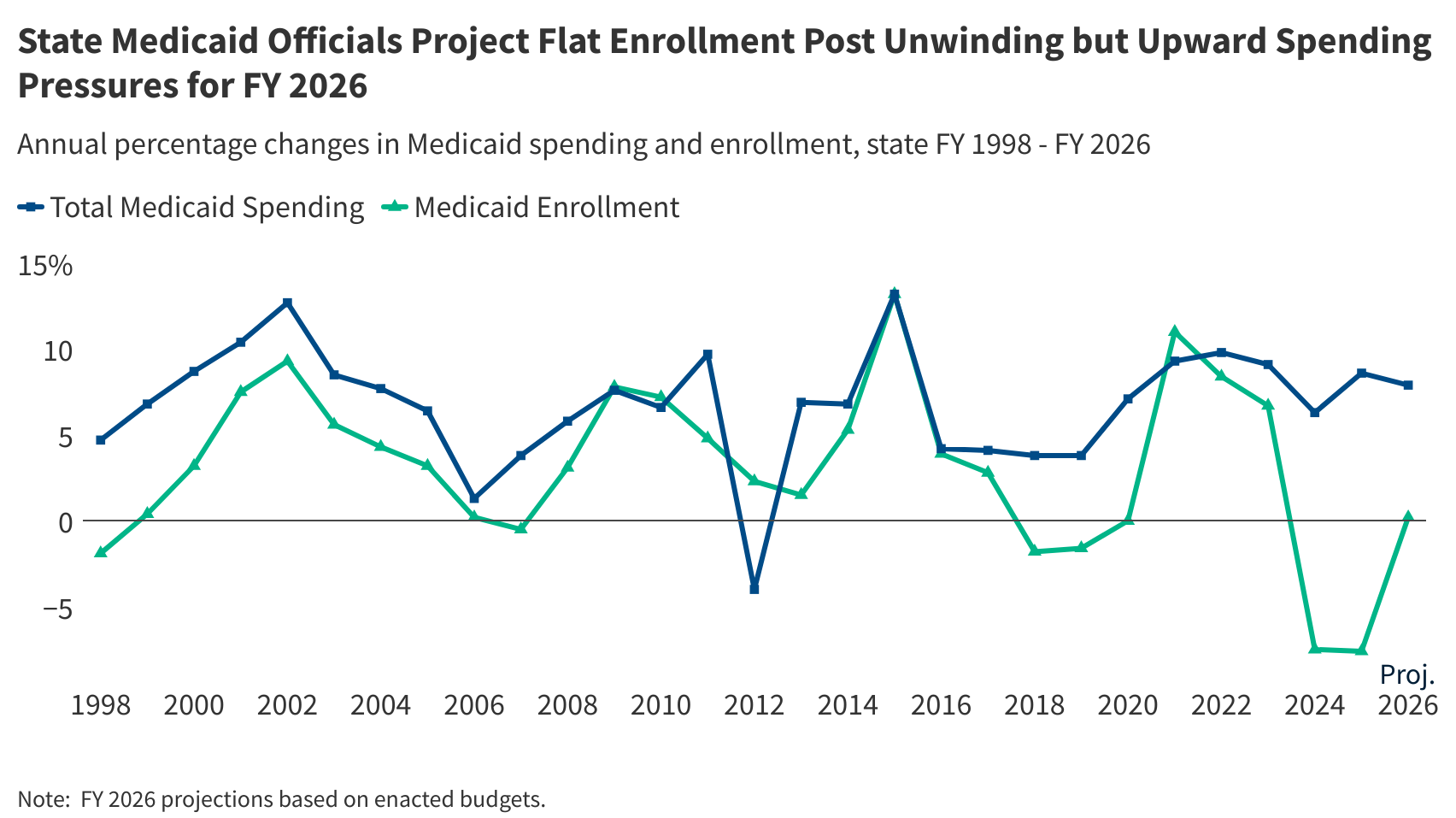
Following the end of the COVID-19 public health emergency and the subsequent “unwinding” of continuous enrollment policies, Medicaid enrollment experienced a 7.6% decrease in Fiscal Year 2025.While enrollment is projected to stabilize in FY 2026, a stark contrast emerges: total Medicaid spending is on the rise. FY 2025 saw an 8.6% increase in spending, with a further 7.9% growth anticipated for FY 2026.
This isn’t simply a return to pre-pandemic norms. States are reporting a confluence of factors driving these increased costs:
* Rising Provider Rates: states are increasingly pressured to increase reimbursement rates to maintain adequate provider networks, particularly in rural and underserved areas.
* Increased Healthcare Needs: Delayed care during the pandemic has led to a surge in individuals presenting with more complex and costly health conditions.
* Long-Term care Demands: An aging population is driving up demand – and associated costs – for long-term care services.
* Pharmacy & Behavioral Health Costs: Prescription drug prices, particularly for specialty medications, and the growing need for behavioral health services are significantly impacting budgets.
Federal Cuts & Fiscal Uncertainty Add to the Pressure
The financial strain is compounded by a challenging macroeconomic environment and significant federal cuts enacted through recent budget reconciliation legislation.States are bracing for a $911 billion reduction in federal Medicaid funding, coupled with new restrictions and work requirements. These cuts will disproportionately impact states already grappling with slower revenue growth and heightened fiscal uncertainty.
The scale of these reductions presents a significant hurdle. States anticipate an 8.5% growth in Medicaid spending in FY 2026, making it exceedingly tough to absorb or offset the federal cuts without impacting program benefits or access. Nearly two-thirds of states now estimate at least a 50-50 chance of facing a Medicaid budget shortfall in FY 2026.
Furthermore, the reconciliation law restricts states’ ability to leverage provider taxes – a common funding mechanism - to bolster Medicaid budgets. Potential future requirements to reduce existing provider taxes for states that expanded Medicaid under the Affordable Care Act (ACA) could exacerbate these pressures.
Shifting Strategies: Rate Controls & Drug Cost Containment
States are proactively adjusting their strategies in response to these challenges. KFF’s companion 50-state Medicaid budget survey reveals a slowdown in the number of states implementing broad reimbursement rate increases for providers. Instead, there’s a growing trend towards rate restrictions as a cost containment measure – a reflection of broader economic conditions and fiscal constraints.
Prescription drug costs remain a key focus.While initial enthusiasm for expanding Medicaid coverage of GLP-1 medications (like Ozempic and Wegovy) for obesity treatment was high,interest is now waning. Some states are even planning to restrict existing coverage, with only 16 state Medicaid programs covering these drugs for obesity as of October 1, 2025. Coverage remains mandated for conditions like diabetes and cardiovascular disease. This shift highlights the complex balancing act states face between expanding access to innovative treatments and managing budgetary pressures.
Looking Ahead: A Call for Proactive Planning
These findings, gathered through a comprehensive survey conducted by KFF and Health Management Associates (HMA) in collaboration with the National Association of Medicaid Directors (NAMD), underscore the critical need for proactive planning and innovative solutions. While these estimates are based on current state budget assumptions and inherently involve some uncertainty,the trajectory is clear: Medicaid faces a period of significant fiscal challenges.
States will need to carefully evaluate their options,prioritize spending,and explore strategies to maximize efficiency and value within the program to ensure continued access to vital healthcare services for their residents. The coming years will be pivotal in shaping the future of Medicaid and its ability to serve as a cornerstone of the nation’s healthcare safety net.