Unveiling Enceladus‘s Secrets: how Supercomputer Simulations are Revolutionizing our Understanding of Ocean Worlds
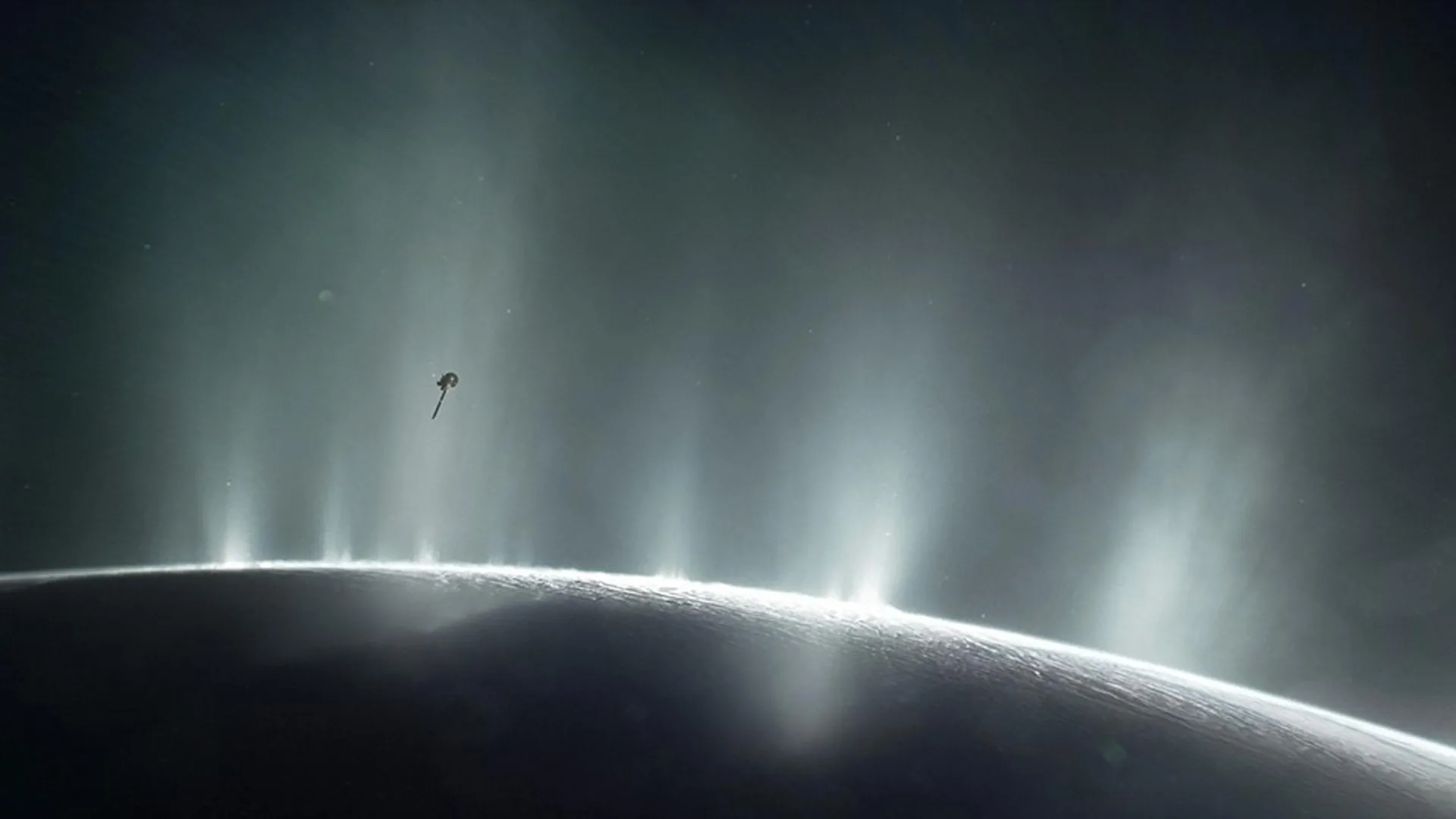
For decades, the icy moon Enceladus, orbiting Saturn, has captivated scientists wiht its astonishing cryovolcanic plumes – jets of water vapor and ice erupting from its subsurface ocean. These plumes aren’t just a remarkable sight; they represent a unique window into a perhaps habitable environment, and recent breakthroughs in supercomputer modeling are dramatically enhancing our ability to understand the conditions within enceladus’s hidden ocean and the dynamics of these remarkable eruptions.
From 48 Hours to Milliseconds: The Power of Advanced Simulation
Understanding the complex physics governing these plumes requires incredibly detailed simulations. Traditionally, Direct Simulation Monte Carlo (DSMC) methods – a powerful technique for modeling gas behavior at low densities – were computationally prohibitive. “DSMC simulations are very expensive,” explains Dr. Alexis Mahieux, a leading researcher in the field. “we used TACC supercomputers back in 2015 to obtain the parameterizations to reduce computation time from 48 hours then to just a few milliseconds now.” This leap in efficiency, achieved through sophisticated mathematical parameterizations, has been transformative.
These advancements allow researchers to move beyond simply observing the plumes to actively modeling their behavior. By leveraging Cassini spacecraft measurements taken during direct flybys through the jets, the team has calculated crucial properties like plume density, gas velocity, and, crucially, the temperature at which material is ejected from Enceladus’s interior. “The main finding of our new study is that for 100 cryovolcanic sources, we could constrain the mass flow rates and other parameters that were not derived before, such as the temperature at which the material was exiting. This is a big step forward in understanding what’s happening on Enceladus,” Mahieux states.
A New Level of Detail: Modeling Low-Gravity Environments
Enceladus, a moon just 313 miles in diameter, possesses weak gravity, allowing the erupting material to escape directly into space. Previous models struggled to accurately represent this low-gravity environment and the intricate gas dynamics at play. The current DSMC approach, though, excels in capturing these nuances.
Imagine a volcanic eruption, but instead of molten rock, Enceladus hurls plumes of water vapor and ice into the void. The simulations meticulously track the behavior of individual molecules, modeling their collisions and energy transfer – akin to countless marbles bouncing against each other. these models follow millions of molecules over incredibly short timescales, measured in microseconds, and can now simulate conditions at lower pressures and with greater distances between collisions than ever before.
The Role of Cutting-Edge Infrastructure: Planet Code and TACC Supercomputers
This progress wouldn’t be possible without the progress of advanced computational tools and access to high-performance computing resources. Professor David Goldstein of UT Austin spearheaded the creation of the DSMC code, aptly named ”Planet,” in 2011. Crucially,the team gained access to the Lonestar6 and Stampede3 supercomputers at the texas Advanced Computing Center (TACC) through the University of Texas Research cyberinfrastructure portal.
“TACC systems have a splendid architecture that offer a lot of adaptability,” Mahieux emphasizes. ”If we’re using the DSMC code on just a laptop, we could only simulate tiny domains. Thanks to TACC, we can simulate from the surface of Enceladus up to 10 kilometers of altitude, where the plumes expand into space.” This expanded simulation domain provides a far more realistic and comprehensive picture of plume evolution.
Enceladus as a Proxy for Habitable Ocean worlds
Enceladus isn’t an isolated case. Saturn, along with Jupiter, Uranus, and Neptune, reside beyond the “snow line” and host numerous icy moons believed to harbor subsurface oceans. “There is an ocean of liquid water under these ‘big balls of ice,'” mahieux explains. “These are manny other worlds, besides the Earth, which have a liquid ocean.”
The plumes of Enceladus offer a unique prospect to study these hidden oceans without the immense challenge of drilling through miles of ice. They act as a natural sampling mechanism, bringing material from the depths into space for analysis. This makes Enceladus a crucial analog for understanding the potential for life elsewhere in our solar system.
Looking Ahead: Future Missions and the Search for Life
NASA and the European space Agency are already planning ambitious future missions to Enceladus. These missions aim to go beyond flybys, potentially including landers and even subsurface drilling to directly access the ocean.
however, even before these missions launch, analyzing the composition and dynamics of the plumes provides invaluable insights. By
Worth a look