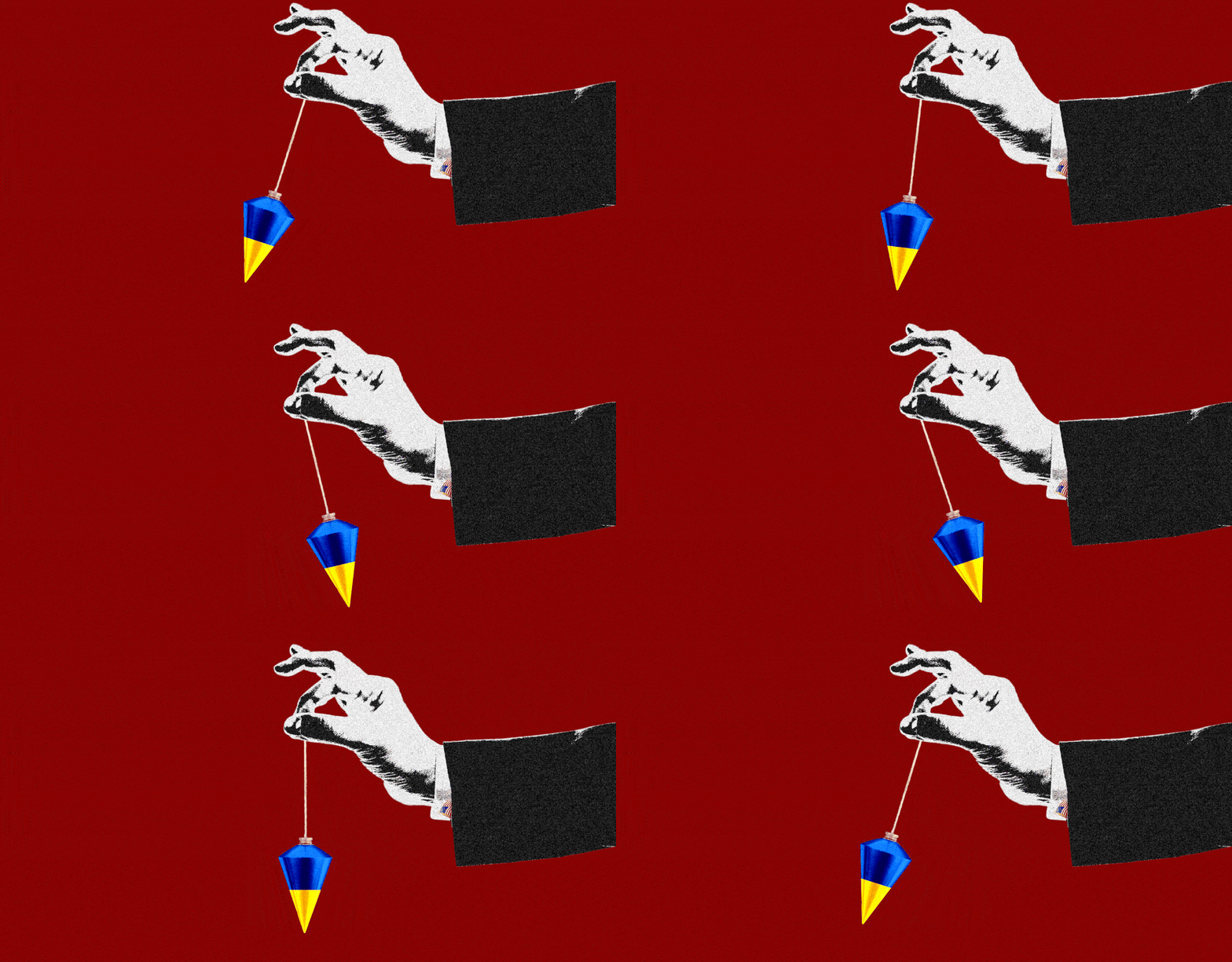
The Tightrope Walk: How Trump‘s Pursuit of a Ukraine Peace Deal is Forcing Zelensky into an Impossible Corner
By Dr. Alistair Finch, Former Senior Diplomatic Advisor to the U.S. state Department
The pursuit of peace in Ukraine has always been a fraught endeavor. But the recent, behind-the-scenes maneuvering – especially the renewed push led by former President Trump – has ratcheted up the tension to a fever pitch. Having spent over two decades navigating the complexities of international conflict resolution, I can attest that the situation facing Ukrainian President Volodymyr Zelensky is arguably the most precarious it has been since the full-scale Russian invasion began.
What’s unfolding isn’t simply a negotiation; it’s a high-stakes gamble with Ukraine’s sovereignty and Zelensky’s political future hanging in the balance. And understanding the dynamics at play requires a deep dive into the shifting priorities, the internal pressures, and the very real limitations of any potential deal.
A Shift in Strategy: Why the U.S. reconsidered Sanctions
For months, the U.S. and its allies pursued a strategy of escalating sanctions against Russia, aiming to cripple its war machine and force a withdrawal. However, as reported in recent discussions with sources within the State Department and European diplomatic circles, that approach demonstrably stalled. The Kremlin,while feeling the pressure,proved unwilling to fundamentally alter its objectives.
The rationale for the shift, as articulated by Trump’s envoy, Michael witkoff, and confirmed by U.S. officials, is brutally pragmatic: continued delays translate directly into Ukrainian lives lost and territory conceded. Trump, it appears, believes a new approach – one focused on direct negotiation and perhaps accepting difficult compromises – offers a faster, albeit riskier, path to ending the bloodshed. This isn’t necessarily a departure from the goal of a sovereign Ukraine, but a reassessment of how to achieve it.
Geneva and Abu Dhabi: The Illusion of Progress
The flurry of talks in Geneva and Abu Dhabi yielded what initially appeared to be a breakthrough. Negotiators, working to align with trump’s vision, successfully stripped away several of Russia’s more maximalist demands. The declaration from Zelensky’s national security advisor, Rustem Umerov, of a “common understanding on the core terms of the agreement” was met with cautious optimism. A U.S. official even went so far as to declare the Ukrainians had “agreed to a peace deal,” framing remaining issues as “minor details.”
However, those “minor details” are anything but. They represent the core of the problem, the point where any potential agreement threatens to unravel.
The Donetsk Dilemma: A Political Death Sentence for Zelensky?
The sticking point, as I’ve learned from individuals directly involved in the negotiations, centers on the future of the Donetsk region. The proposed provision would require Ukraine to cede control of the remaining territory it holds in Donetsk, including strategically vital towns like Pokrovsk. These towns aren’t merely geographical points on a map; they represent a fortified defensive line against further Russian advances.
Giving up this territory isn’t just a military setback; it’s a political catastrophe for Zelensky. As one of his close aides confided, surrendering even ”one square kilometer” would be relentlessly exploited by political opponents, potentially crippling his chances in any future election.This isn’t hyperbole.In a nation fighting for its very existence, territorial concessions are viewed as betrayal by a important portion of the population.
Witkoff himself acknowledged this dilemma months ago, questioning weather Zelensky could politically survive acknowledging the loss of territory. His assessment remains chillingly accurate: this is the central, intractable issue at the heart of the conflict.
Zelensky’s Impossible Choice
Zelensky now faces an agonizing choice. He must simultaneously appease his people, who are fiercely determined to defend their land, and convince Trump that Russia, not Ukraine, is the primary obstacle to peace.he needs to demonstrate a willingness to negotiate without appearing to capitulate. It’s a tightrope walk with no safety net.
The Kremlin’s actions, ironically, may offer Zelensky a degree of leverage. The continued Russian bombardment of Ukrainian cities – the recent attack in Kyiv that claimed at least seven lives is a stark reminder of the ongoing brutality – reinforces the argument that Russia is the aggressor and needs to be pressured to de-escalate. This narrative aligns with the concerns of many European allies, who have consistently advocated for maintaining pressure on Moscow.
**Trump’
Keep reading