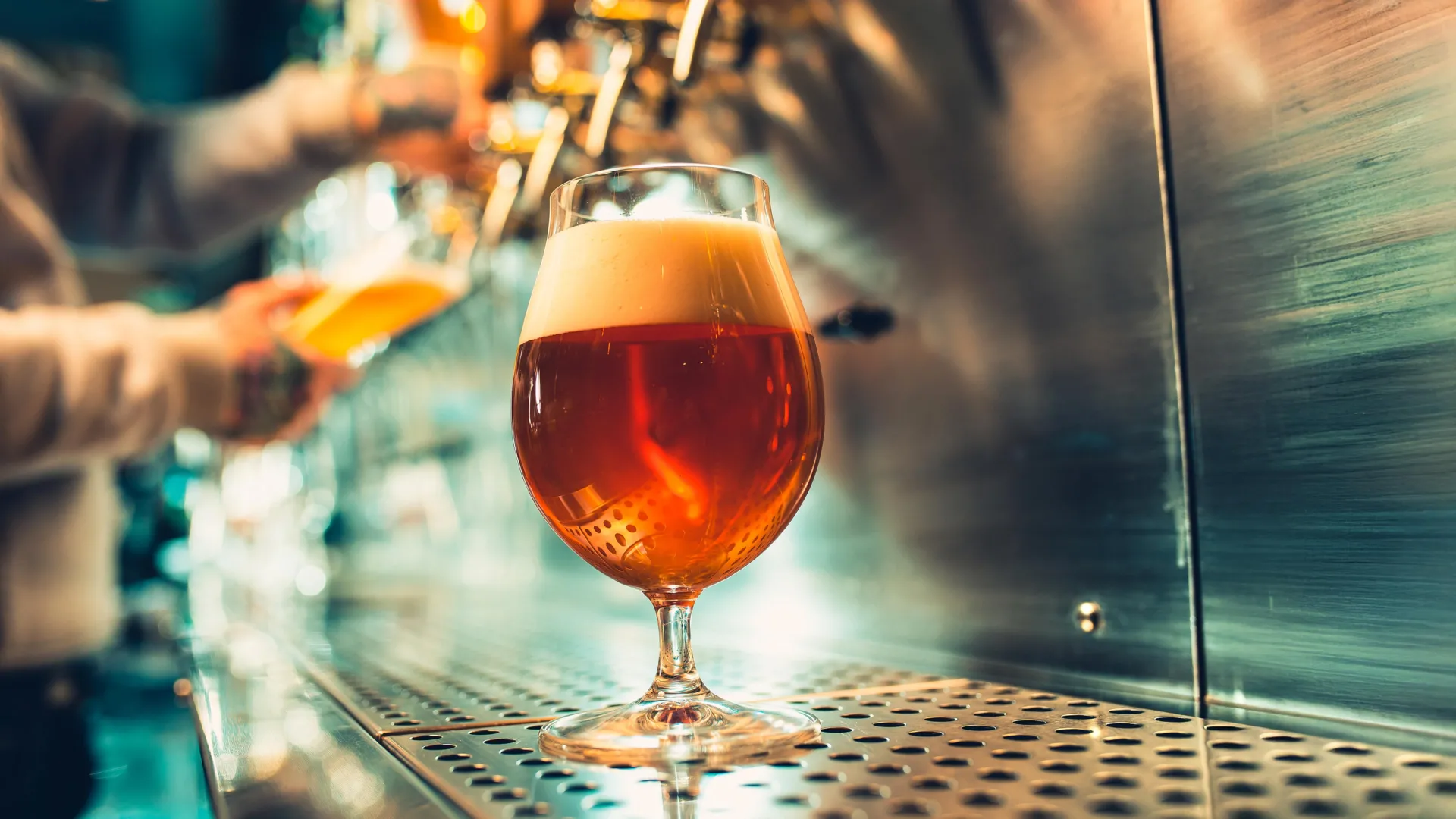
The Surprisingly Complex Science of Beer Foam: Beyond Proteins and into a World of Viscoelasticity & Marangoni Effects
For centuries,the perfect beer pour has been judged not just on the liquid itself,but on the quality of its head – that creamy,persistent foam crowning the glass. Traditionally, scientists attributed beer foam stability to protein-rich layers forming around each bubble, influencing surface tension and viscosity. Though, groundbreaking new research reveals a far more nuanced picture, demonstrating that foam behavior is deeply intertwined with beer style and a complex interplay of physical forces. This isn’t just about brewing better beer; it’s unlocking basic principles of foam science with implications spanning industries from electric vehicles to environmental sustainability.
A Paradigm Shift in foam Understanding
The long-held belief in a universal protein-driven foam stability model has been challenged by a team at ETH Zurich, lead by Professor Vermant. Thier meticulous experiments demonstrate that the mechanisms underpinning foam longevity vary dramatically depending on the beer.This research, conducted in partnership with a major global brewery, moves beyond simplistic explanations and delves into the specific physical properties at play in different beer styles. it’s a critically important advancement, moving the field from observation to a detailed understanding of why certain beers hold a head better than others.
Lagers vs.Tripels: Two Distinct Approaches to Foam Stability
The research highlights a striking dichotomy between lager and “Tripel” style beers. Lagers,known for their relatively stable foam,rely heavily on surface viscoelasticity. This means the foam’s durability is directly linked to the amount of protein present and, crucially, how those proteins denature – change their structure. Higher protein levels create a stiffer,more resilient film around each bubble,extending the foam’s lifespan. Think of it like a stronger, more flexible skin protecting the bubbles.
though, Tripel beers operate under a completely different set of rules. They exhibit minimal reliance on viscoelasticity, instead leveraging Marangoni stresses.These forces arise from variations in surface tension, creating currents that stabilize the bubbles. A compelling demonstration of this effect can be observed by adding soap to water containing crushed tea leaves – the leaves are rapidly drawn outwards, creating swirling currents that mimic the stabilizing forces within Tripel foam. This is a fundamentally different mechanism than simply having a strong protein film.
Delving Inside the Bubble: The Microscopic Architecture of Foam
Further investigation into Belgian beer styles – Singel and Dubbel – revealed even more intricate foam structures.Singel beers exhibit a foam structure resembling a two-dimensional suspension, were tiny, tightly packed spherical particles reinforce the bubble surface. This arrangement provides exceptional stability.Dubbel beers, on the other hand, boast a mesh-like protein membrane that further strengthens the bubbles, creating an even more robust foam.
The researchers identified LTP1 (lipid transfer protein 1) as a key player in these variations, confirming its importance through structural and concentration analysis of Belgian beer samples. Understanding the role of specific proteins like LTP1 allows for targeted interventions to improve foam quality,rather than relying on broad-stroke adjustments.
The Pitfalls of Simplistic Solutions & The Importance of a Holistic Approach
Vermant emphasizes a critical point: foam stability isn’t a linear equation. “You can’t just change one thing and get it right.” Adding surfactants to increase viscosity, for example, can paradoxically destabilize the foam by interfering with the crucial Marangoni effects. The key lies in understanding and optimizing the dominant mechanism for each beer style.This nuanced approach reflects a deep understanding of the complex interplay of forces at play. It’s a testament to the power of fundamental research to inform practical applications.
beyond the Brewery: A Ripple Effect of Innovation
The implications of this research extend far beyond the brewing industry. the team’s expertise is now being applied to address critical challenges in other fields:
* Electric Vehicles: Foaming lubricants can pose significant risks in electric vehicle systems. The ETH Zurich team is collaborating with Shell to develop strategies for efficiently breaking down these foams.
* Sustainable Surfactants: The demand for environmentally friendly surfactants – molecules that reduce surface tension – is growing. This research is contributing to the advancement of alternatives that avoid harmful fluorine and silicon compounds.
* Food Science: The team is investigating how proteins can stabilize milk foam, collaborating with food researcher Peter Fischer from ETH zurich, demonstrating the broad applicability of their findings.
* Biotechnology: Exploring foams as carriers for bacterial systems, opening new avenues for controlled biological processes.
The Future of Foam Science: A Cultural Gratitude & Global Impact
Vermant acknowledges the cultural significance of foam, notably in Belgium, where it’s valued for both taste and the overall drinking experience. However,
Related reading
- Engineers Work to Stabilize LINK Satellite After Uncontrolled Spin
- Apple Watch Series 11 Drops to All-Time Lows With $99 Off at Amazon
- Anthropic Reveals AI Models Accidentally Cyberattacked Three Organizations (world-today-news.com)
- Audi Reveals Massive New Q9 Flagship SUV Built in Bratislava (newsdirectory3.com)