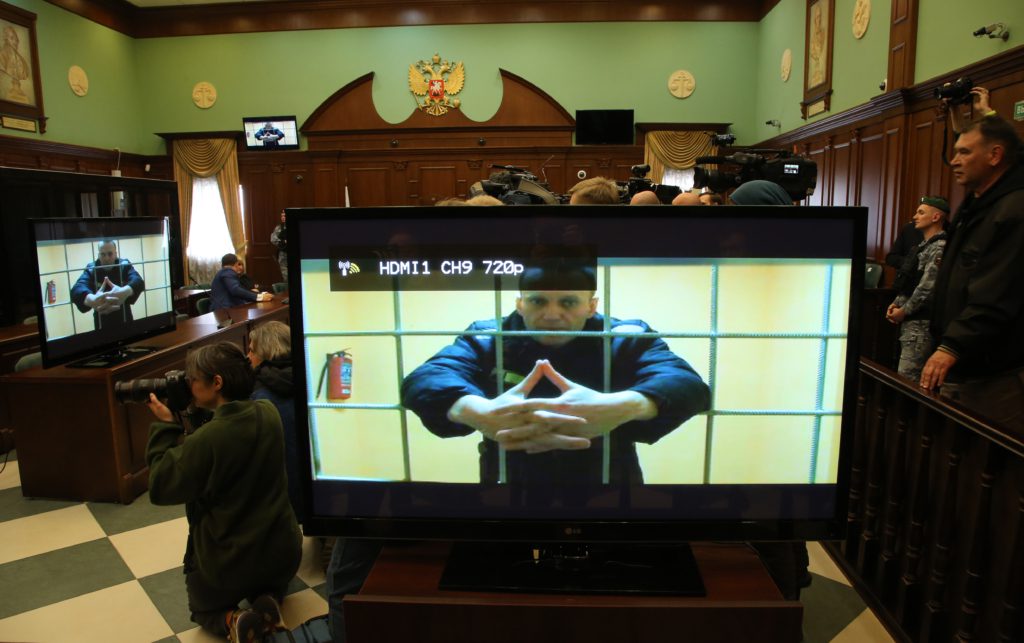
Russia Designates Navalny’s Anti-Corruption Foundation as ‘Terrorist Organization’: A Deep Dive into Political Repression
The Russian Supreme Court’s recent,closed-door decision to label the Anti-Corruption Foundation (ACF/FBK),founded by the late Alexei Navalny and his colleagues,a “terrorist organization” marks a chilling escalation in the kremlin’s ongoing crackdown on dissent. This move, condemned by international observers, isn’t simply about silencing an organization; it’s about rewriting history, criminalizing association, and instilling fear within the Russian populace. But what does this designation really mean, and what are the broader implications for human rights and political freedom in Russia?
A Stunning Peak in a Long Campaign of repression
As Marie Struthers, Amnesty International’s Director for Eastern Europe and Central Asia, powerfully stated, this decision represents “a stunning peak” in the Kremlin’s relentless campaign against Navalny and his supporters. The arbitrary nature of the proceedings – held behind closed doors – underscores the lack of due process and the politically motivated intent behind the ruling. This isn’t a legal judgment based on evidence; it’s a calculated act of political repression.
The designation extends beyond the organization itself. it now casts a shadow over the tens of thousands of russian citizens who have, over the past 15 years, donated to, volunteered with, or even simply engaged with FBK. The threshold for prosecution has been drastically lowered. As Amnesty International highlights, even possessing a photograph of Navalny has already resulted in severe consequences; now, it practically guarantees arrest and imprisonment. This creates a climate of pervasive fear, effectively silencing any remaining opposition.
Understanding the Anti-Corruption Foundation (FBK) and its Legacy
Founded in 2011 by the prominent opposition figure Alexei Navalny, FBK quickly became a thorn in the side of the Russian government. the organization gained widespread recognition for its meticulously researched and powerfully presented investigations into high-level corruption within the Kremlin and among its allies. These investigations, frequently enough released as viral videos on YouTube, exposed illicit wealth, lavish lifestyles, and systemic abuse of power.
FBK’s impact wasn’t limited to exposing corruption. It successfully mobilized popular support through anti-graft campaigns, organizing protests and challenging the ruling elite. The foundation’s work resonated with a growing segment of the Russian population disillusioned with the status quo. This success, however, made it a prime target for the authorities.
In 2021, FBK was initially banned as an “extremist organization,” leading to the prosecution of its alleged members and donors. This latest designation, escalating the label to “terrorist organization,” represents a important intensification of the crackdown. The US-registered successor to the Russia-based FBK, the Anti-Corruption Foundation, Inc., was also included in the ruling.
the Weaponization of ‘Anti-Terrorism’ Legislation
This case exemplifies a disturbing trend: the weaponization of “anti-terrorism” legislation to suppress dissent. The same judge who presided over this closed-door hearing previously outlawed the “international LGBT movement” and “international satanism movement” as “extremist,” demonstrating a pattern of using broad and vaguely defined accusations to target groups perceived as threats to the regime.
This tactic allows the Kremlin to bypass legal norms and justify increasingly draconian measures against its critics. By framing opposition groups as “terrorists,” the authorities can justify arbitrary arrests,lengthy prison sentences,and the suppression of fundamental freedoms. This is a risky precedent that undermines the rule of law and erodes democratic principles.
Recent Developments & Statistics (November 2024 – November 2025)
Recent data from the OVD-Info monitoring group (a Russian human rights organization) indicates a significant increase in politically motivated arrests as Navalny’s death in February 2024. Between February and November 2025, OVD-Info recorded over 2,500 detentions related to demonstrations, memorial events, or even symbolic acts of support for Navalny and his work. (Source: https://ovdinfo.org/). This demonstrates a clear escalation in repression following Navalny’s passing.
Furthermore, a report released by the Committee to Protect Journalists in October 2025 highlighted the increasing self-censorship among Russian journalists, with many fearing prosecution for reporting on sensitive political topics. (Source: https://cpj.org/). This chilling effect on freedom of the press further exacerbates the climate of fear and limits access to independent facts.
**What