Paris Police Under Scrutiny: Investigation Launched Over Mocked Anti-Fascist Banner
A concerning incident in Paris has ignited a firestorm of criticism, prompting an official investigation into alleged misconduct by police officers. The controversy centers around a photograph circulating online appearing to show officers mocking a banner seized from a feminist and anti-fascist demonstration. This event raises critical questions about police conduct, potential bias, and the safety of activists. Understanding the details of this police misconduct case, its implications, and the broader context of accusations against French law enforcement is crucial.
The Incident: A Banner Turned Upside Down
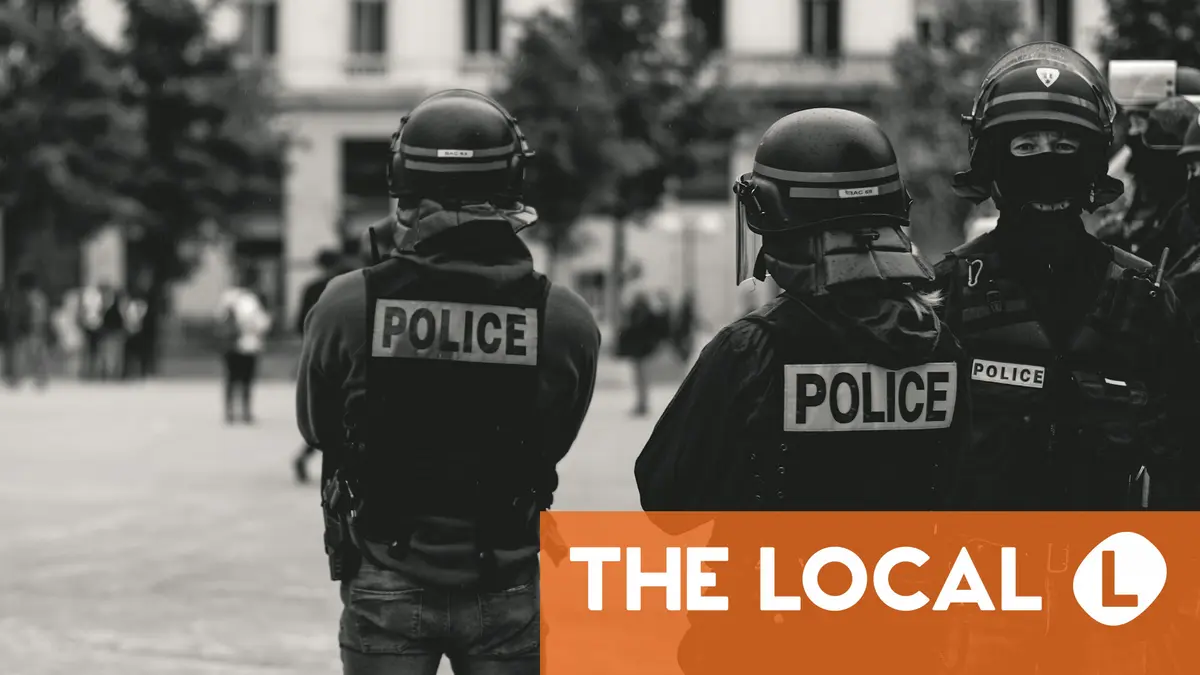
On November 22nd, during a demonstration against sexual and gender-based violence in Paris, police confiscated a banner reading “Antifa Feminists against transphobia and racism.” Shortly after, an image surfaced – published by online media outlet Blast – depicting approximately two dozen uniformed officers posing behind the banner, deliberately turned upside down. The officers’ faces were largely obscured by hats and neck gaiters,but the message conveyed was clear: a display of disrespect towards the banner’s message and the groups it represented.
this act, according to Blast, echoes behavior commonly seen within extremist circles that police are tasked with confronting, creating a disturbing irony.Paris police headquarters swiftly responded, announcing the immediate opening of an investigation into the incident. The investigation aims to identify the officers involved and determine the extent of the misconduct.
Accusations of Bias and a History of Concerns
This isn’t an isolated event. For years, rights groups and left-wing political parties, like France Unbowed (LFI) led by Jean-Luc Mélenchon, have repeatedly accused the French police of harboring right-wing biases and engaging in racist practices. Mélenchon sharply criticized the incident, stating that the officers’ actions were a dishonor to their uniform and the silence from the police hierarchy spoke volumes about the dangers faced by women.
While the police force consistently rejects these accusations, maintaining that isolated incidents of misconduct don’t reflect the institution as a whole, the recurring nature of these claims fuels public distrust. A recent report by the Ligue des droits de l’homme (LDH), a French human rights organization, highlighted a meaningful increase in reported cases of discriminatory policing practices in 2023, especially targeting minority communities. https://www.ldh-france.org/
Understanding the Legal and Ethical Implications
The officers’ actions potentially violate several internal regulations regarding neutrality and respect for citizens’ rights. Beyond the procedural violations, the incident raises serious ethical concerns. Public trust in law enforcement relies on the perception of impartiality and fairness. Mocking a banner representing vulnerable groups undermines that trust and can contribute to a climate of fear and intimidation.
Police accountability is paramount. The ongoing investigation must be thorough and clear, with appropriate disciplinary measures taken if wrongdoing is confirmed. This includes not only the officers directly involved but also a review of the command structure to determine if there was a failure of oversight.
What happens Next? Demanding Transparency and Reform
The investigation’s outcome will be closely watched by activists, rights groups, and the public. Calls for greater transparency within the police force are growing louder. This includes body-worn cameras for all officers,independent oversight boards with real investigative power,and extensive training on implicit bias and de-escalation techniques.
Furthermore, addressing the systemic issues that contribute to these incidents requires a broader societal conversation about racism, sexism, and the role of law enforcement in a democratic society. Are current police training programs adequately addressing issues of diversity and inclusion? What mechanisms are in place to ensure accountability for misconduct? These are critical questions that must be answered.
Seeking legal counsel is advisable for anyone who believes they have been subjected to discriminatory policing practices. Resources like the LDH and other human rights organizations can provide guidance and support.
Evergreen: The Importance of Police-Community Relations
Building strong, positive relationships between law enforcement and the communities they serve is essential for maintaining public safety and trust. This requires a commitment to transparency, accountability, and respectful engagement. Community policing initiatives, where officers actively work with residents to address local concerns, can be highly effective in fostering these relationships.However,these initiatives must be genuine and prioritize the needs and voices of the community,not simply serve as public relations exercises. The long-term health of a democratic society depends on a law enforcement system that is both effective and just.
FAQ: Addressing Your Concerns About Police Misconduct
Q: What constitutes police misconduct?
Related reading