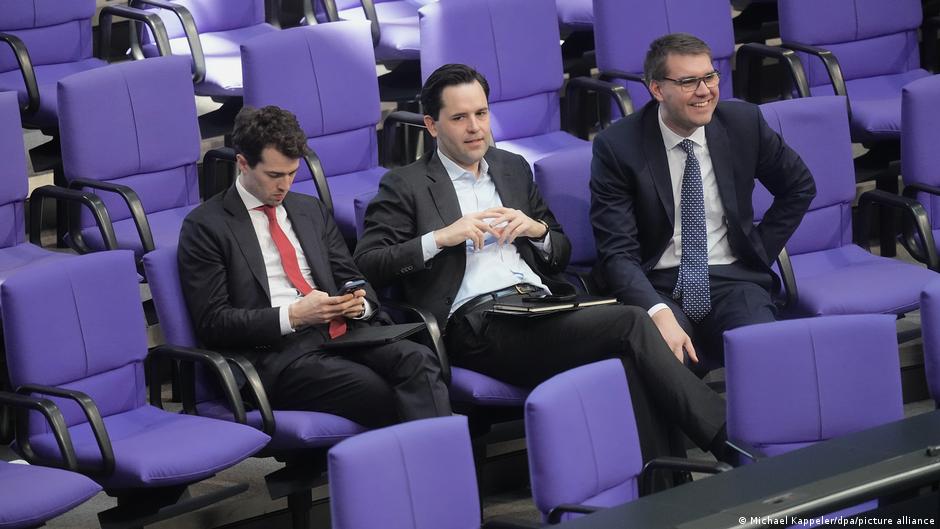
Germany’s Youth Wings Flex Their Political Muscle: A Shift in Power Dynamics
Germany’s political landscape is experiencing a subtle but notable shift. The traditionally more reserved youth organizations of established parties – and now the newly formed wing of the far-right AfD - are asserting themselves with newfound confidence, pushing for clearer ideological stances and challenging their parent parties’ approaches. This trend signals a potential reshaping of German politics, driven by a generation eager to leave its mark.
A Rising Tide of Youthful Assertiveness
For years, youth wings like the Junge Union (JU), the CDU’s youth organization, largely adhered to the established party line. Though, that dynamic is changing. Political scientist Uwe Jun at the University of Trier observes a growing self-assurance within these groups.
“The confidence has not been as strong in Junge Union as we see it now,” Jun explains. ”Generally, youth organizations are becoming more self-confident, wanting their viewpoints more strongly represented in politics.”
this isn’t isolated to the center-right. The Grüne Jugend, the youth wing of the Green party, recently voiced frustration with its parent party’s perceived lack of courage. Co-leader Luis Bobga publicly criticized the Greens for not taking a firmer stance in the recent debate surrounding controversial immigration remarks made by CDU leader Friedrich Merz.
Bobga, 23, argued that “many people are no longer clear about what the Greens stand for,” emphasizing the need for “clear messages” heading into the next federal election. This highlights a broader desire among youth wings to define – and perhaps redefine – their parties’ core identities.
The Role of Youth Wings: Drivers or Disruptors?
What’s driving this change? Experts suggest youth organizations are increasingly acting as ideological engines for their parties. They tend to champion purer, less pragmatic versions of their party’s platforms.
* Ideological Purity: They prioritize core objectives over political compromise.
* Radical Positions: They often represent the more extreme ends of the political spectrum within their respective parties.
* Driving Force: they act as a catalyst, pushing parties toward bolder – or more rigid – positions.
As political analyst Hillje notes, “They are something like the driver of the parties. Sometimes that works out well, sometimes it doesn’t. You can’t go too far when you lead the youth organization.”
The AfD’s “Generation Germany“: A Test Case
The emergence of “Generation Germany” (GD), the youth wing of the far-right Alternative for Germany (AfD), represents a particularly stark example of this trend. Founded last weekend in Giessen, the GD promptly sparked controversy and counter-protests.
Leader Jean-Pascal Hohm and his associates have made mass deportations a central tenet of their platform. This aggressive stance,coupled with concerns about the organization’s membership,raises serious questions. Many GD members are linked to the extremist Identitarian movement, and Hohm himself has been identified as a right-wing extremist by intelligence agencies in his home state.
Hohm’s ambition is clear: “We want to be a training ground for the party’s future leaders,” he stated at the founding conference. “We want to develop the officeholders, the elected representatives, and hopefully also the future members of the government.”
This ambition, and the GD’s radical platform, will undoubtedly test the limits of how far a youth organization can push its parent party – and the boundaries of acceptable political discourse in Germany.
What This Means for You
The increasing assertiveness of Germany’s political youth wings signals a period of potential upheaval and realignment. You can expect:
* Sharper ideological debates: Parties will likely face internal pressure to clarify their positions on key issues.
* Increased polarization: the push for ideological purity could exacerbate existing divisions within the political landscape.
* A new generation of leaders: Youth wings are actively cultivating future political figures who may challenge the status quo.
Staying informed about these developments is crucial for understanding the evolving dynamics of German politics.
Stay Updated: Every Tuesday, DW editors provide a complete overview of German politics and society in the Berlin Briefing newsletter. Sign up here to stay
Related reading
- Zondacrypto Controversy: Secret Meeting Involving Roman Giertych, Jacek Dubois, and Przemysław Kral Sparks Prosecutor Investigation
- Royal Air Force Gold Wire Embroidered Emblem Patch UK Military
- Barcelona Successfully Register Youth Player for La Liga (world-today-news.com)
- German Government Law Aims to Stop Rising Health Insurance Contributions (archyde.com)